
Walther Luft – Austria’s Innovator

Words: John Moffat for Trials Guru
Contributions: Hartwig Kamarad; Yrjö Vesterinen; Alfred Wagner & Max Hengl.
Photos: Alfred Wagner; Hartwig Kamarad; Hans Meditz; Iain Lawrie; Rainer Heise; Eric Kitchen; Graeme Campbell; Iain C, Clark; Ian Gibson; Jimmy Young; Justyn Norek; Trials.AT; John Moffat.
Acknowledgements: Motorrad Trial Museum Ohlsdorf/Hartwig Kamarad; Max Hengl, Austria; KTM AG, Mattighofen; Steyr-Daimler Puch, Graz; Alfred Wagner, Austria; Trial.AT, Austria.

John Moffat begins the Walther Luft story:
I first met Walther Luft at my family home in Bathgate, West Lothian in late April 1970. He was entered for his first Scottish Six Days Trial along with his friend from Vienna, Peter Bous who was to ride a Bultaco.

Walther was a quiet man, he understood and spoke some English, but it was clear to me that he was very shy and reserved, that was until he had some wine! He was also quite humorous and would laugh at mildly funny things.

My task was to accompany them along with a Herr. Hans Meditz from Steyr-Daimler Puch, Graz. He was their effective manager for the event, Meditz, I later discovered had been an accomplished enduro rider for the Puch factory team and had competed in the International Six Days representing his native Austria. He was an employee of the factory, but I never found out what he did for a living, even although my family would visit him at his home in Graz when on holiday in Austria the next year.
Walther’s first foray into the most famous motorcycle event in the world attracted attention from the UK Puch importers, Steyr-Daimler Puch GB, who were based in Lower Parliament Street in Nottingham who sent up their UK General Manager, Peter Bolton and one of their technical salespeople. The Puch GB people travelled around the highlands in a brand new series 1 Range Rover with the private number plate 1 SDP. At this time, Puch were supplying 124cc engines, wheels and front forks to Dalesman in Otley, Yorkshire and had just started supplying Greeves with the six speed 169cc engine for the new Pathfinder which was being debuted by Bill Wilkinson, Derek Adsett and Scott Ellis in the SSDT.
My father, T. Arnott Moffat had made connections and friends while attending the ISDT at Garmisch-Partenkirchen in September 1969, this included some officials of the OAMTC and the German ADAC. He was always telling people overseas to come to Scotland and compete in the SSDT and this time it worked.

He received correspondence from a connection in the OAMTC asking how to enter a couple of Austrian riders for the ‘Scottish’. Very much delighted to help, my father replied and put them in touch with the new SSDT Secretary for 1970, Jim McColm of the Edinburgh & District Motor Club and two entries were secured for the Austrians. Peter Bous would be allocated number 70 and Walther Luft, number 71.

My mother made up the spare bedroom at our home in Torphichen street, Bathgate and I was despatched to my Gran’s cottage to allow my bedroom to be vacated, thus accommodating all our Austrian guests.
The contingent had arrived early for the trial and needed to make some preparations to their machines, so my resourceful father took them to Uphall Station, West Lothian where his friends, the Gillies brothers ran a large haulage business with extensive workshops, under the control, of Jim Gillies, a family friend. The Austrians were allowed access to all the tools and also welding equipment as Walther Luft was a blacksmith to trade.

My father suggested that the duo us a spare can for their fuel and I was told to paint their riding numbers on an old red Esso two gallon fuel can, which I did with Humbrol enamel in white gloss, I still have that can with its original brass cap, still showing the writing, ‘71 and 70 SSDT’.
SSDT 1970:
Peter Bous was very unlucky in his first SSDT, the crankcase seals on his Bultaco failed at the first fuel check near Culross, some twenty-five miles north of the start, however he returned a couple of years later with a Puch and received a finishers award.
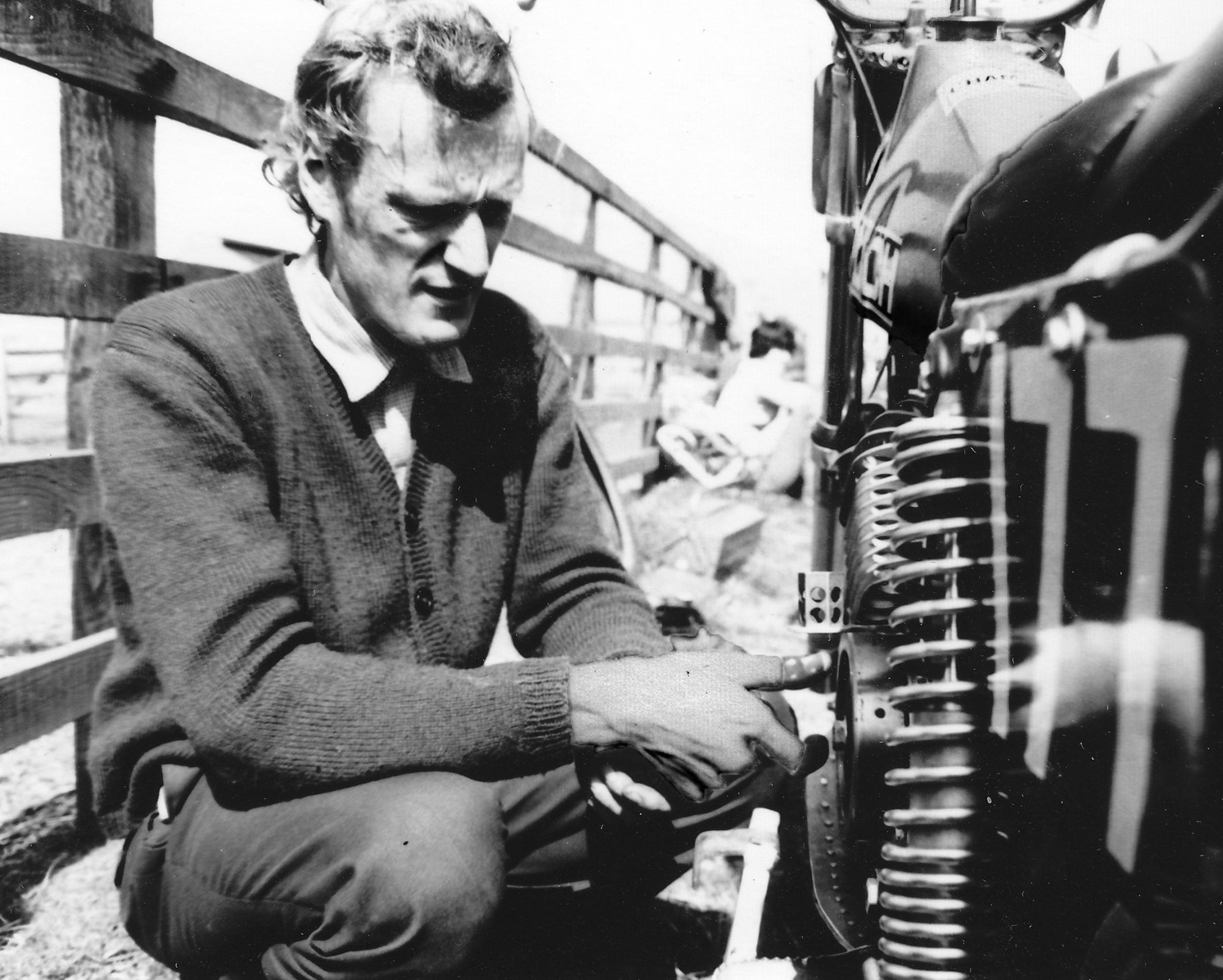
Walther Luft was a serious rider; he took his sport and the construction of his special 169cc Puch very seriously. His preparation was total, I had the pleasure of not only watching him, but assisting him where I could.
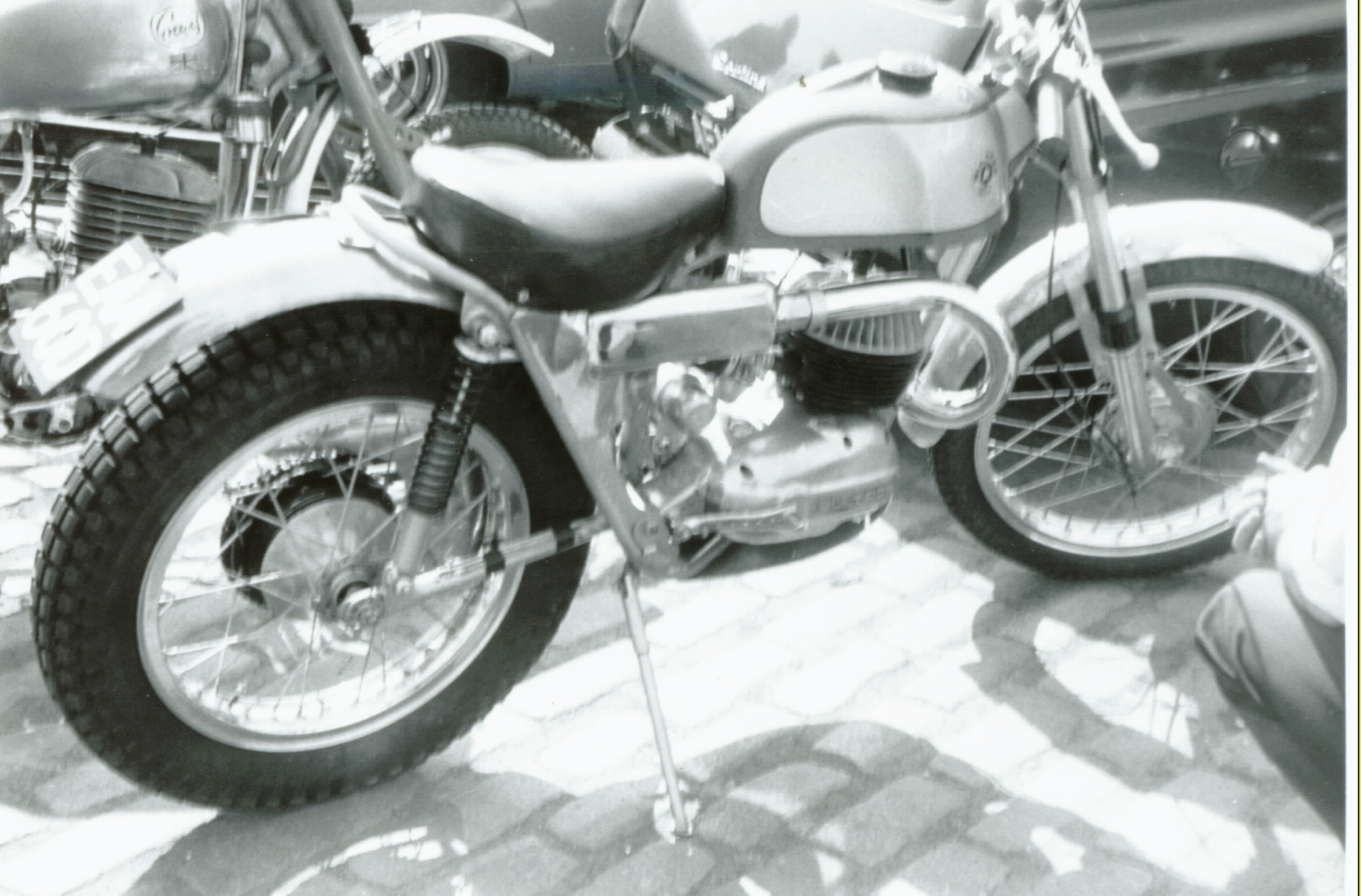
In 1970 his Puch was in its preliminary stages of development, registered in Vienna (Wein) as W-30823, it sported an alloy fuel tank similar to that being used by the English constructor, Dalesman who were using 125cc Puch motors at that time. Finished with alloy mudguards and braced steel handlebars. Luft I then discovered, had made the frame and swinging arm himself, up until that point I assumed it was a factory bike. He also used Nylon 66 at around 5mm thickness for a sump shield, nobody at the weigh-in for the SSDT had seen such a sump shield made from plastic material before! Later he fitted American ‘Preston Petty’ mudguards to the Puch when they became available, then he used the British made ‘VF’ (Vacuum Formers). For controls he favoured the German ‘Magura’ brake and clutch levers.

The air-box was also made from sheet Nylon 66, and I noticed extensive drilling of many components for lightness. Walther referred to these components as ‘spetzial parts’, he was always experimenting with innovative ideas.
After all the preparations, Monday 4th May loomed, and the Austrians were standing by their machines in the Gorgie Market in Edinburgh for the start of the Scottish Six Days Trial. The weather was sunny and as mentioned Bous retired on the first day so was able to crew for his friend Walther.

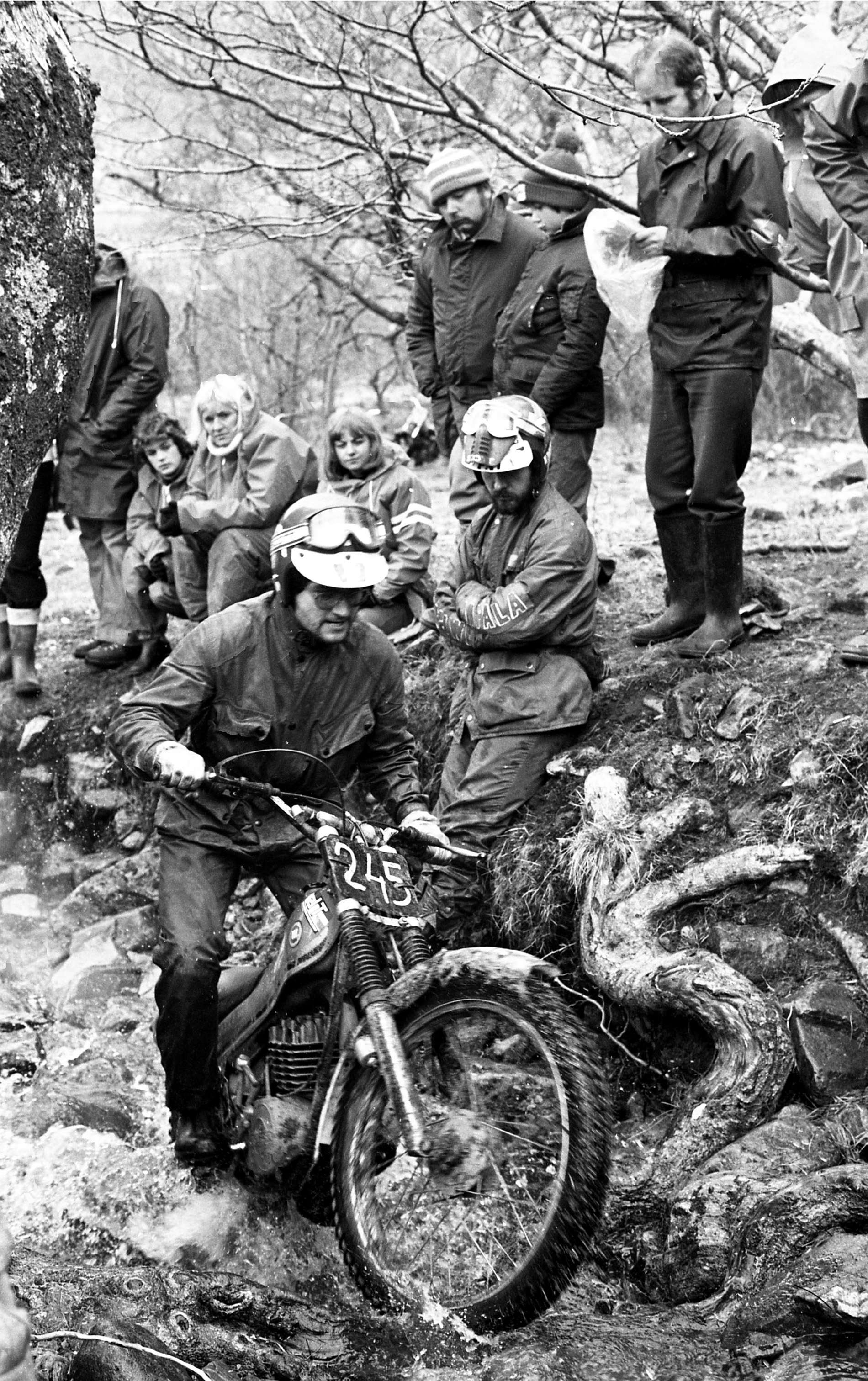
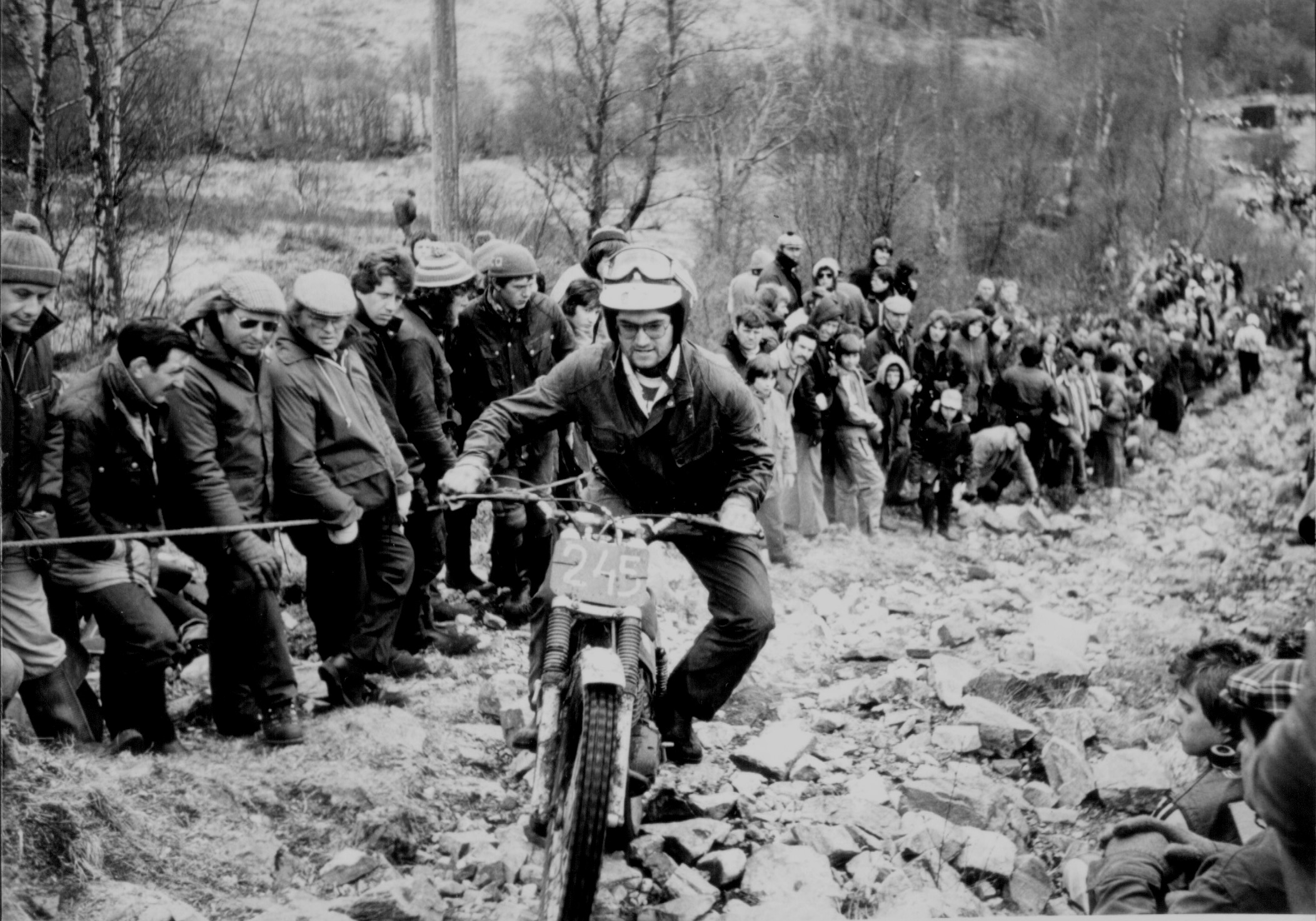
Walther was overjoyed at the awards ceremony in the George Hotel in George Street, Edinburgh on Saturday 9th May when he collected the ‘Edinburgh Trophy’ for the best performance by a foreign rider, fourth position in the up to 175cc class and was placed at 45th overall in the trial. This started a love affair between Luft and the SSDT, for he would return many times over the years.

Early years:
Walther Luft was born at Süßenbach in the county of Raabs an der Thaya, Lower Austria (Niederoesterreich) on 15th November 1944, his father was a chemist, he had a sister.

Walther was a trained craftsman, welder and turner. He ran a one-man company that carried out repairs and made bespoke machine tools and also made wrought iron work.
Luft took a liking to trials as it was a technical sport and suited his mentality and professional training, a thinking man’s sport.
In Austria, there were not many motorcycle trials dealerships and riders used home market road machines suitably adapted and modified. A popular conversion was the Puch SGS 250, a split-single two stroke which the factory produced ‘Gelandesport‘ models for speed events like the ISDT. Many riders geared these machines down for observed trials use.
Trials legend Sammy Miller had conducted some trials schools in Austria when riding for Ariel and these encouraged many Austrian trials riders.
The Austrians also ran many events through the winter months called ‘Winter Cup‘ series trials, these were very muddy type events, but proved popular. Walther wasn’t a great fan of these events preferring rocky sections and very steep climbs on which he excelled.
The Puch factory took notice of Walther and he received support from them with parts such as wheels, engine, suspension parts. There were some very clever engineers who worked at the Graz factory, but they were mainly engaged in the production of their GS or enduro models, ranging from 50 to 175cc. Many of the components were hand made by Walther, so his machines were very much ‘one-offs‘.
Austrian involvement:
Walther Luft wasn’t the first Austrian to take part in the SSDT, that honour belonged to Horst Leitner, who later became the Bultaco importer/concessionaire for Austria and Germany. Leitner rode a factory supported 250cc Puch SGS in the 1961 SSDT, but it resembled more of an enduro machine than a proper trials mount. Leitner would also sponsor Austrian champion, Joe Wallman from 1973 to 1979 on Bultaco Sherpas through his Austrian Bultaco dealership. Leitner was a multiple ISDT gold medalist and later produced the ATK Leitner motocross machines in Southern California in the USA and patented the ‘Leitner-Link‘ suspension system.
Development:
Ongoing development of the trials machine was always on Luft’s mind, he was a perfectionist and could not rest until something he was working on was 100% correct.
The Puch he rode was always a work in progress, by 1973, he had increased the capacity of the engine to a 250, actual capacity 244cc and had made a special fuel tank out of plastic, based on the tank element of the Bultaco Sherpa ‘Kit Campeon‘ tank seat unit. Walther had made his own mouldings and therefore had self-made his own tank for his Puch.
Copy-cat:
In fact Walther had fabricated in 1970, two nylon 66 tubes with suitable bracketry and fixings to enclose the rear drive chain of his Puch, this idea was subsequently copied by Montesa for the 1976 Cota 348 ‘Malcolm Rathmell Replica‘.
At this time, with the larger capacity engine, Walther was constantly tinkering with carburation and exhaust systems. At first he used glassfibre wool as silencing and to create sufficient back-pressure for the loop-scavenging two-stroke Puch engine. He then tried wire wool as he found that the glass wool was prone to burn out rapidly and he was losing the back pressure mid event. His engines were all six-speeders.
The fork yokes were alloy items, but extensively drilled and sometimes the holes filled with nylon 66 rod, such was his attention to detail.
In 1971, in his second SSDT, Walther was again the best foreign rider and came home in 31st position, the Puch was by now a 169cc capacity, listed as a 200. The following year, he was logged as 29th position overall and the Puch‘s capacity listed as 187cc. The best foreign rider was rising Ossa star, Thore Evertson.
1973 was a good year for Walther on the 250cc Puch Special, he won the Santigosa Three Day Trial in Spain (Tres Dies de Trial de Santigosa) beating Bultaco rider Charles Coutard and Spaniard Fransec Paya (Ossa) and also took the best 250cc cup. He travelled to events alone in a dark green VW 1600 Variant estate car with the Puch inside, with its wheels removed and his luggage alongside. Walther by now always stayed with the Borthwick family in Blacket Avenue in Edinburgh’s southside prior to the SSDT to be close to the start.
In the Scottish Six Days he was ninth in the 250cc class, and nineteenth overall in the event. The best foreign rider was again Swede, Thore Evertson on the works Ossa in fifth position.

At the finish of the SSDT at Blackford Hill, Edinburgh, Walther was approached by Martin Lampkin and Malcolm Rathmell, the eventual trial winner and asked Luft for a quick spin on the Puch. Rathmell was first to try the peppy machine, before handing it to Lampkin. Martin, not realising how powerful Luft had made the motor almost lost it when he opened the throttle, it gripped on the hard pathway leading up to the Blackford Hill Observatory. He had a broad smile on his face when he handed the Puch back, undamaged, but he came close to looping it in front of witnesses.
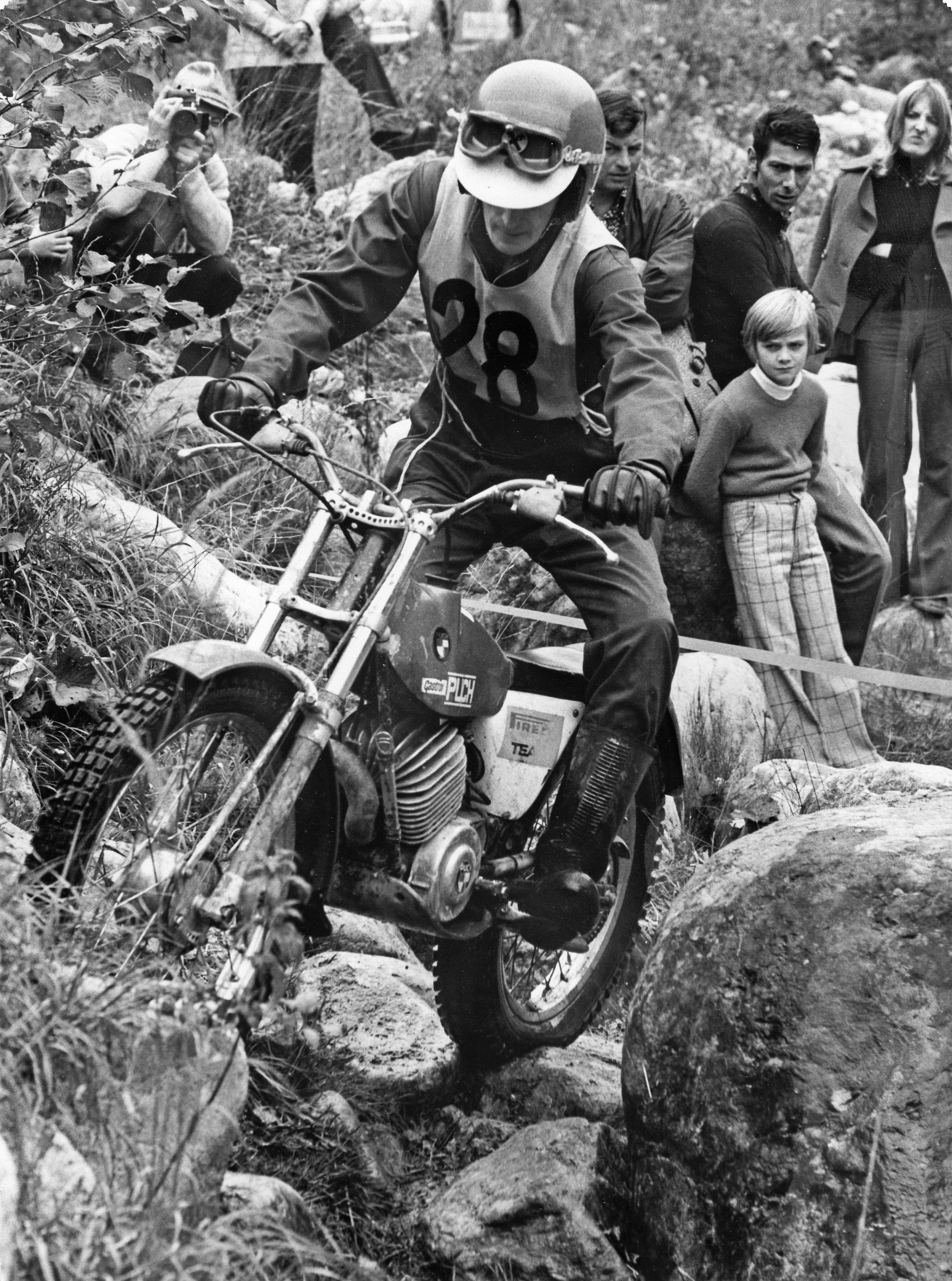
Walther 1973 season was dotted with success, apart from his Santigosa win he also achived the following:
Triumph Club, Castrol Trial at Tulln in March, second place overall; – International Trial at Saint Llorenz de Mont in Spain, third place overall; – International Trial at Bergamo, Italy in June, sixth position; - International Trial at Muhldorf in June, first position; – International Trial in Konstanz in July, first position; – European Championship round in Finland, August, nineteenth position; – European Championship round in Sweden, ninth position; – International Trial at Marburg, Germany in September, first position and the European Championship round at Keifersfelden, sixth position. [1]

In the 1974 SSDT, Walther posted a fine fourteenth position and the Puch was listed as a 250, five marks behind German Champion, Felix Krahnstover on his Montesa.
However, what was overlooked in the 1974 Scottish Six Days was that Walther had made the best performance of the trial on the very last day, the Saturday, which earned him the Ossa UK trophy, surrendering only 1 mark that day.

1975 was the last year Walther would be on his faithful Puch and he was now accompanied by friend, central heating engineer, Walther Wolf from Ernstbrunn in the district of Korneuburg in Lower Austria, north of Vienna. They travelled to Scotland in Wolf’s Fiat 238 van.

The Austrians even managed a little sponsorship from the Erste Bank der Oesterreichischen Sparkassen AG in Vienna. The bank’s logo was emplazoned on their riding jackets.

By now several Austrians were competing in International trials, including Joe Wallman, Gottfried Engstler on Bultacos and Walther Wolf. Walther Luft would shortly debut the prototype KTM 250 ‘Trial‘ along with German Trials Champion, Felix Krahnstover.

As said, Walther was always experimenting with components of his machines, reknown German photographer, Rainer Heise attended the Scottish Six Days many times and of course concentrated in the German riders and the Austrians.
Rainer Heise: “I can’t remember exactly which year, Walther showed me the rims of his machine. He had made them himself from carbon material and assembled them with hub, spokes etc. to make a complete wheel. At that time, the use of carbon was almost completely uncommon at trial.“
Walther was innovative, he was a thinker and new materials made him wonder if they could be used to lighten his machines further, this was at a time before even mountain bike technology had taken hold.

KTM Cometh:

The rival KTM (Kronreif und Trunkenpolz, Mattighofen) concern, based at Mattighofen in Upper Austria were eyeing up the burgeoning trials market and began developing their own trials machine in 1975, first a 250, followed a year later with a 325cc engine.

The trials project had the blessing of Hans Trunkenpolz. The firm were reknown for their high build quality and their trials machines were no different, but bespoke.

They shared few components with the ‘MC‘ motocross or ‘GS‘ enduro spec models of that time, much of the prototype trials machines components were custom made.

In charge of the engineering for the trials project was Heinrich Weiditz at the KTM factory, everyone at Mattighofen was enthusiastic about the ‘Trial’ project.
Max Hengl, a friend of Walther Luft takes up part of the story:
“Since I was Walther Luft trained, he was able to put me in touch with KTM, who were looking for a young Höhere Technische Lehranstalt educated engineer to build their trials bike. There I got to know Walther as a recognized expert. He had more or less single-handedly developed and built the KTM trial machine. I remember a phone call from him to the factory in Mattighofen, where he told me that on the way to an important event, a car collided with his trailer and the KTM was badly damaged. He was now coming to the factory and I was supposed to help him get his motorcycle back in working order. A few hours later he showed up at the development department and showed me the damaged KTM. In addition to the handlebars, the tank and the side panels were broken. Since the machines developed in the factory already had a different frame, their tank did not fit on Walther’s machine. We worked through the night trying to somehow get a rideable motorcycle ready. Rarely have I seen Walther so desperate, as he could not do a perfect job in the time available. In the morning, he reluctantly loaded the assembled KTM onto his trailer, which had also been repaired, and drove to the trial. He was pretty angry with me when he lost the tank in a crash. This tarnished his image, but he was able to attend the event and that had been the declared goal of the night session. But Walther doesn’t hold a grudge and so he had to laugh about the situation himself.“
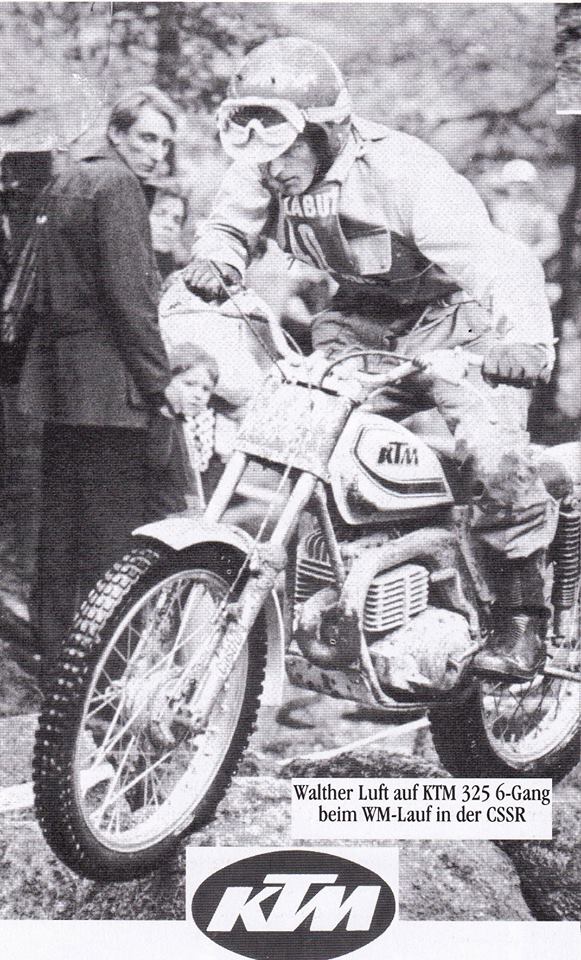
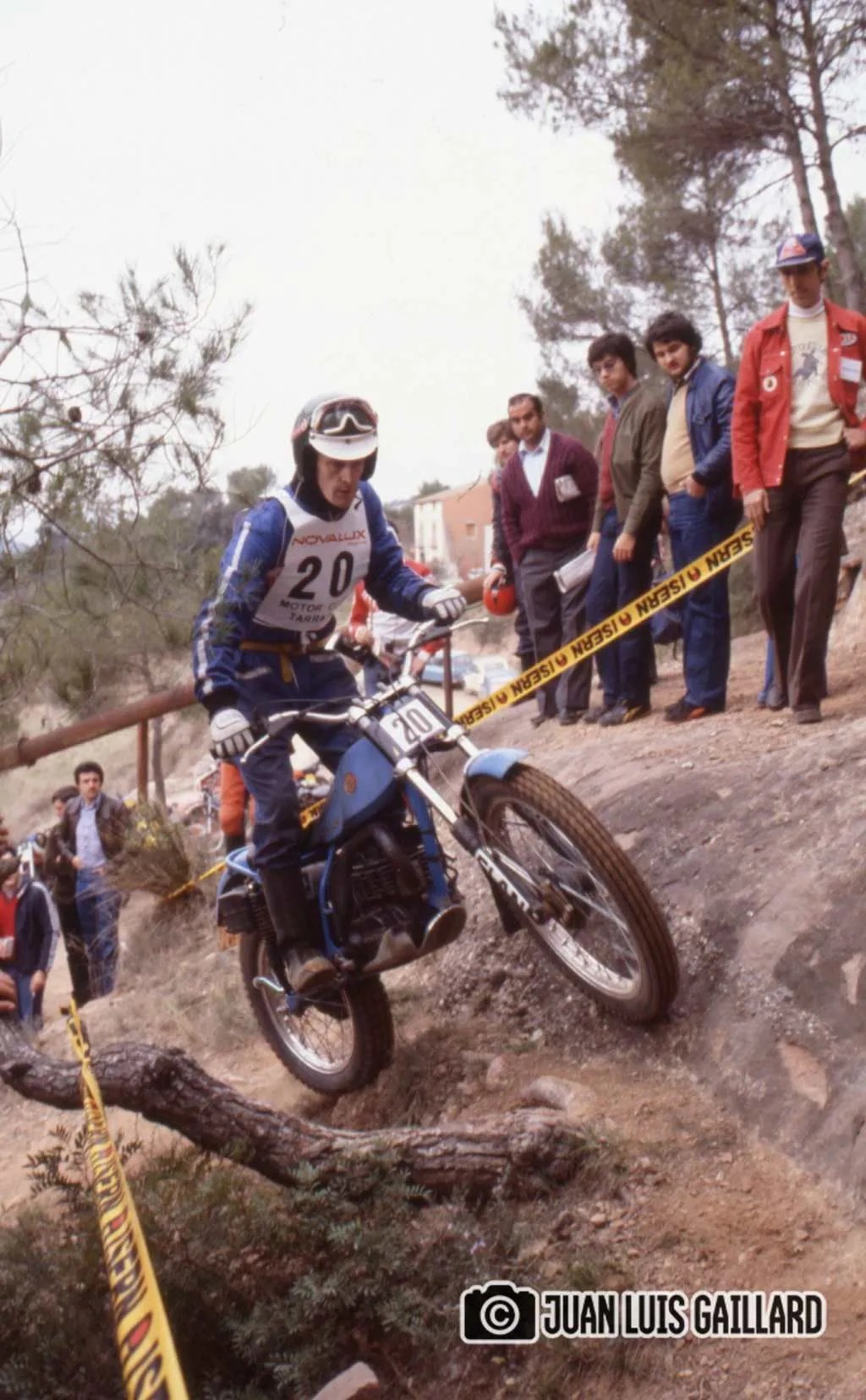
With the trials engines based on the bottom half of the 400 enduro model, which had an actual capacity 355cc, Walter rode three SSDTs on the KTM brand, Krahnstover went back to ride a Montesa in 1977, returning in 1978 on the 325 KTM. Walther Luft came home in twenty-sixth position at the SSDT in 1977.

Walther was in thirty-eighth position in 1978, back on the 250 machine, but the decision was made to scrap the project, siting the high demand for their motocross and enduro ranges and strong orders from the American market where the KTM had been previously re-branded ‘Penton’. The size of the trials market being considerably smaller, being the rationale for the shelving of the ‘Trial’ enterprise.
At the 1978 Scottish Six Days, Walther, riding the 325 KTM was a member of the Best Foreign team, winning the ‘Scotia Trophy’ for Team Austria along with Joe Wallmann, Freidl Engstler and F.W. Trummer.

KTM TRIAL today:
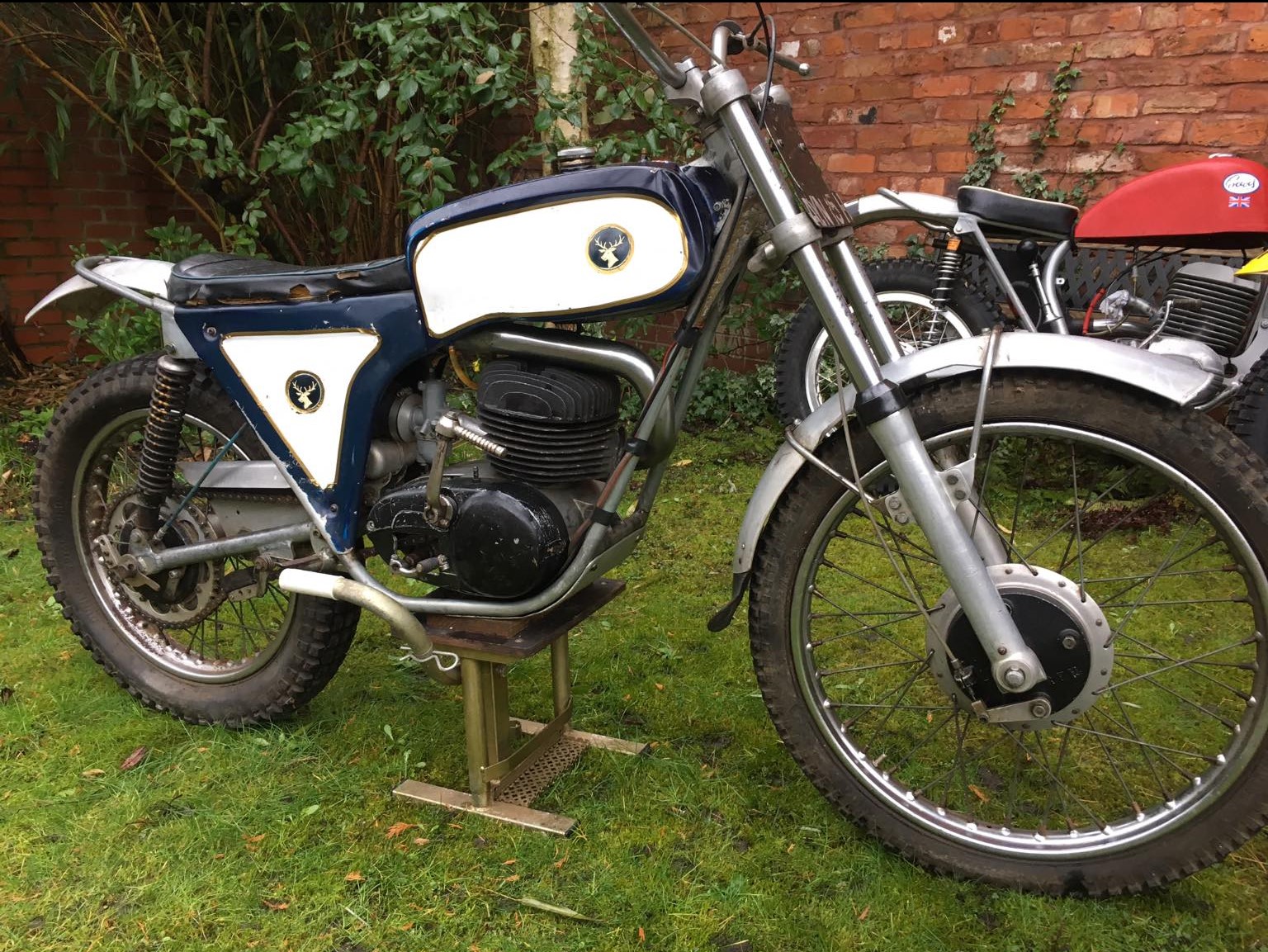
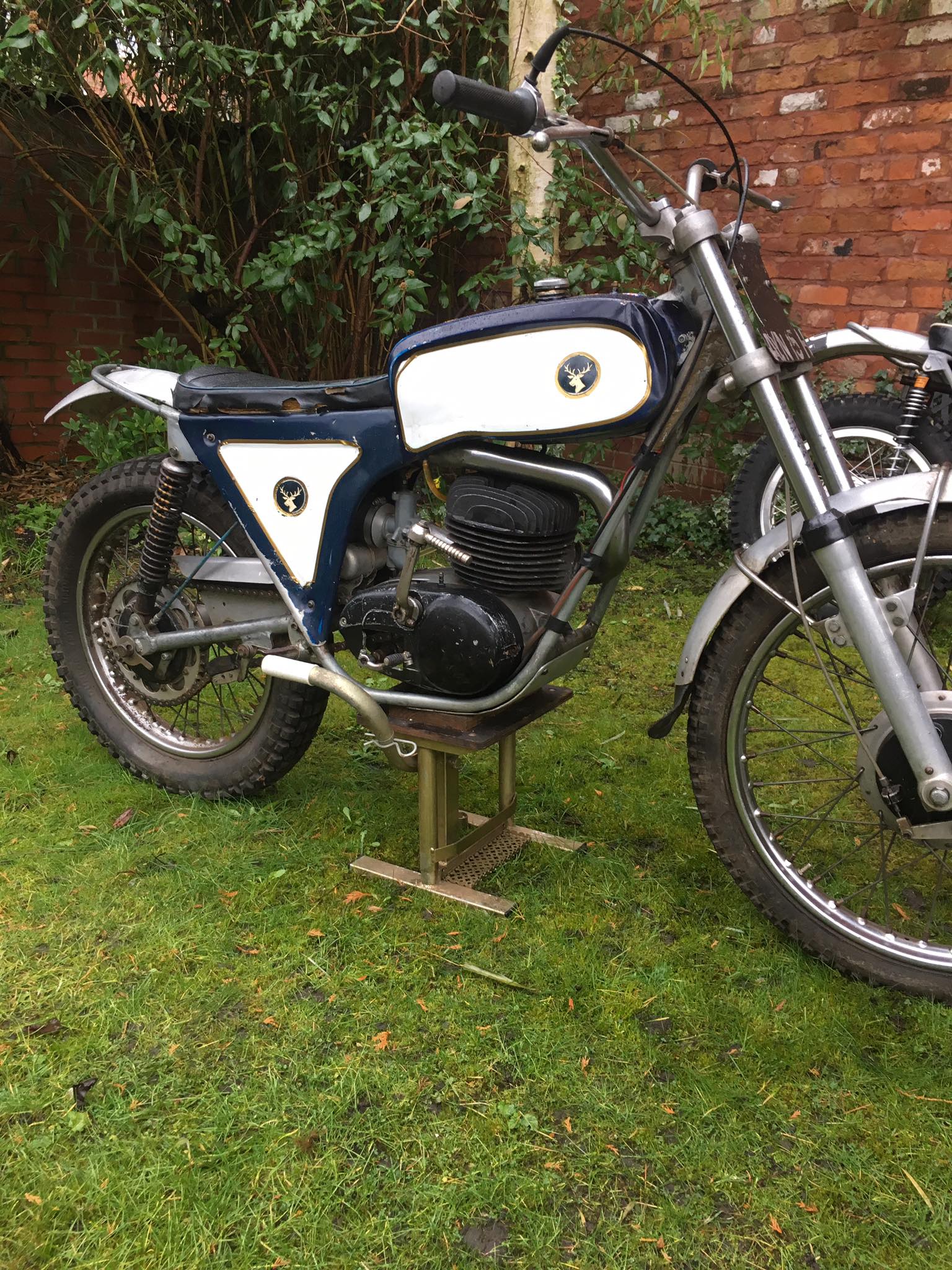
There were four KTM Trial 325 machines made at the Mattighofen factory by the Trial Project, one of which survives in the Mottorrad – Trial Museum, Weinbergstraße 66, 4694 Ohlsdorf, Austria in the prinicipality of Gmunden, Upper Austria, some 74 Kms east of Salzburg. The curator is Hartwig Kamarad who has a fine collection of trials machines and memorabilia on display. The KTM in Trialmuseum is that of Hans Trunkenpolz and has the frame number 4.

Fahren mit Bultaco:
With the disbanding of the KTM trials project, a disappointed Walther started riding a private 325 Bultaco, but of course a heavily modified machine. Walther really wanted KTM to proceed with series production of a trials machine, but his dreams were shattered. Luft was no stranger to the Spanish Bultaco brand, having built and tested a special frame for World Champion, Yrjo Vesterinen. There was only one problem, Vesty found the machine just too light! Luft had gone to town and lightened the chassis beyond belief, making it difficult to find grip.
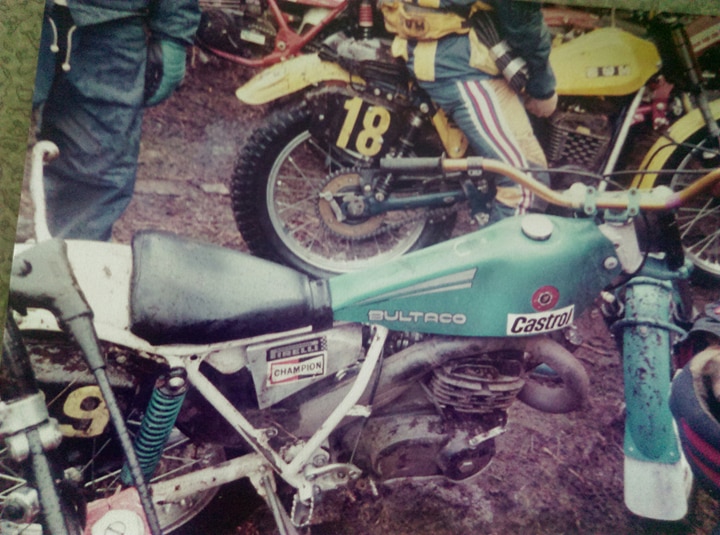
Yrjö Vesterinen: “The weight balance was out between the front and the back of the bike. Walter managed to take too much weight off the front end. This made the bike very difficult to ride in sections.
The bike went back to the Bultaco factory, it was effectively cannibalised for its parts, and I remember seeing bits of it on Manuel Soler’s bike after that. It is a pity I could not have saved it for posterity.
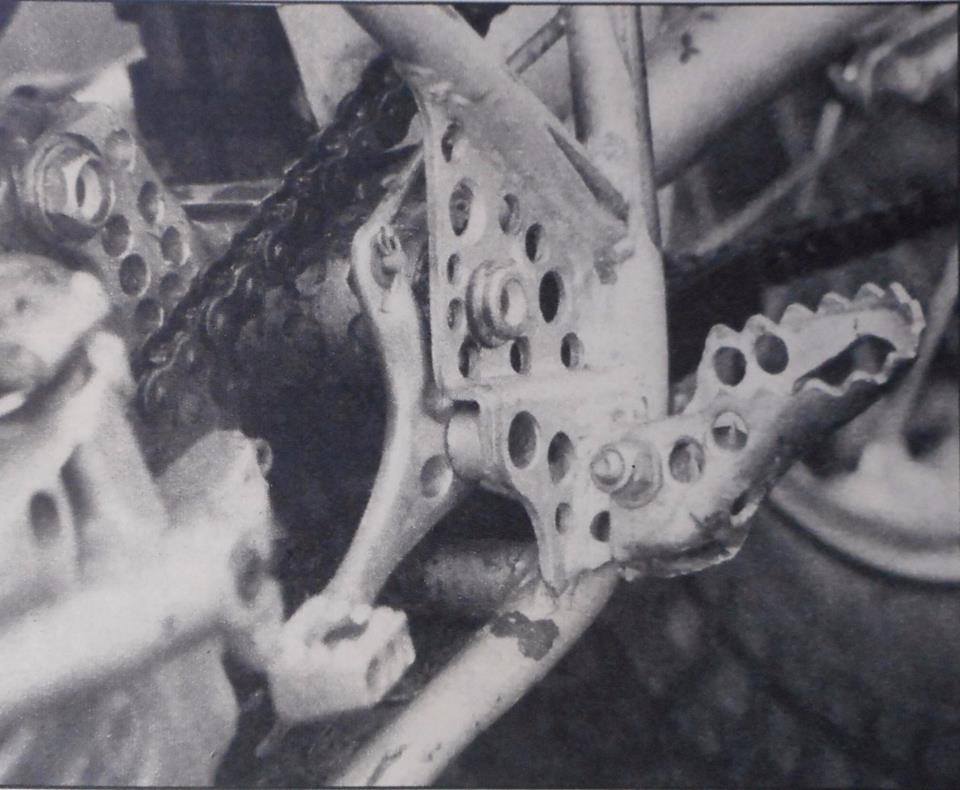
Why did I do this? When the new 159 model came out, I really liked them. However, I also noticed that it had become heavier than the 133 model prototypes that we rode previously. I was convinced that by making it lighter it would make it easier to handle. I managed to convince my team boss, Oriol Puig Bulto, to have a special machine built and lightened by Walther. Walther was of course famous for his ultra-light Puch machine that he had built for himself. He took the job on and started working on my machine in Vienna. The outcome was it weighed about 11 kg less than the standard works machine did at the time. This was a beautiful testament to Walter’s engineering skills. He had lightened pretty much every part and fabricated numerous parts from lighter materials. Initially I thought that this machine was a winner. However, the more I tested it, the more obvious it became that the weight distribution of this otherwise very special machine was not right. I struggled to keep the front wheel on the ground on steeper sections. I had to lean more forward to compensate which meant that I would lose the grip with the rear wheel.”

Back to standard, well almost:
Vesty: “With great frustration I had to revert back to the more standard machine. Oriol was not best pleased as this project had cost a small fortune. My results were badly affected by this machine that I could not ride very well. The ultimate outcome was that the standard machine was proven to be a winner and ultimately everybody was smiling again! I did initially take a few nice parts of the Luft Special, for my own bike before the others helped themselves for the rest.
After that I never saw it again. I felt extremely sorry for Walter Luft, a good friend of mine who had done a very big, as well as expensive, job to build this bike and I just could not ride it. It needed more testing, but the time did not allow that as I was right in the middle of the first half of the 1976 World Championship season.”
The Vesterinen Bultaco, modified by Walther, had a frame that was extensively drilled, along with the rear engine mount, cylinder head, cylinder barrel and other components.

Full circle:
1980 arrived and that marked ten years of riding in Scotland for Walther Luft as well as five years competing in World championship trials and he was still on the 199A Bultaco with his own modifications. He was now thirty-six years of age, so technically passed his prime, but still capable and keen. Later he used a much modified 199B Bultaco in trials.

According to Charly Dematheu’s Trialonline website, Walther Luft had amassed 94 world championship points and highest place was 18th.
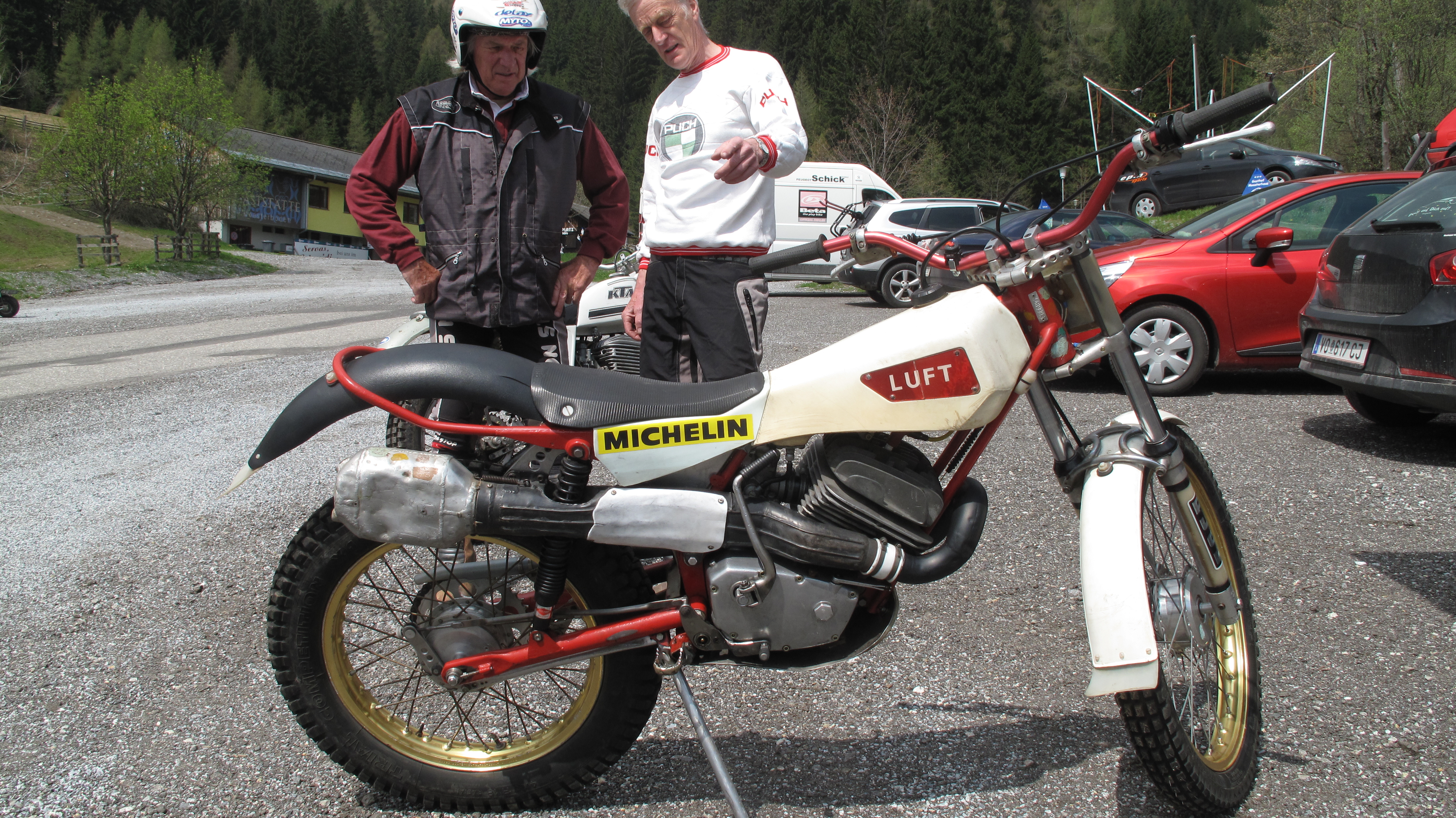
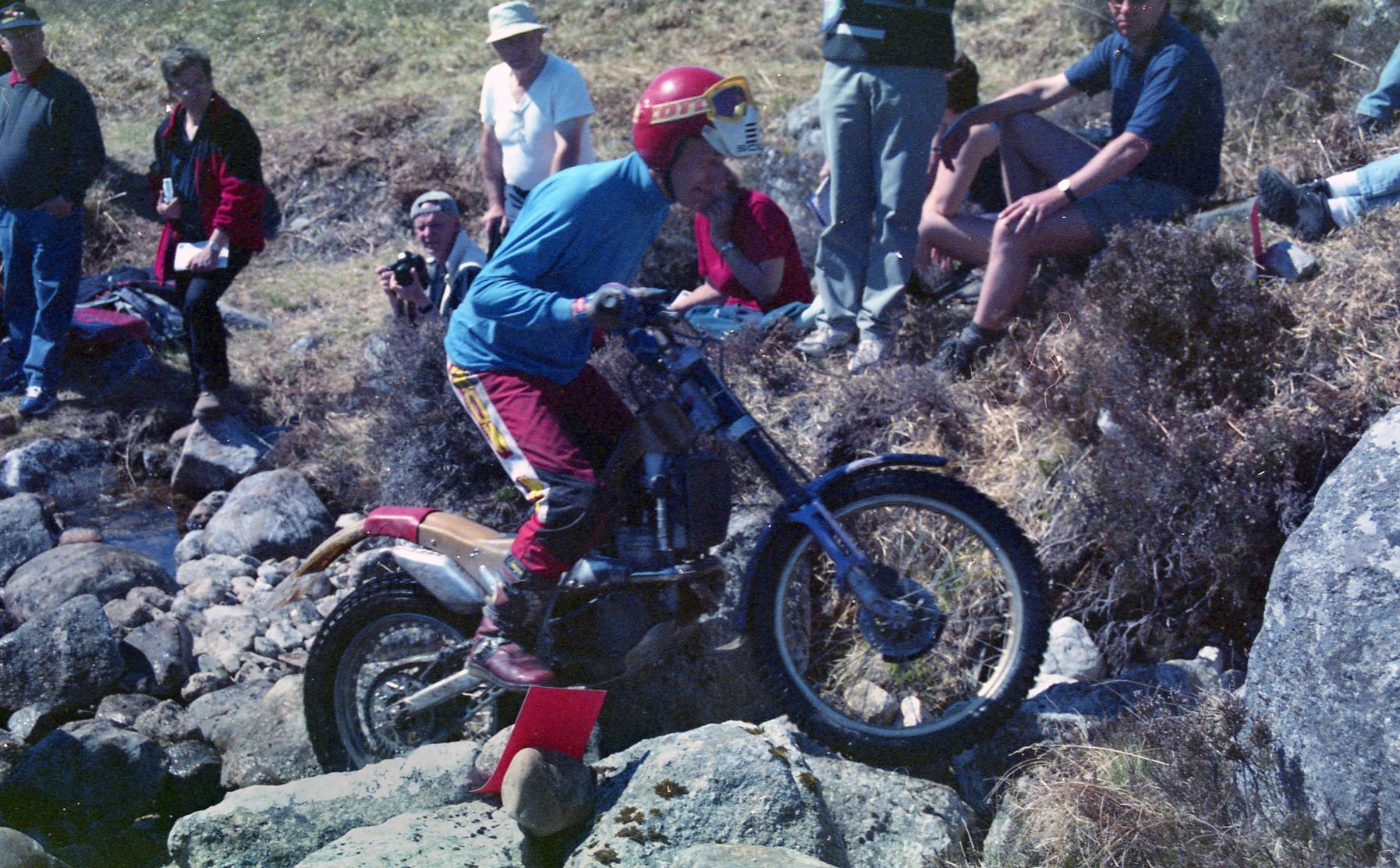
When Walther came to near the end of his competitive era, he switched back to his beloved Puch, riding it in the 1981 SSDT, until he switched to a Rotax powered Aprilia, again heavily modified in the mid 1990s.

The millenium Scottish Six Days, 30 years after Walther’s first ride in Scotland.

A little more information on Puch:
Johann Puch was born in 1862 to Slovenian parents in Ptuj in Lower Styria, Austria. Having been an agent for British Humber bicycles, he started making his own cycles, motorcycles and other automotive products in 1899 at Graz in Austria. He was classed as an industrialist, his company became part of the Steyr-Daimler-Puch conglomarate and made cycles, motorcycles, automobiles and eventually off-road vehicles for military and commercial uses. Up to 1914, Puch had produced 21 different cars, lorries and buses. The company was quite humanitarian in it’s outlook, providing accommodation for its workforce in the city of Graz near to the factory. Mentioned in this article, Hans Meditz was heavily involved in the Puch ‘Haflinger’ which started production in 1958 and the larger ‘Pinzgauer’ introduced in 1970, both off road vehicle projects, both 4×4 vehicles with many uses. Puch was reknown world-wide for its four wheel drive systems. Meditz appears to have started work with the company around 1963 until his retirement. Meditz was not only involved with producing vehicles, but also in the building of Puch workers houses. To make sure the Puch employees were involved with the contruction, lots were drawn to allocate the occupation of the first houses, a novel idea. It is important to remember that in 1975, when Luft went to KTM, Puch secured the World 250cc Motocross Championship with Belgian, Harry Everts.
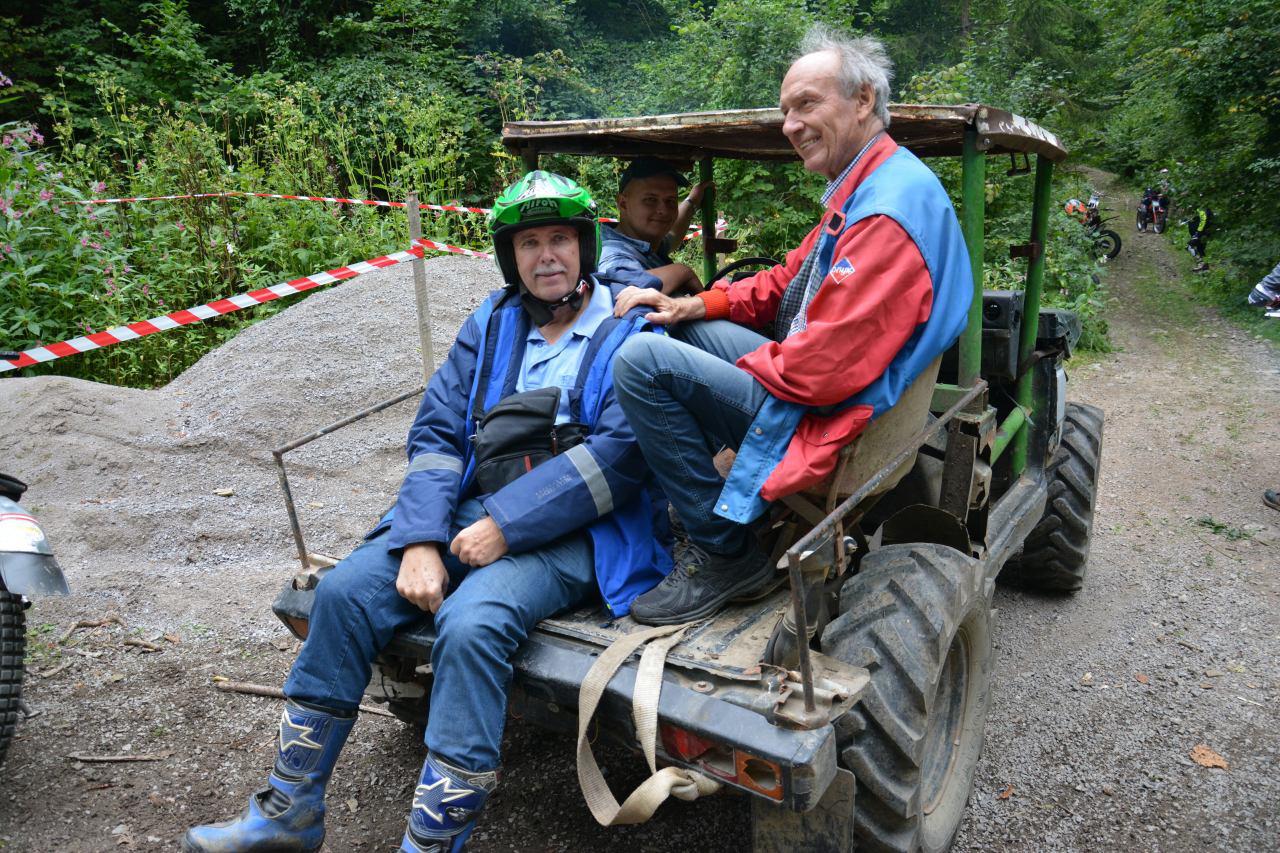
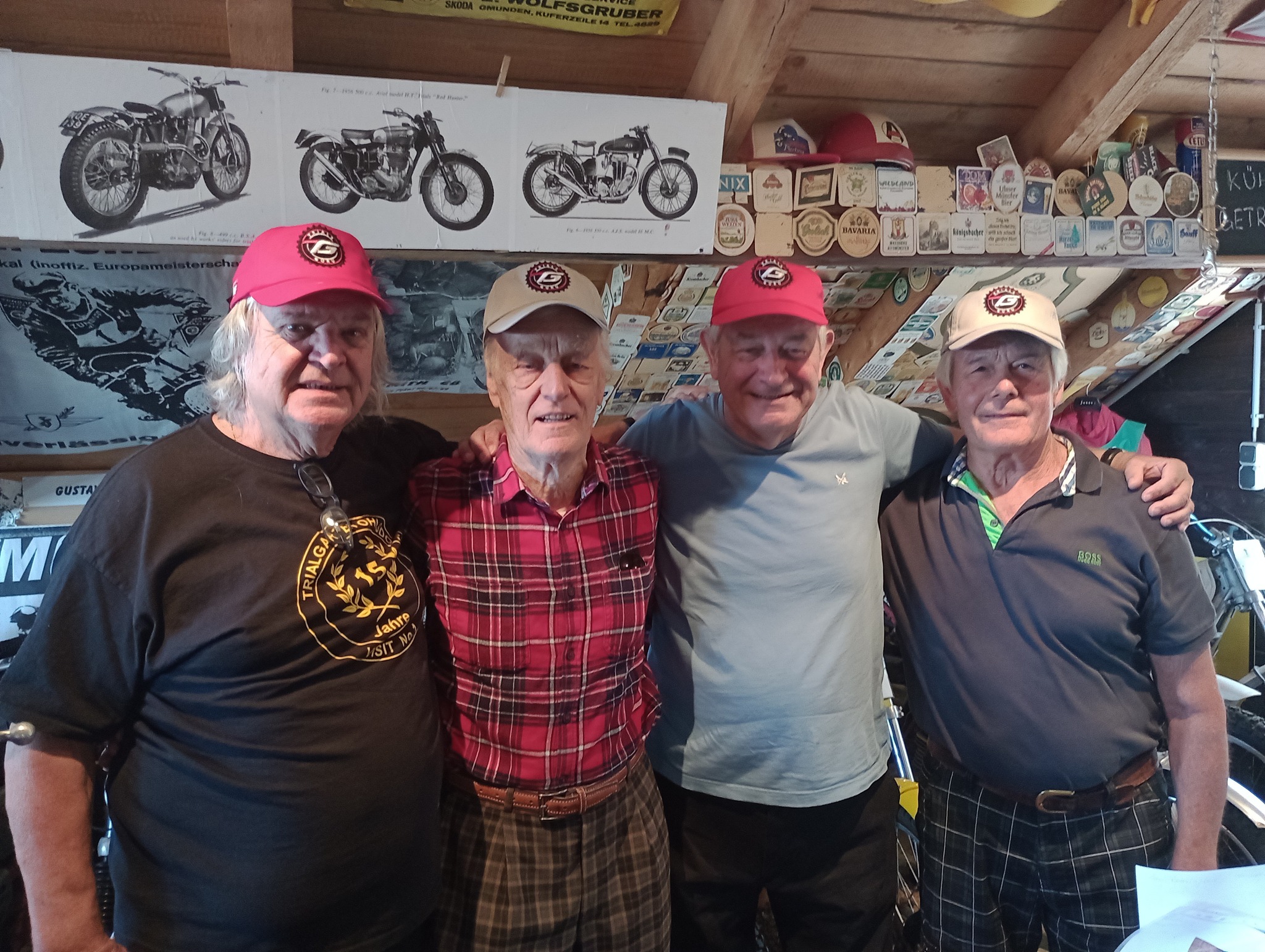
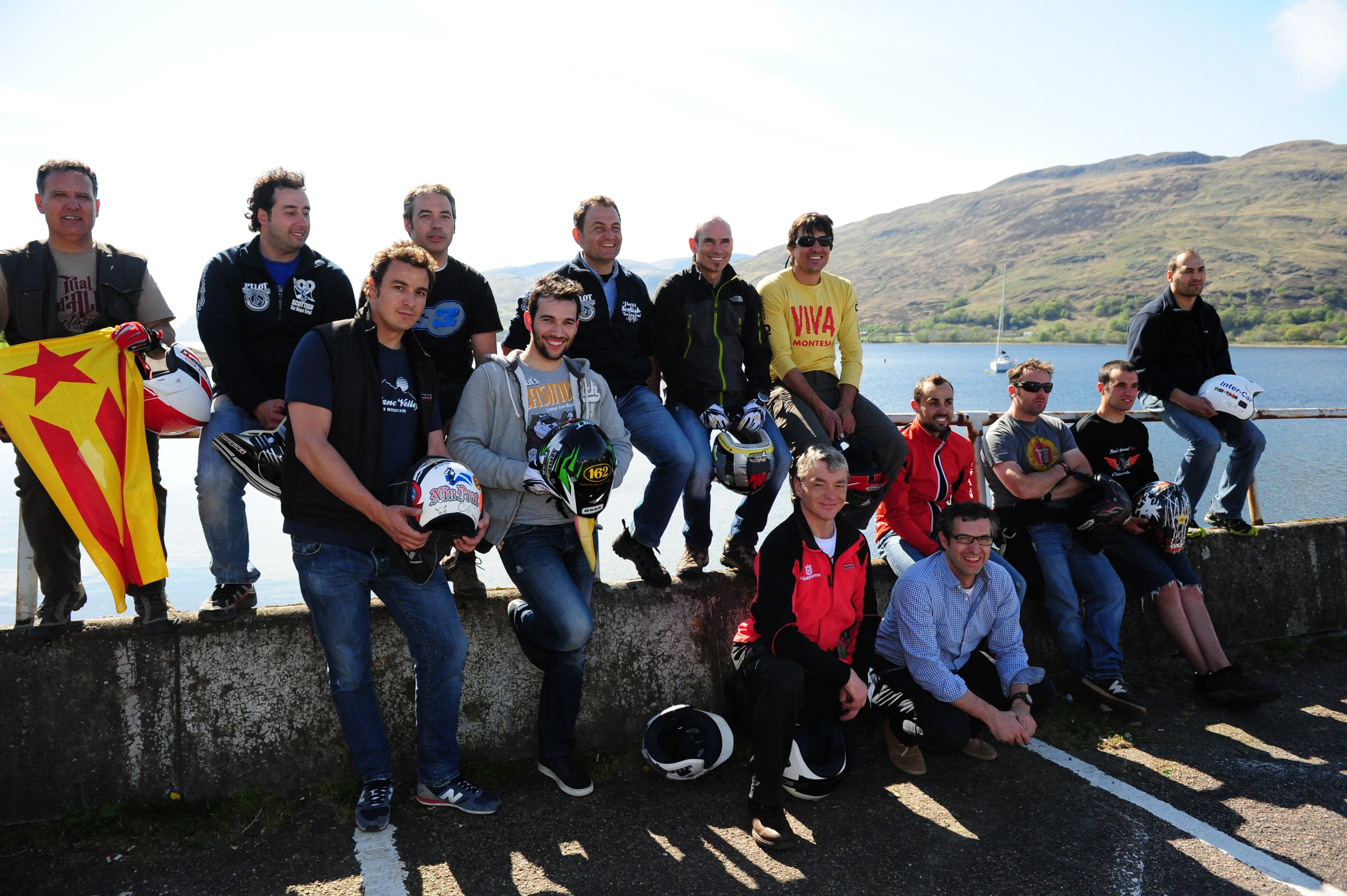
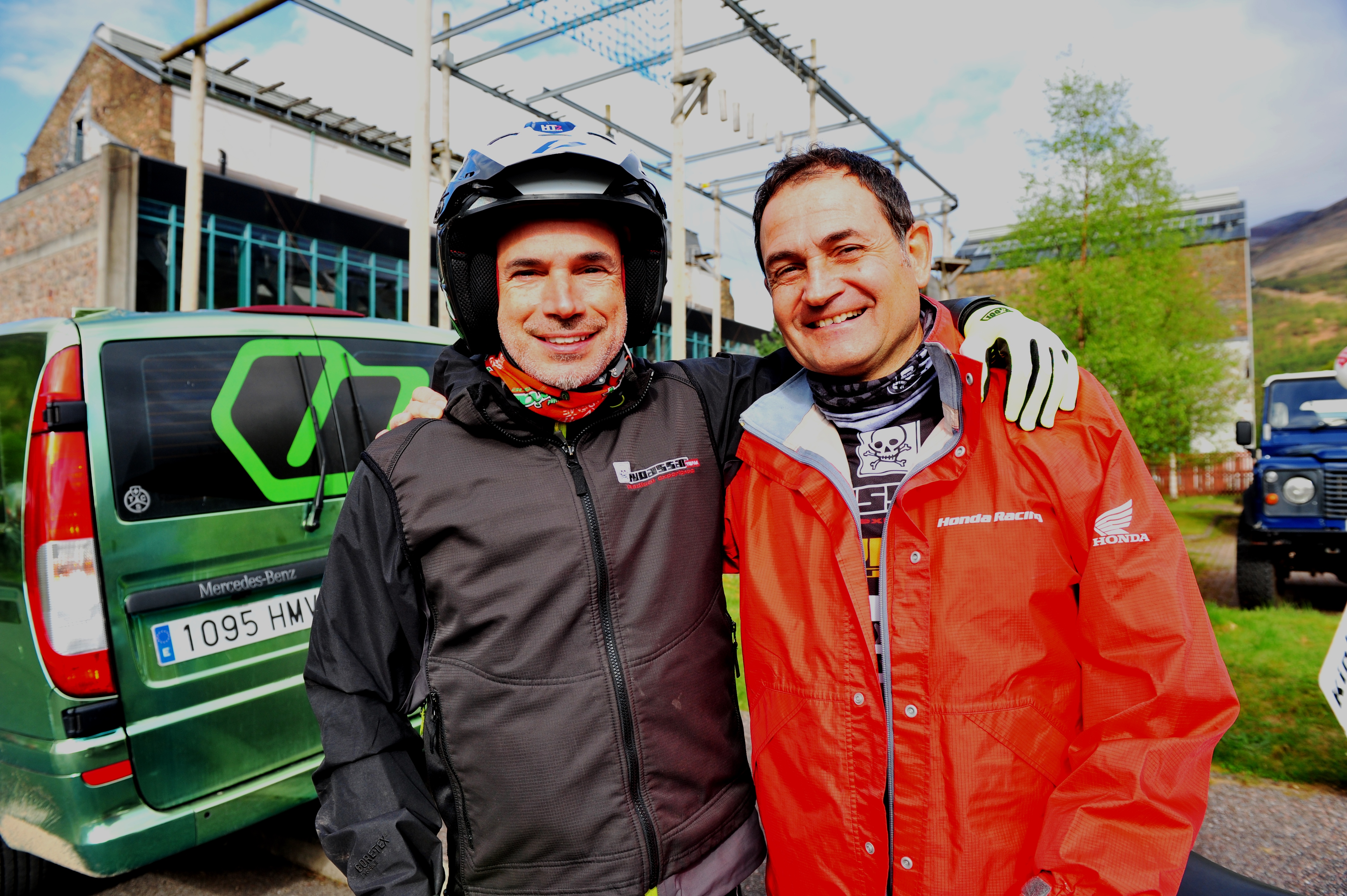
In August 2025, John Moffat from Trials Guru website visited the 1st European Trial Museum at Ohlsdorf, Upper Austria and met with the curator, Hartwig Kamarad to present Trials Guru ‘Trial Legend’ caps to both Walther Luft and Joe Wallmann. There are only 25 ‘Trial Legend’ caps worldwide.
Austria Trial Champions:
1969 – OSTG Trial Cup: 100cc – Joe Wallmann; 200cc – Walther Luft; Over 200cc – Walther Wolf.
1970 – OSTG Trial Cup: 100cc – Joe Wallmann; 200cc – Walther Luft; Over 200cc – Walther Wolf.
1971 – Osterreichisher Shell Trial Pokal: Walther Luft
1972 – Osterreichisher Shell Trial Pokal: Walther Luft
1973 – Osterreichisher Shell Trial Pokal: Walther Luft
1974 – OSK Pokal: 250cc – Franz Trummer; Over 250cc – Joe Wallmann
1975 – OSK Pokal: 250cc – Franz Trummer; Over 250cc – Joe Wallmann
1976 – Stattsmeister: Joe Wallmann; OSK Pokal: Franz Trummer
1977 – Stattsmeister: Joe Wallmann
1978 – Stattsmeister: Gottfried Engstler
1979 – Stattsmeister: Gottfried Engstler
1980 – Stattsmeister: Franz Trummer
1981 – Stattsmeister: Walther Luft
Bibliography/Research:
Article: ‘Mein Freunde Walther Luft‘ – Max Hengl.
Motorradsporterfolge (Motorcycle Racing Successes) – Steyr-Daimler Puch verlag 1973. [1]
Steyr-Daimler Puch AG, Graz, Austria
Trial Guide – Hartwig Kamarad – Trialmuseum Ohlsdorf.
Trialonline.org – Charly Demathieu
‘Six Days In May’ – Twenty-Five Years of The Scottish Six Days Trial : 1970-1994 – Jim McColm
Article copyright: John Moffat/Trials Guru 2023
Photographic Copyright: Individual photographers as captioned.

Apart from ‘Fair Dealing’ for the purpose of private study, research, criticism or review as permitted under the Copyright, Design and Patents Act, 1988, no part of this article may be copied, reproduced, stored in any form of retrieval system, electronic or otherwise or transmitted in any form or by any means, electronic, electrical, mechanical, optical, chemical, photocopying, recording or otherwise without the prior written permission of the author as stated above. This article is not being published for any monetary reward or monetisation, be that online or in print.



















 TRIALS GURU - DEDICATED TO TRIAL