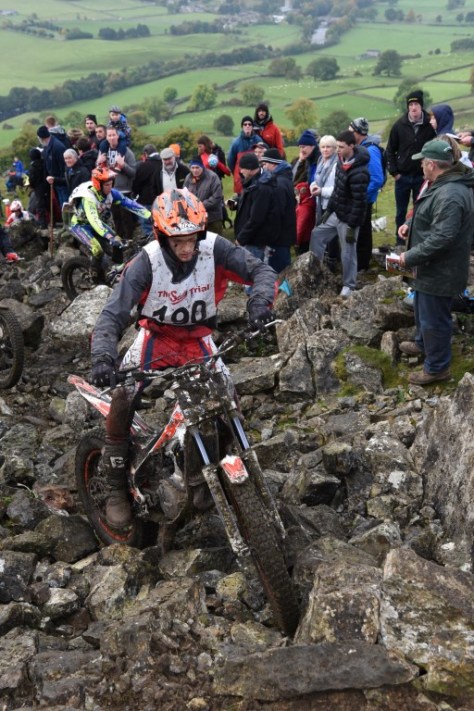
Richmond clubman, Nick Hunt on his ‘Barry Watson Tuned’ Yamaha TYZ250 – Photo: Lorenzo Burnet
Richmond forester, Nick Hunt rode the Richmond trial at Marske on Sunday, 30th October, 2016 on a Barry Watson Racing prepared TYZ Yamaha instead of his usual Montesa 4RT.
The 1999 machine has been ‘resting’ in Jack Watson’s garage since 2006 after being prepared for the 2006 Scott Trial.
Gary Watson, Barry’s youngest son, wisely decided his knees would not stand another hammering so did not ride. Nick fired the Yam up and opted to give it a whirl at Marske on Sunday.
But for stalling the engine in the seventh section on the last lap he would have been top three or four in the Over 40’s class.
Team Watson are seeking another TYZ despite the fact that the current model will just not wear out.
Coverdale farmer Steve Lambert is an authority on TYZ cow bikes which are a sought-after commodity in the Scott Trial localities. Steve takes it to the extreme though has he has and eras the original Team Yamaha riding clothing.
Steve Lambert on his Yamaha TYZ – Photo: Lorenzo Burnet
James Dabill (Vertigo) – Photo: John Hulme/Trial Magazine 2016
The annual ‘Scott Trial’ took place on Saturday 22nd October with almost a full start grid, save for those who had to withdraw at the last minute, in Swaledale, North Yorkshire.
The eventual winner was James Dabill from Leeds on his factory 300 Vertigo. This is now his third Scott victory, having won previously in 2010 and 2014 on Gas Gas and Beta machinery.
Scarborough’s Michael Brown (JST Gas Gas 300) was second place overall – Photo: John Hulme/Trial Magazine UK – 2016
The event was organised by Richmond Motor Club, in fact this was their twenty-fifth anniversary of running the Scott on behalf of the Yorkshire Centre ACU. The clerk of course, Paul Robinson appeared satisfied with the event which takes a large team of volunteers to make it all happen, with seventy-six observed sections requiring not only observers but ‘checkers’ as well to ensure that riders are captured at sections efficiently, given that on occassions there is more than one rider in a section at some stage!
Guy Kendrew brought his Beta home in third position overall – Photo: John Hulme/Trial Magazine UK – 2016
The event raises a healthy sum each year which is presented to local ‘Scott Charities’ from programme sales and the charity auction which preceeds the presentation of awards. It is believed the charity auction alone raised in excess of £2,600 on the night.
50 years of Scott wins separate these two riders! Alan Lampkin (BSA) on the left won in 1966, James Dabill (Vertigo) winner 2016 – Photo: John Hulme/Trial Magazine UK – 2016
Winner Dabill appeared both calm and confident at the start field when interviewed, all but briefly, by Trials Guru’s John Moffat who acted as the official start and finish commentator this year.
Scottish rider from Temple, Gorebridge, Mike McNiven (Beta) on Orgate – Photo copyright: Lorenzo Burnet
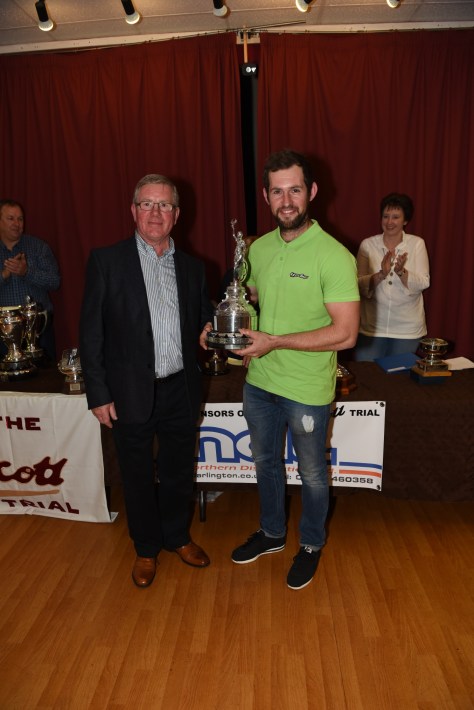
The Guest of Honour at the awards presentation was the 1966 Scott Trial winner, Alan R.C. Lampkin who handed over the trophy he won fifty years ago to Dabill. Lampkin was a popular presenter with those at the ceremony and is a true enthusiast of the sport.
Women’s Trial World Champion, Emma Bristow (Sherco) came home in 25th place and a Silver Scott spoon, the first female rider to achieve a Scott spoon in the 102 year history of the event – Photo: John Hulme/Trial Magazine UK – 2016
First man home was local Skeeby rider, Jonathan Richardson on his 300 Sherco who set fastest time, a feat he achieved in 2015 on a Beta and was eventual winner in 2011 on a Sherco.
Jonathan Richardson (MRS Sherco 300) on Bridge End was fastest rider, setting standard time at 5 hours and 29 seconds – Photo: Jaxx Lawson
Richardson: “I didn’t have a good day, my observation wasn’t good, I don’t think I’m in with a shout today” he told Moffat at the end of a gruelling seventy plus miles of moor crossings. He had lost seventy-eight marks on observation to Dabill’s thirty-two, so ended up in sixth position overall picking up the Kart House trophy and a coveted Gold Scott Spoon for his efforts. His standard time was 5 hours and 29 seconds.
Previous winner four times, Dougie Lampkin (Vertigo) was out of luck after suffering a problem on the course, seen here at Orgate – Photo copyright: Lorenzo Burnet
The last man home as an official finisher was rider number 65, David Carter who made it in with just one second to spare at 7 hours, 30 minutes and 28 seconds to take the ‘R. Woodward Wilson’ trophy!
When second place man, Michael Brown arrived, apart from being mud-spattered, he looked fairly fresh, but like all of the top ten riders he felt that he could have done better on observation. Many riders having suffered multiple punctures during the day.
Guy Kendrew looked fresh at the finish and reckoned he had a good day at the office, which netted him third position and the ‘White Bear’ trophy for best Northallerton Club member, the Raspin Challenge Bowl for his third place and of course a Gold Scott spoon.
John Moffat interviews Scott Trial 2016 winner, James Dabill at the finish – Photo: John Hulme/Trial Magazine UK – 2016
Scott 2016 Results: Courtesy of Richmond Motor Club (Yorks) Ltd – Scott Trial Committee, subject to official confirmation
The 2016 Scott Trial Charity Team (203) who rode to raise funds for Pancreatic Cancer sufferers. From the left: Barry Roads; Kevin Hart; Ray Haslam; Roger Johns and Paul Anstey – Photo courtesy: Mrs. Theresa Roads.
…
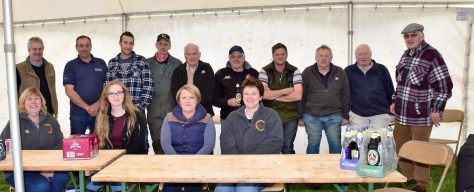
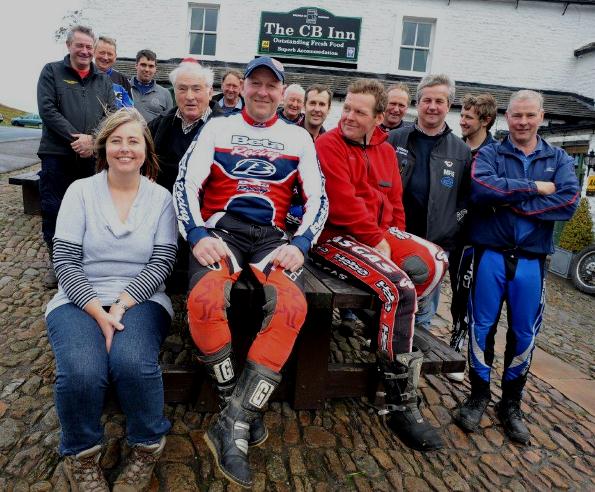
Some of the hard working members of the Scott Committee, club members and other helpers/enthusiasts that make the Scott Trial happen, year in year out – Top Row from left: AG Brown; Ken Wallis; Wayne Anderson; Nigel Cummins; Eric Kitchen; Barry Watson; Greg Porter; Stuart Lowther; Jack Knoops; Barry Robinson. Front row from left: Chris Walls; Charlotte Brown; Diane Horner & Ros Brown – Photo courtesy of Mr. Barry Robinson, Ilkely (Timer image)
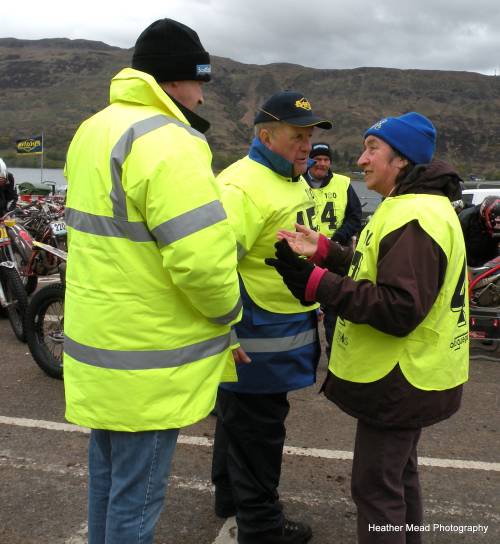
Penny Ludgate (right) chatting at the SSDT to officials Fergus Gray (left) and George Ferguson (centre) – Photo: Heather Mead Photography, Dingwall
West Leeds Motor Club long term secretary and stalwart, Mrs. Penny Ludgate died suddenly on Sunday, 23rd October. She was on route to spectate at the Scott Trial on 22nd October and was taken ill suddenly. The cause is unknown at this time. Sincere condolences go out to the Ludgate family, in particular her sons Sam and Ben. Penny was widowed a few years ago when her husband Chris passed away and was Yorkshire Centre ACU past President and a regular observer at the Scottish Six Days Trial for over 25 years plus undertook many ACU stewarding duties at British Championships and National trials. This is a huge loss to the world of motorcycle trials.
Trials Guru’s John Moffat said: “Penny Ludgate was a true motorcycle sport enthusiast whose knowledge of the sport seemed endless. I first got to know her when I was SSDT Secretary in 2002 and we hit it off right from the word go. I had enormous respect for Penny and always enjoyed meeting her at events. I never interrupted Penny when she was talking, as I knew this was a person one could learn much from. The sport will be certainly poorer with her passing”.
Penny’s funeral will be Monday 14th November, 2016 at the Pontefract Crematorium at 10.20 am, leaving her home in Upton at 09.50am. Details of the wake to be confirmed. Donations to the ACU Benevolent Fund and the Injured Jockeys Fund.
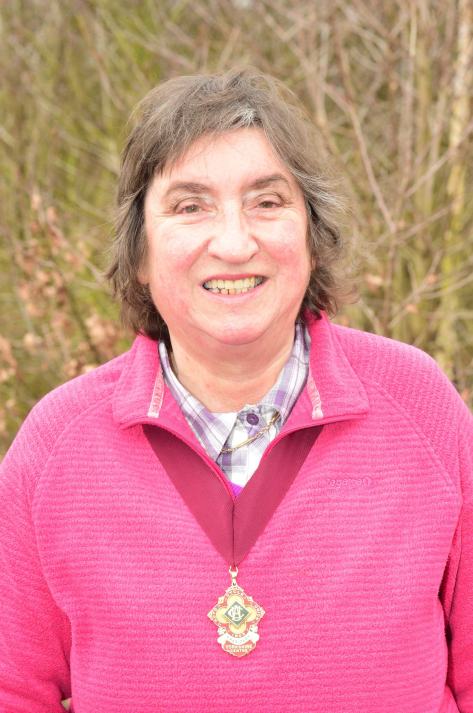
Penny Ludgate held office as President of the Yorkshire Centre ACU until 2015 – Photo: Barry Robinson
2015 -Alexz Wigg (JST Gas Gas 300) – Photo: John Hulme/Trial Magazine UK
The Scott Trial 2016 plans are well advanced by the Scott Trial committee and Clerk of Course, Paul Robinson and his team of course markers. This year marks the twenty five years since the Richmond Motor Club took over the organisation of the famous event on behalf of the Yorkshire Centre ACU, except for 2001 when the UK ‘Foot & Mouth’ outbreak stopped all motorcycle activity nationwide.
An early start, the event is on Saturday, 22nd October near to Marske, Richmond at Feldom Lane – Sat/Nav postcode: DL11 7LS.
The Scott Trial 2016 Official Souvenir Programme, priced at £5.00 is packed with information and features and is a ‘must have’ for the event on 22nd October.
Official programmes went on sale, pre-trial on Monday 9th October by post and through the local retail outlets and reports indicate that they are selling fast – but don’t worry – there will be plentiful supplies available on Saturday at the start car park. This has been undertaken by the friendly Programme team, led by Mrs Vera Watson and Barbara Walker, who will happily collect your £5 in exchange for a copy. Remember all programme sales generated go to the local Scott Charities! The official souvenir programme is 92 pages packed with information and articles for the event. There are important notices included, so please be sure to read them before you set out on your spectating day.
If you don’t know where to watch… get the programme! Scott Trial stalwart and former clerk of course, Bruce Storr has again compiled his annual suggested daily plans of which there are four choices, for your maximum spectating benefit on page 80. The rider’s list is now situated right at the back for easy reference on pages 84-87 with the route planner on page 81 and the key to section map on pages 82-83.
The first rider and first timer, James Edwards from Hatfield will set off the start ramp on his Fantic twin-shock, enthusiastically flagged away by Richmondshire District Council leader, John Blackie at 09.00.00 with following riders leaving at twenty second intervals or three riders per minute if you prefer. James Fry will be last away at 10.06.20 and the first rider will appear back at the finish field around the 3.00pm. The finish time is an estimate of course as it all depends on a variety of factors, the weather being just one of them.
It’s not all over until…. the Charity Auction takes place at the Richmondshire Cricket Club and of course the presentation of awards which this year sees Alan Lampkin hand over the prizes, as the guest of the event who just happened to win the Scott Trial a mere fifty years ago.
No-one knows who has won The Scott until the announcer states who the recipient of the Alfred A. Scott trophy is at around 10.30 pm on Saturday night. Free admission, all welcome!
The late Len Hutty from Frimley Green on his 410 Matchless seen here on ‘Mamore’ (2005 Pre’65 Scottish) – Photo: Iain Lawrie, Kinlochleven, Scotland
SSTC are running the second annual Len Hutty Memorial Group Charity Trial, on Sunday 6th November at Hungry Hill, Aldershot in aid of the Phyllis Tuckwell Hospice.
The trial will also be Round 4 of the Degrees of Comfort Air Conditioning Specialists Club Championship.
The trial is open to members of all ACU clubs in the Star Group/TVTC/AMCA Clubs South Coast Group.
Due to the expected high level of entries (last year in excess of 230 riders took part) please pre-enter to make it easier on the day. Regulations are available to download on the Events Page of the website. Completed entries can be given to Mandy Frearson at any of our trials prior to the event.
The trial commences at 10 am and on site catering facilities will be provided by ‘Naughty But Nice’ Catering.
Last year an amazing £2,621 was raised for the charity. Please support the Club and enjoy a fantastic trial and let’s try to raise an even greater sum this year for the charity.
Popular local restaurant, Alessandro’s Hideaway in Richmond are offering 10% discount to Scott Trial enthusiasts in their advertisement in the 2016 official souvenir programme.
Patrons are advised to book early to avoid disappointment, mention the 10% offer seen in your programme and support a local business who supports the trial.
The official caterer during the event is The Roast Inn who will have mobile units stationed at stratigic areas during the day, locations are shown in the official programme which is on sale at £5.00 at the usual local outlets or by mail order by e-mail to scotttrial100@gmail.com
The online entries are now open for the 2017 Scottish Six Days Trial – Monday 1st to Saturday 6th May.
The organisers request that the entry notes republished below must be read before completing the online entry form for the annual “Sporting Holiday in the Highlands”.
The riders are allowed to nominate one riding companion ‘Riding Buddy’ whereas in previous years the Edinburgh club allowed up to three riders to compete in consecutive order. Entries close on Wednesday, December 7th, 2016 and applications must be complete in every detail. The expected entry fee is £460.00 for the 2017 event, which is centred in and around Fort William and Lochaber and nets a cool £1.6 million to the local economy during the week of the trial.
Back at the helm for the 2017 trial is Clerk of Course, Jeff Horne and Event Secretary, Mieke De Vos, the trial is expected to be once again over-subscribed.
As a guide/information only, the online notes read as follows (taken as at 12/10/2016, the date entries opened), but please refer to the event official website mentioned above, as items may be varied from time to time by the trial organisers, prior to the event:
Note 1 – ENTRY FEES:
The entry fee for the 2017 SSDT has been set at £460. This includes your entry, your fuel for the week and your lunch for the week. Edinburgh & District Motor Club retain the right to apply a surcharge to this entry fee if the cost of fuel rises significantly before May 2017. Do NOT send your entry fee when you submit your online application.
Note 2 – LICENCE:
All entrants must be in possession of a valid licence. This must be one of:
A current SACU licence (Scottish riders); An ACU registration card (English and Welsh riders); An MCUI licence (Northern Irish riders); A full international licence (all other riders).
Note 3 – RIDING COMPANIONS:
You can elect to ride alongside one other rider. You can list only one name on the entry form. In order to be sure of riding together your nominated companion must also name you on their entry form. You will get a chance to change this once the ballot has been drawn in the event of your selected companion not being successful in the ballot.
Note 4 – ROAD TRAFFIC ACT INSURANCE:
All riders must ensure that their own insurance covers them for use of the machine in competition on the road for the duration of the trial – this is not provided as part of your SACU/ACU membership.
The Club will provide third-party RTA insurance for the duration of the trial and details of this will be sent out with your entry pack. If you opt for your own insurance cover rather than that provided by the club, it is a condition of the acceptance of your entry that you provide the name of your insurer and your policy reference where indicated on the entry form and it is your responsibility to ensure that your insurer covers this type of event.
Please note that most insurers have an exclusion clause if your machine is being used in competition or trials.
Note 5 – REPATRIATION INSURANCE:
Riders affiliated to the SACU/ACU have Personal Accident Insurance provided under their membership and riders with a full international license have Repatriation Insurance included as part of their license.
MCUI riders are required to obtain a Release Form from their FMN or alternatively provide evidence of FIM insurance cover, which must be sent to the Secretary before the trial. If you do not provide evidence of the necessary insurance then an additional charge may be made when you register your entry on Sunday 1st May.
Note 6 – FUEL:
The fuel supplied to you during the event will be the type of fuel selected in the Bike Details section of the Entry Form. Should your fuel requirements change between the completion of entry submission and the trial itself, you must inform the Secretary immediately.
The online entry form should only be completed after reading the notes and any subsequent amendments thereto as they appear on the event website.
Ace photographer, Eric Kitchen (left of centre) and some of the Scott committee and helpers at the 2011 event – Photo copyright: Barry Robinson, Ilkley
The Scott Trial pace quickens as we draw nearer to the annual event on 22nd October.
Diane Horner, Scott Secretary spoke with Trials Guru today, October 11th – (S Day -11)
“At present we still have a large waiting list. As you can see we have a charity team riding for Pancreatic Cancer Sufferers, and I’m delighted to say that also have managed to get a late ride for Sam Sharp whose ride this year will be very emotional as it is in memory of his father Simon, a regular Scott finisher, who died last year. Sam himself finished the course for the first time last year.
You will see that we have Miquel Gelabert and Benoit Bincaz from the World stage for the first time and our friend from last year Christian Naranjo Ruano from the Canary Islands returns and is joined by his brother Jonathan. Apparently he has done nothing but enthuse about the Scott since last year“.
Diane added: “We also have a good contingent from Ireland.
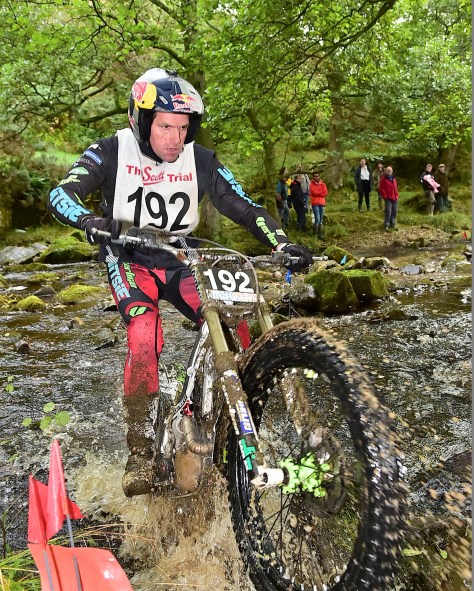
To add to the excitement, Red Bull are in attendance at the event this year and will be filming the Scott for Red Bull TV.
All in all its looking like it’s going to be a fantastic year, so fingers crossed for some good weather!
The work everyone does to promote the Scott is highly appreciated and without which the success of the Scott couldn’t be taken for granted.
I look forward to seeing you at the start field on Saturday 22nd October”.
The Scott Trial 2016 Official Souvenir Programme is packed with information and features and is a ‘must have’ for the event on 22nd October.
The 2016 Scott Trial Official Souvenir Programme, which this year, is again a full colour edition is on sale now at the local outlets in and around Richmond.
Supplies are now with the usual outlets which include:
AG Bikes, Low Row – CB Inn, Arkengarthdale – Richmond Petrol Stations – Cross Lanes Store, Richmond – Smith and Allan, Darlington – Piercebridge Farm Shop, and the usual Reeth outlets for £5. Profits made, as usual, will go to The Scott Charities.
The programme which is as traditional as the trial itself, amounts to 92 pages, in full colour and packed with all the information you will need to spectate at the annual classic on 22nd October.
You can also order a copy by post, by emailing your request to: scotttrial100@gmail.com (cost: £6.50 including the postage). Please make the subject line: ‘Scott Trial Programme Order’, payment details will be made available to you by return e-mail.
Toshi Nishiyama (Japan – BSA B40) Pre’65 Scottish 1999, watched by Mick Wilkinson on far left and Robert Woodfield on right centre – Photo: Iain Lawrie, Kinlochleven
Entry forms and regulations are now available for the 2017 Pre’65 Scottish Trial on Friday 28th and Saturday 29th April.
The event has been running since 1984 and is limited to 180 competitors. It is expected to be over-subscribed which necessitates a entry ballot which is drawn just before Christmas.
The 2017 event is sponsored by Hope Technology of barnoldswick in Yorkshire and is in memory of part founder, Simon Sharpe who died this year and was a regular competitor in the event.
‘Team Sharpe’ son and father: Sam & the late Simon Sharpe at the 2016 – Photo courtesy: John Hulme, Classic Trial Magazine UK
Here are the entryform and regulations for the 2017 Pre’65 Scottish:













 TRIALS GURU - DEDICATED TO TRIAL