Tag Archives: AJS

Bob Paterson – Scotland’s Mr. Honda

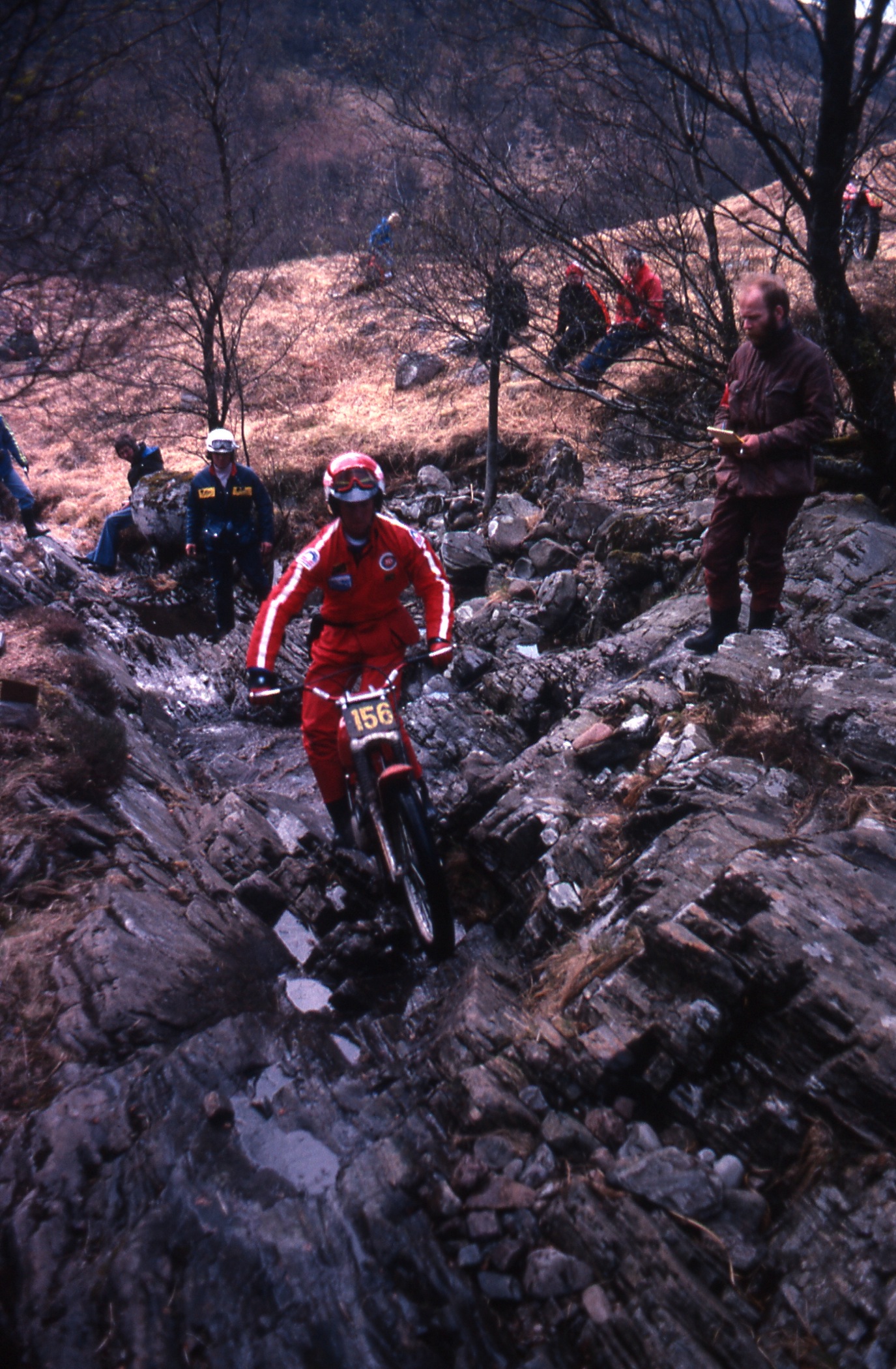
Recently, we created a Trials Guru ‘section’ on Colin Bullock who has been taking trials photos for many years and we were proud to feature some of his most excellent images. It was when we were studying one of Colin’s photos from the 1985 Scottish Six Days of Steve Saunders on his Honda Britain supported RTL250 Honda. In the photo was a man well-known to Trials Guru’s John Moffat, that man was Bob Paterson, former Scotland and Northern Ireland Sales Executive with Honda motorcycles and power equipment.

1952 Scott Trial - Ray Biddle
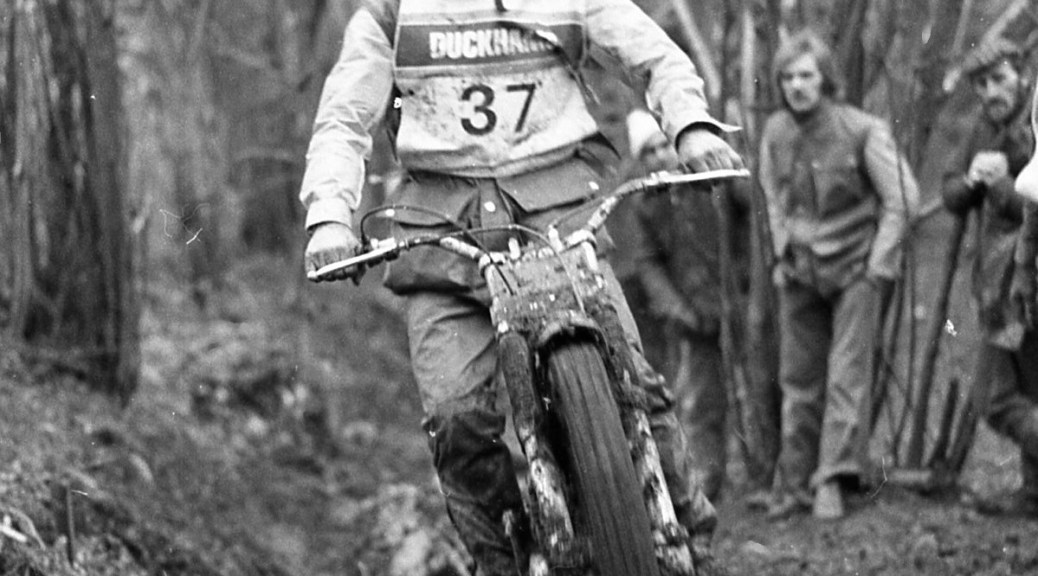
Bob Paterson in the 1952 Scott Trial on his 350 Matchless – Photo: Ray Biddle, Birmingham

Bob Paterson, known as ‘Big Bob’ to the Scottish trials community of the period was a keen trials rider of the old school. He was a stalwart of the Lanarkshire Motor Cycle & Car Club which is based in west-central Scotland and had a history as being a scrambles and trials club which could trace it’s roots back to the 1930s. In the early days it was a joint club, for motorcycles and light cars.

The Lanarkshire MCC was the first Scottish motorcycle club to organise ‘scrambles’ events.

watsons1
Watsons of Airdrie service department in 1956. Bob Paterson is second from the left in the front row, Director, Bill Watson is fifth from left. Photo courtesy of Carrick Watson

Back in 1998, John Moffat was writing some articles on Scottish motorcycle personalities for a magazine and visited quite a few former riders to get their story. These riders included Ian Bell, John Davies, Jackie Williamson and Bob Paterson. They were all people that knew John well, through his father T. Arnott Moffat, secretary of the Scottish ACU.

1950 Scottish Experts - Bathgate
Bob Paterson on his 350 Matchless in the 1950 Scottish Experts Trial, the section is at Westfield near Bathgate, West Lothian – Photo Courtesy Paterson family

Bob Paterson had by this time unfortunately passed away, but Moffat went to visit his widow, May Paterson at her home at Luggiebank, near Cumbernauld. Moffat had also by this time started collecting material for his first book which was to be called Scotland’s Rich Mixture, Memories of Motorcycle Sport 1945-1975. May Paterson has since passed away.

Lochaber Spring Trial
Lochaber MCC Spring Trial – Grey Mares Ridge with Bob Paterson getting a helping hand with his 350 Matchless, Ian Pollock on the left and Laurie McLean on the right. – Photo: Courtesy of Paterson family

Bob Paterson was brought up in Glenmavis, a village in North Lanarkshire two miles north-west of the town of Airdrie. He took up employment at Watson Brothers in Airdrie and was a faithful employee for thirty-eight years before moving to Honda of which Watson’s had a dealership in their Cumbernauld branch.

It is believed that Bob became frustrated with Watsons when a promise of a directorship in the family run business failed to materialise. Paterson resigned, moved on and became the Scotland and Northern Ireland Sales executive for the Japanese car and motorcycle giant. Bob was a well-known face amongst the motorcycle trade, he was a valued sales-person with years of experience gained in a busy motorcycle then a large Vauxhall-Opel multi branch dealership.
lanarkshire-mcc-scramble-in-1946-800x570
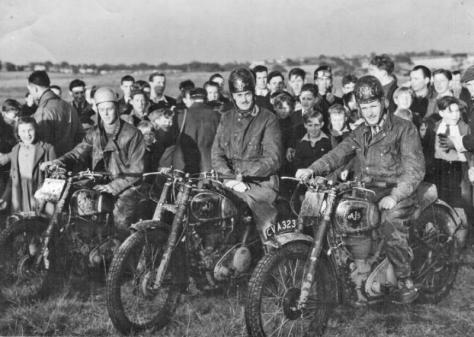
1946 Lanarkshire MCC Scramble. The middle rider is Bill Smith (AJS) formerly a Levis supported rider and later became a director of Associated Motor Cycles, the manufacturers of Matchless and AJS and on the right is Bill Watson of Watson Bros, Airdrie on a Lanarkshire registered AJS – Photo: Carrick Watson

Bob and May had a daughter, Shona and son Robert Junior, but they also adopted May’s younger brother, Kenneth who had been orphaned when May’s parents died suddenly. A very difficult decision to make for a couple, but ‘Big Bob’ and May just took it in their stride.

Paterson rode in both scrambles and trials, he had a particular liking for ‘colonial’ type trials which would form the basis of time-trials and latterly enduros. His favourite was the Edinburgh St. George Colonial Trial at Gifford, East Lothian. He rode several Scottish Six Days trials and rode in the 1952 Scott Trial on his 350 Matchless (HSG211).

ssdt 1970 Luft Puch B
Prior to the start of the 1970 SSDT at Edinburgh’s Gorgie Market, we see Bob Paterson quietly smoking a ‘cigarillo’ and closely examining the finer points of Austrian Walther Luft’s 169cc Puch – Photo Hans Maiditz.

Paterson was a great supporter of the Scottish Six Days, he had ridden the event, his first being 1950 course marked it in the 1960s and was an SACU steward in the 1970s. He sat on the International stewards jury when the event was at it’s pinnacle and was over-subscribed and all the factory riders had it written into their contracts that they rode the Highland classic.

Bob for many years assisted in the course marking from Stirlingshire up over Fersit to Fort William, a run he thoroughly enjoyed either on his own Matchless G3C or a machine supplied by the Edinburgh & District club.

Gorgie 1970 - HM
SSDT 1970 – Group photo at the ‘weigh-in’ From Left: Walther Luft; Peter Bous (crouched down), Tommy Ritchie; John Graham; Trevor Hay; Bob Paterson; Jackie Williamson; Unknown; John Moffat; Unknown; T.Arnott Moffat – Photo: Hans Maiditz, Graz

Paterson enjoyed setting the course for the Lanarkshire MCC’s annual Valente Trial held at Kilsyth, he used his Matchless to set the moor and road work for the event which had a lap of approximately 15 miles.

Bob was elected President of the Scottish Auto Cycle Union upon the retiral of the haulage firm owner from Markinch, Fife the late Jim Birrell, Bob held the post until 1983.

Jim Birrell - 1951 Highland 2 Day Trial
The late JIM BIRRELL from Markinch, Fife on his 197cc James Commando in the 1951 Highland Two-Day Trial at Inverness. Birrell and Paterson were not only past Presidents of the SACU but great friends also. Photo courtesy of the Birrell family

He was asked by the SSDT Secretary, Jim McColm in 1983 to write an article for the official programme when he was president of the Scottish ACU, in it he wrote a fascinating account:

I feel priviledged to be asked to write this article for this years’ Scottish Six Days programme and probably like many contributors before, find it difficult to begin. As a layman at this kind of task, I feel hopelessly inadequate to try and put into words the feeling one gets in attending the SSDT. Be that as it may, there is no doubt if one rides or even attends the Scottish, forever after come hell or high water, the first week of May will be reserved for the Sporting Holiday in the Highlands or as the late Allan Jefferies once described it ‘A religion or an incurable disease.

It was 1950 before I had the good fortune to enter the SSDT and as over the previous few years I had listened awestruck to older hands talking and reminisce regarding this great event, the big day rushed nearer with all the attendant forms, what with signing up for oil and petrol etc and then obtaining my international licence. I was beginning to feel taller than my then 6′ 1 1/2 ” frame. Finally being allocated riding number 53 only one place behind the great man himself, High Viney at 52.

This was to prove a great benefit, for B.H.M.V actually came over and spoke to me at the weigh-in and from then on throughout the week I felt quite at home. The fact that I was to lose 100’s of points to his tens or was it single figures? Didn’t matter.

When the great man took the time to advise and follow him, like getting up onto the pegs and into top and blasting over the Mamore Road it made it feel like a main road compared to my 1st and 2nd gear slitherings, prior to his advice.

Sometimes the lessons learned from the big boys were well driven home certainly I never forgot one occasion when after leaving Altnafeadh and heading down the main road for about 46 miles to Camushurich on South Tayside past Killin, I found myself at the front of a long line of the big names and feeling quite proud to be heading a procession of about a dozen machines in close company, that was until I spluttered to a near stop and had to go on reserve with the string passing and waving their thanks for the tow, probably getting them to a lonely pump somewhat short of Lix Toll

Those were the days of course when the petrol and oil tankers followed the route of the trial and one drew alongside when suction pumps emptied the 4 stroke oil tanks, replenished with fresh oil and tanks were topped up with petrol. The International flavour created by the properly sited tankers and trade barons in those days were much better than many varied vehicles we see today, spread all over the countryside to give the necessary support to their riders. it is a great pity that the petrol barons have withdrawn from our sport and of course new legislations also prevent some of this assistance.

Within days of the trial the newcomers are seen in close contact with the stars and while today I’m sure some of the big names are easy to converse with and obtain some guidance, there can be no doubt the stars have more pressures, with all the backing, sponsorship and manufacturers to contend with than in earlier times.

As trials are no longer a British sport but International, we can now gauge the strengths and expertise of our overseas visitors by their performance over the pas few years and one never ceases to be amazed by the severity of sections we now see in national and World rounds of our trials sport.

The Edinburgh & District Club have managed to accommodate this welcome involvement from our overseas and home top runners and yet provide possible sections which continue to ensure a fully subscribed entry, made up in the main from club riders and most importantly newcomers.

It may be that a special section per day to fully test the top runners will soon be required and the rest of the sections something less than the crankcase breakers we are now seeing in World rounds, whatever is decided I’m sure the E&D will live up to the test, requirements and pleasures the Scottish has provided over the years.

One could not exclude from this article the efforts, work and hours the organising committee put into the running of this event, from the many long, hard, wet, snow covered and just occasionally dry weekends covered by the scouts who are out and about in the area of the trial on motor-cycles, visiting landowners, looking at new hills etc. and during the trial out marking the hills, to the hard pressed office staff in getting the results out as soon as possible. All their efforts must of course be assisted by the voluntary observers and other officials during the week, ready and willing numbers of people to fill those duties are always available and speak volumes for the popularity of the event, Having experience on most of those duties, i.e. to route marking and back marking, I can recall, as this years assistants will, the pleasure of getting back to the Hotel, having a bath, catching a meal (sometimes) and as in the past, off to the bar for a small talk of the day.

Having had previous experience as a steward of the trial, I wish this years’ jury a good trial with not too many nights on duty into the ‘wee sma hours’ and above all trust that our secretary of the trial, Jim McColm keeps his cool as usual and has yet another successful trial under his belt.

I look forward to being with you all this year in Fort William and trust that our Scottish greeting of haste ye back will be remembered as the first week in May keeps coming around“.

In the 1980s he was a spectator, but also a Honda representative and took an close interest on the Honda factory riders of the day, especially Eddy Lejeune and Steve Saunders. Bob would be found standing silently wearing his deer-stalker style hat at the side of many of the sections eagerly awaiting the arrival of the Honda mounted riders. He would continue to watch the riders walk the sections and then ride them. Bob enjoyed a small cigar called a cigarillo and would smoke one while waiting for the riders to arrive.

Back Catalogue Trials 276
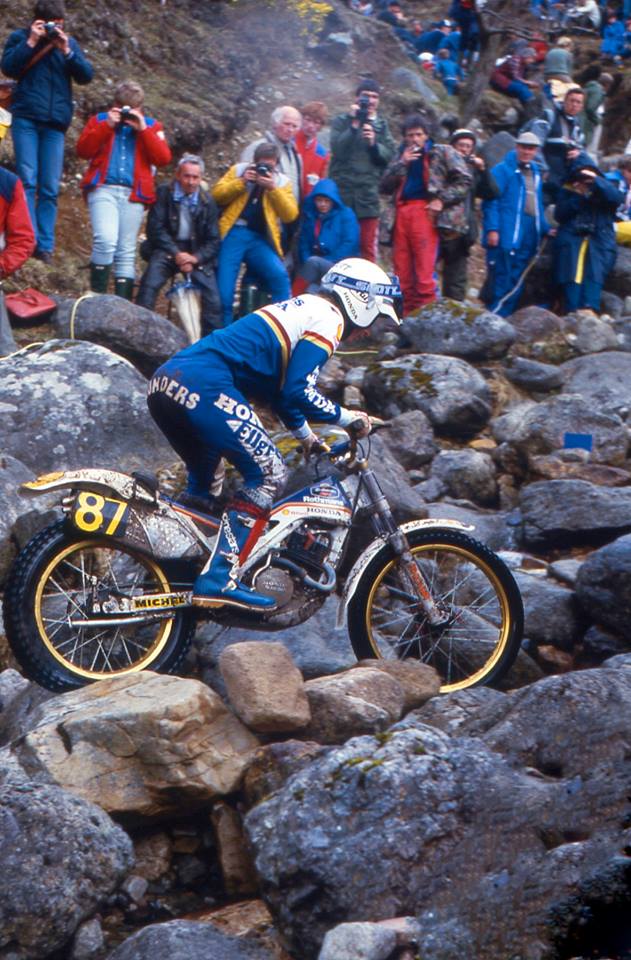
Steve Saunders on the Honda Britain RTL250S at the 1985 Scottish Six Days on Achlain section, watched closely by Honda UK representative Scotland & Northern Ireland, BOB PATERSON – Photo copyright: Colin Bullock/CJB Photographic

On quite a few occassions in later life, Bob would take his specially imported 1976 Honda TL250 up with him to the SSDT to observe and used the machine as transport instead of his car. Often he rode around to follow the trial for a number of years with fellow SACU man, Adam Brownlie, but never off-road.

There was a rider called Fransisco ‘Paco’ Nistal who came over to compete in the SSDT in 1986 from Guatemala who stayed with the Macgillivray family at Muirhearlich just outside Fort William. He was having trouble coming to terms with the machine he had entered for the event and wanted to buy a Honda RTL which was a machine in short supply. Alastair Macgillivray mentioned this to Bob Paterson, who knew Tom Robinson of Robinsons of Rochdale, a main Honda dealer and one of a select few chosen by Honda UK to handle sales of the specialist machine. Robinson’s happened to have a brand new RTL250S in stock. The RTL was sent up to Scotland for the Guatemalan to ride, all due to Bob’s interaction.

Bob Paterson Trophy:

The Pre’65 Scottish Trial accepted a trophy from his son Robert and widow, May to remember Bob and his significant contribution to Scottish motorcycle sport. Called ‘The Bob Paterson Trophy’, it is awarded annually for the best performance of a competitor riding a machine up to 500cc.

Article Text Copyright: Trials Guru / Moffat Racing – John Moffat 1997-2016

Photos:

  • Paterson Family, Cumbernauld.
  • Birrell Family, Fife.
  • Ray Biddle, Birmingham.
  • Colin Bullock/CJB Photographic.
Rob Edwards update

Here is a message direct from Rob Edwards, former Montesa factory rider.
Hi Everybody!
Thanks for the great support you have given me throughout our story on the Trial Guru website.
The ‘Trials Guru’ whose idea it was for this story is more than happy for us to continue until we all get our fill.
I am honestly amazed at your response. My only problem is that I would like to thank each and everyone of you for your response but of course that’s not possible, but the one person I can thank is ‘The Guru’.
When he said that he was interested in me doing my story back in October 2014, I wasn’t sure if we had enough material to keep you occupied. I now know there was!
The response both locally and overseas has been fantastic. The fantastic Thornaby gang who have followed the story from day one. There has been a list of riders who during my riding career I used to see most weekends but since then we went our separate ways.
The group would have in it is Steve Robson, Chris Griffin and Mick Illing who keeps us stocked up with yesteryear’s photos, thank you very much indeed.
Thornaby’s Tony Clarke’s three pictures of his drowning Dot. These are fitted in among the various stories by The Guru, John Moffat.
As 16 year olds, we used to ride in the woods from morning till dark.The woods at one time were part of Thornaby Airfield.
In one section we dropped down into the beck, turned across a large piece of wood and back up the bank. It was years later that we discovered that the wood was the propeller off a Spitfire aeroplane. It has since been retrieved, renovated and is on the wall of the Spitfire Public house. – Rob Edwards

Click to go to the Rob Edwards Story on Trials Guru

1969 - SSDT - Cotton Minarelli - MDC521G - Cailliach RE
Rob Edwards on the factory Cotton Minarelli in 1969 at the Scottish Six Days on Cailliach – Photo: Rob Edwards collection

Guy Martin rides Pre’65 Scottish in 2016

PRE65 SCOTTISH LOGO

Guy Martin, star of the film ‘TT3D – Closer To The Edge’ and various television series is to ride a 350cc Ariel in the 2016 Pre’65 Scottish Trial on Friday 29th and Saturday, 30th April, 2016. He will also undertake duties as the official guest of honour for the event which takes place around the village and hillsides of Kinlochleven, Argyll.

guy-martin-sl702522
Trials Guru’s John Moffat (left) with Guy Martin (centre) and George McCann at the Bon Accord Grampian Motorcycle Convention at Alford in 2011 where he was guest of honour – Photo copyright: Jean Moffat/Moffat Racing

The Pre’65 trial secretary, Anne Gordon added: ‘We are delighted to announce that Guy Martin, Motorcycle Racer and TV star has agreed to be Guest of Honour for the 2016 event and has also entered the trial to try his hand at Pre’65 trials riding. It is a great honour for us to have him at the trial and we would like to thank Simon Sharp and Owen Hardisty at Hope Technology (our Saturday Day Sponsors) for helping us to get Guy to the event after we approached them at last year’s SSDT. We are really excited to have such a celebrity at our event and hope he enjoys taking part. I don’t think there will be many people who have not heard of Guy, as he is well-known through his very illustrious motorcycle racing career as well as his many film and television shows that have us all enthralled with his very hands on and down to earth approach’.

The Pre’65 Scottish is always massively oversubscribed with over 150 potential entrants disappointed at not getting through the inevitable ballot of competitors. However it should be clarified that Hope Technology are the event sponsors and as such, are entitled to what is effectively a ‘wild-card’ reserved entry as part of their sponsorship deal, which in this case has been granted to Guy Martin for 2016. The appearance of Guy Martin at this event, both as a rider and guest of honour can only be good for the sport of trials and the ever supportive inhabitants of the town of Kinlochleven.

Owen Hardisty and Guy Martin - Photo
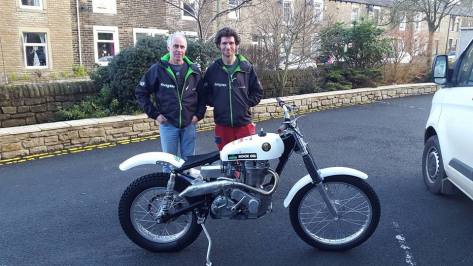
Guy Martin picks up his 350 Ariel that he will use in the 2016 Pre’65 Scottish Two-Day Trial on 29/30 April from Hope Technology’s designer Owen Hardisty – Photo courtesy of Hope Technology.

Who is Guy Martin?

Born in Grimsby, Lincolnshire, England in November 1981, Guy was the central racing character when supported by the Irish-based Wilson Craig Honda team in the docu-movie, ‘TT3D – Closer to the Edge’ which was filmed during the 2010 TT races and screened in 2011. This set Martin on the road to a lucrative television career having competed for many years at the Isle of Man TT with success, but so far no outright TT win to his credit. He has ridden for AIM Yamaha, Relentless/Tyco Suzuki and Hydrex Honda teams in the past.

Martin is interested in all things mechanical, his main occupation is an HGV mechanic with an independent truck company in Grimsby Lincolnshire, which specialises in the maintenance of Scania trucks. His father Ian who also ran a similar business is also a former motorcycle road racer who retired from racing in 1988 after an accident at Scarborough’s Oliver’s Mount.

Martin has been the central character in several television documentaries which has taken him half way around the globe to India and most recently to Latvia in a Chanel Four production in which he retraced the life of his late maternal grandfather, Zanus ‘Walter’ Kidals in the war-torn Baltic state of Latvia which saw occupation by both German and Russian troops in the second world conflict. His grandfather was a displaced person known as ‘DP’ arriving via Hull where he met an English girl, married, settled and worked in Britain.

By coincidence, the town of Kinlochleven saw many DPs, like Martin’s grandfather; arrive from war-torn Europe and the Balcan states of Poland, Latvia and Lithuania as there was work available at the North British Aluminium Company smelter in Kinlochleven. One such man was Lithuanian born Paul Kilbauskas, who arrived in 1947 and found employment at the aluminium works and with co-worker and friend Ian Pollock discovered the many paths and sections that are still used by both the Pre’65 and Scottish Six Days events that make use of the Leven Valley in early May. Kilbauskas later became a ‘Tunnel Tiger’ working on the large hydro-electric schemes in the Scottish Highlands.

Guy has harboured a desire to compete in Pre’65 trials since 2011, but television and racing commitments rendered it a ‘back-burner’ for a few years.

The Pre’65 committee having secured sponsorship with Hope Technology which has an association with Guy through his interest in mountain bikes and eventually Simon Sharp and Owen Hardisty made the approach to see if Martin would be Guest of Honour at the annual event, now in its thirty second year.

Guy Martin has turned his skilled hands to many things in front of camera, including a two-year restoration of a Supermarine Spitfire fighter aircraft which had been buried in a French beach since the second world war; a rebuild of a narrow-boat called ‘Reckless’ and much more; including riding a hydroplane motocross bike across a lake and setting a speed record for a pedal-cycle. He was even fortunate enough to be allowed to work on the last flying Vulcan bomber aircraft XH558 during preparations for its final flight in 2015.

Guy’s Ariel:

On loan specially for the Pre’65 Scottish Guy will be riding a 350cc Ariel HT3 which used to belong to Lancastrian ace, Chris Gascoigne who campaigned the machine for many years and has been a winner in Chris’s hands many times over.

Added attractions for the 2016 Pre’65 Scottish from 1966:

1967 Programme
The 1967 SSDT programme cover featured the 1966 winner, Alan Lampkin on his factory BSA 748MOE

There will also be an appearance of the 1966 Scottish Six Days winning BSA C15T of Alan ‘Sid’ Lampkin. Registered as 748MOE, it will be ridden in the Pre’65 by Alan’s son, James Lampkin to celebrate 50 years since Sid’s SSDT victory on the very last British four-stoke machine to win the Highland classic. This will be James Lampkin’s first pre’65 Scottish although he has competed in the SSDT for many years.

James Lampkin: “Dad realised that it would be 50 years since the BSA won the Scottish in 1966 after he bought the bike back again in October 2014. It is very original having passed through quite a few owners since it was sold off in 1967. Although he doesn’t ride trials himself anymore, he was very pleased when I agreed to enter on the BSA. I’m really looking forward to it”.

Sid - JOM - John hulme credit
1966 SSDT winner, A.R.C. ‘Sid’ Lampkin seen here with John Moffat (Trials Guru) in November 2014. James Lampkin is visible on the left of the photo – Photo courtesy: John Hulme/Trial Magazine.

Scott Trial Page on Trials Guru

Dedicated to the hardest motorcycle trial riders can take part in, the Scott is regarded as an annual classic. One route for all, fastest rider sets standard time. All in the Swaledale, North Yorkshire.

So, This is Yorkshire!

Ben Hemmingway - 2015

The Scott Trial page is now live on Trials Guru

Scott Trial on Trials Guru

Mick Andrews in Germany

Heise + Mick + Krahnst+¦ver
From the left: Rainer Heise; Mick Andrews & Felix Krahnstover – Photo: Kurt-Patrik Beckmann, Hanover.

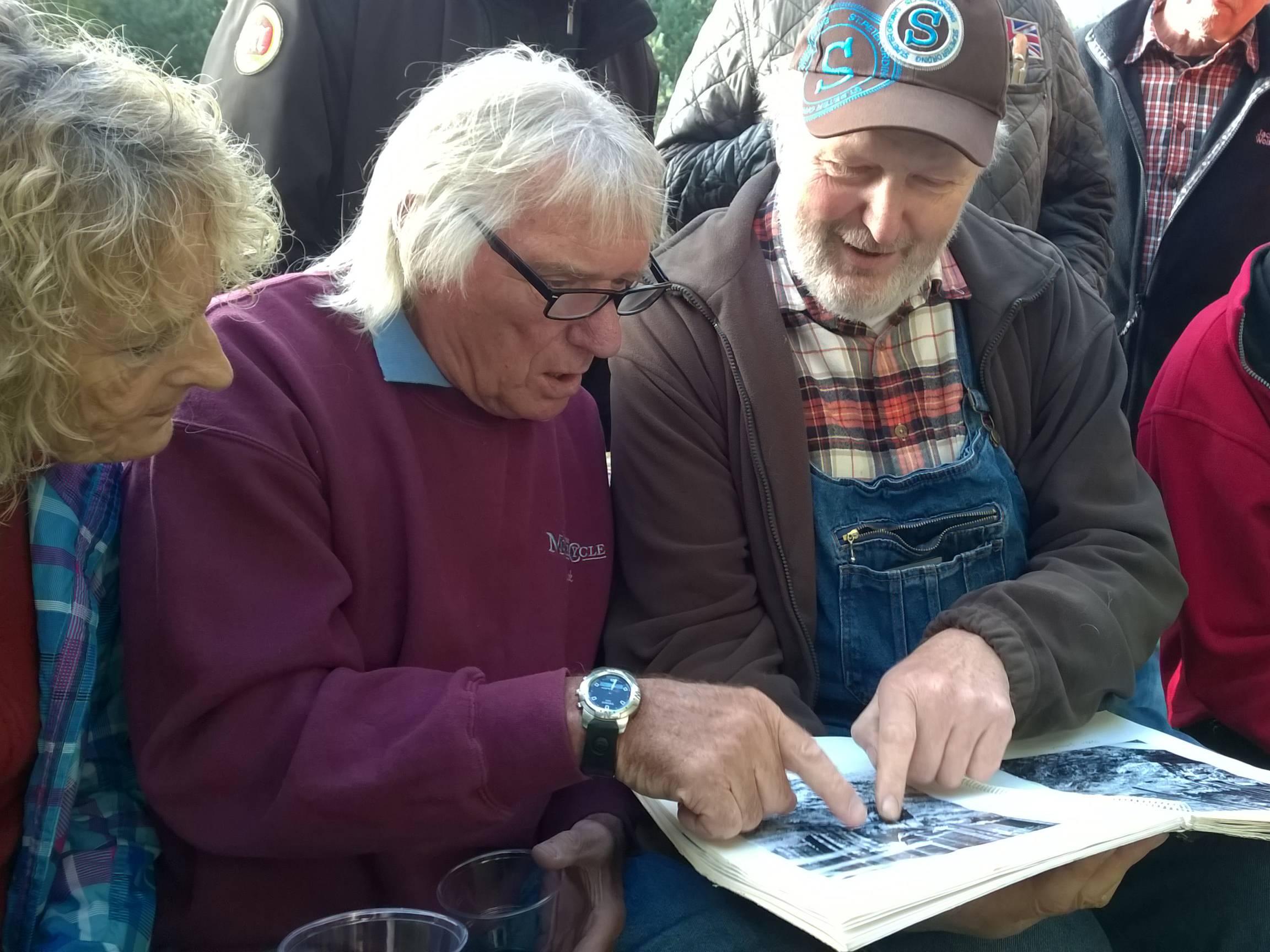
Recently, Mick Andrews held a trials school near Celle, Lower Saxony near to Luneberg and Hanover in Germany for the local ‘Celler Trial Club’. Some old friends also showed up in support, none other than Felix Krahnstöver, former 10 times German national champion and Montesa and KTM factory rider.

Mick and Krahnst+¦ver exploring Heises Photos
Jill and Mick Andrews have a look at Rainer Heise’s photos with Felix Krahnstover. Photo: Kurt-Patrik Beckmann, Hanover.

Accompanied by Rainer Heise friend and trials rider and was the photographer of Fahrerlager (Paddock) and Trialsport magazine from the beginning of the 1970’s to 2000.

No longer competing, but still an enthusiast Krahnstöver is still dedicated to the local club. Felix is still selling and dealing in trials machines and was editor of Trialsport Deutschland when it began in 1977. The magazine is still going now run by Hans Greiner based in Freudenberg-Ebenheid.

Rainer, being an enthusiast of the sport and a keen photographer, brought along his fantastic photo album for Mick and the other enthusiasts to look at.

Looking at ex- 02
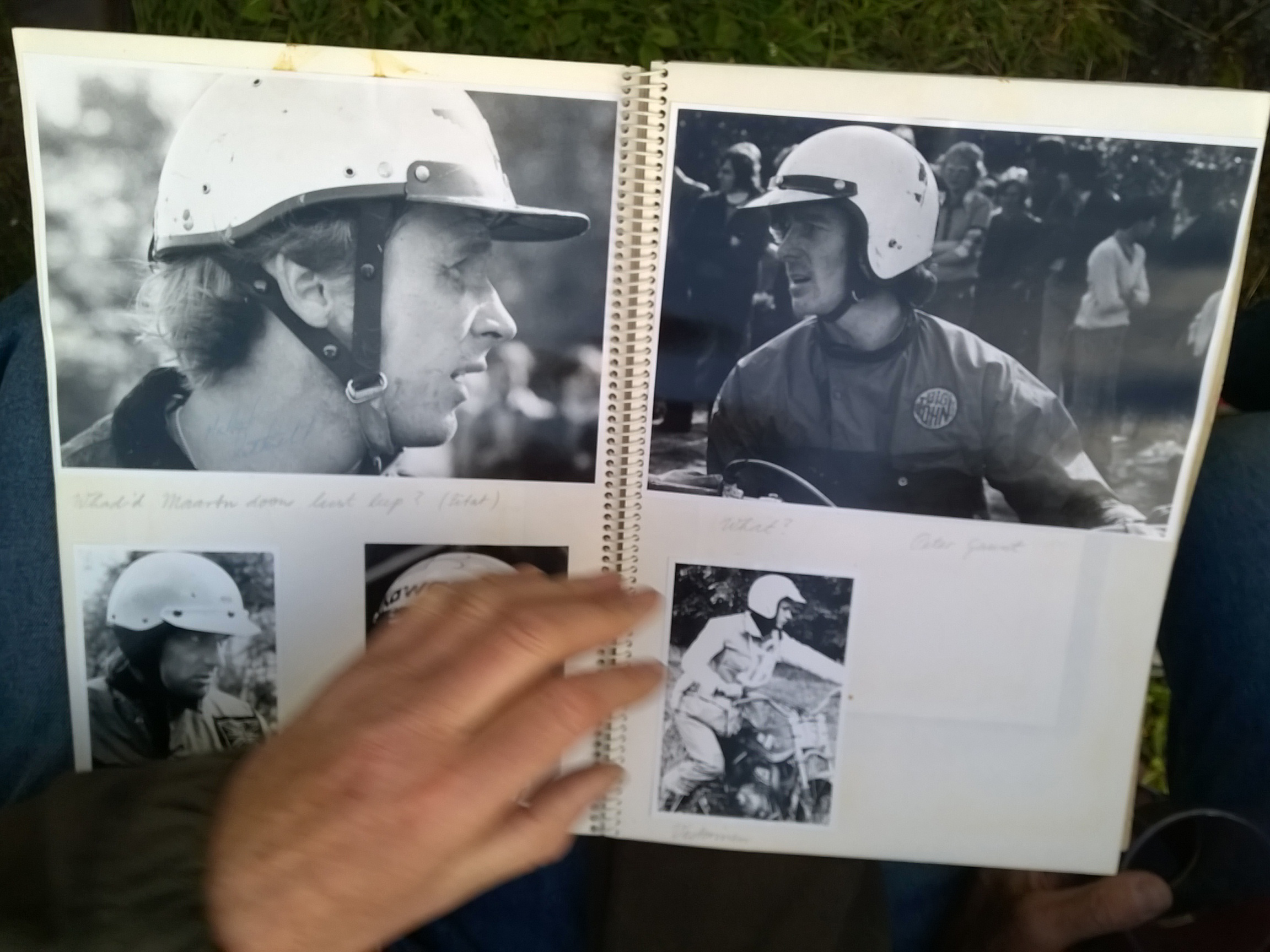
Two of Rainer Heise’s photos showing Malcolm Rathmell and Peter Gaunt back in the 1970’s. Photo: Kurt-Patrik Beckmann, Hanover Original photo images copyright: Rainer Heise, Celle, Germany.

Trials Guru has been in contact with Rainer Heise and shortly we will be featuring a selection of some of his work from the early 1970’s through to the 1990’s. So we have created a “Rainer Heise – Trials in Germany” page specially for this.

Link: Rainer Heise – Trials In Germany

Photos by Kurt-Patrik Beckmann, Hanover, Germany.

DON MORLEY – The ‘Godfather’ of Action Sports Photography

Don Morley 1995
Don Morley riding his ex-works 250cc Greeves Anglian in the 1995 Pre’65 Scottish Trial. Photo Copyright: Iain Lawrie, Kinlochleven, Scotland. When Don Morley was made aware of this very image, he was keen to obtain a copy and willing to pay for it. Iain Lawrie immediately provided Don with a copy with his compliments!


Words: Trials Guru

Photos: Don Morley; Iain Lawrie & John Knight

Trials Guru recognises the talents of a man from Redhill, Reigate in Surrey who has brought literally thousands of wonderful and exciting colour sporting images into magazines, periodicals and books the world over. His name is Don Morley and what’s more he’s a trials rider! Well actually, Don is a frustrated road racer at heart as he didn’t have the funds available to race when he was a young man, so took up trials riding instead, being the less expensive motorcycle sport option!

dm on his 1949 ex works 350 re. reg_ hwp 731 - red
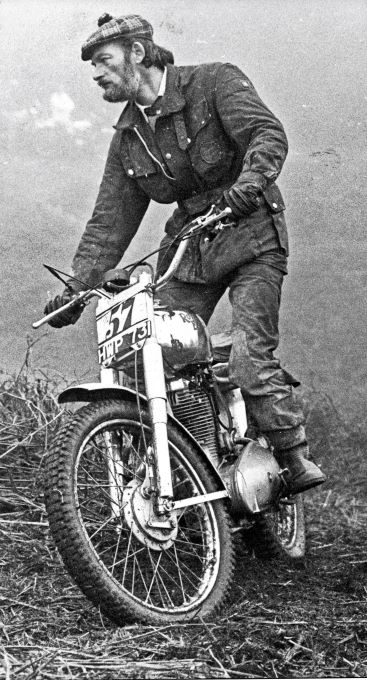
Don Morley aboard his 1949 ex-factory Royal Enfield (HWP731) – Morley is an acknowledged expert on the marque. (Photo supplied by Don Morley for this article from his personal collection)

Described as the ‘Godfather’ of sports photography by Fast Bikes Magazine in the article they ran on Don in their September 2010 edition, Morley is respected the world over by riders, athletes and team managers because of his uncanny ability to press the button just at the right moment.

Raised in Derby, Don started taking photographs for a living in the 1950’s when it was all glass negatives, progressing to processed roll film. He began his motorcycle photography as a staff photographer with Motor Cycle News in 1957.

Morley is a 100% professional sports photographer, joining forces with Tony Duffy’s “All-Sport International Photographic Agency/Don Morley” in the 1970’s, his images of sporting events and competitors are highly sought after around the globe.

CBTSTB
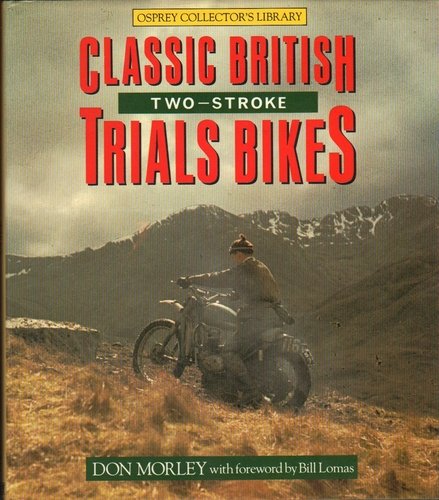
Puiblished by Osprey, Don Morley’s book on Classic British Two-Stroke Trials Bikes is a much sought after publication. Truly a collectors item now.

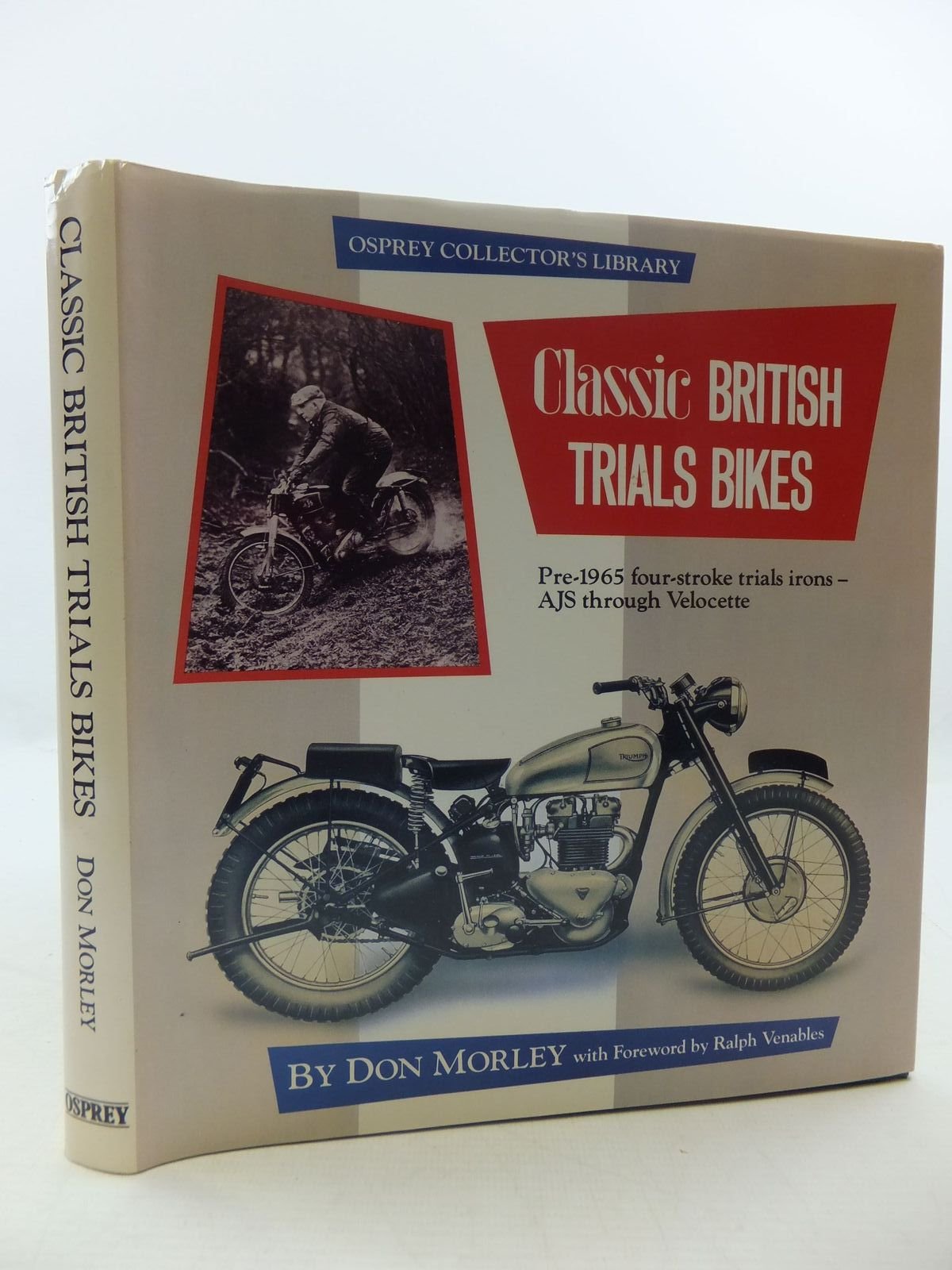
Don is also an accomplished author, writing several books which include: Classic British Trials Bikes & Classic British Two-Stroke Trials Bikes; Spanish Trials Bikes and Trials: – A Riders Guide, to name but four!

CBTB 1984 - Don Morley
Published by Osprey in 1984, Don Morley’s Classic British Trials Bikes book was a top seller. Original copies fetch high prices to this day.
TT In camera
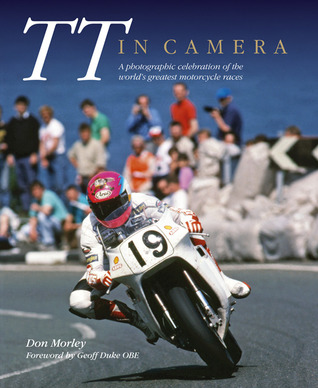
“TT – In Camera”, One of the many titles written by Don Morley over the years, with foreword by Geoff Duke.

Morley has photographed many events, not just sporting events, witnessed the Munich Olympic Games terrorism atrocity to name but one major international incident and much, much more. He has had a varied and interesting life as a sports photographer.

Don has owned several ex-factory trials machines in his time as a rider, including the Johnny Brittain Royal Enfield 500 Bullet HNP331 and another ex-factory Enfield, LUY86. He appeared in the BBC TV series, ‘Perpetual Motion’ in an edition which covered the Royal Enfield and Enfield of India story in 1992. Morley is an acknowledged expert on the Royal Enfield marque. He built a few special trials machines including a BSA B40 and also wrote a series of articles on the development of four-stroke trials machines for the ‘Classic Motor Cycle’.

Don Morley New APMC Hon President. 1402
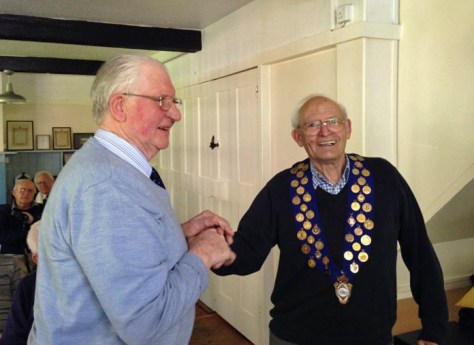
Don Morley (right) recieves his chain of office from Chairman, Ken Brady – Photo: John Knight (former British Trophy team member ISDT)

Don was one of the first to take up Pre’65 trials competition back in the early 1980’s on an ex-Brian ‘Tiger’ Payne AJS.

The one thing you notice about Don is his serious nature, he is a professional after all, he took photographs to make a living, but he does have a good sense of humour as well.

Trials Guru’s John Moffat met Don Morley many years ago at the Pre’65 Scottish at Kinlochleven, initially it was a frosty meeting as ‘The Guru’ intimated that Don had made a “slight mistake with a factory registration number” in one of his books! After a good frank chat, it was all ended very amicably, as this was merely an amateur enthusiast correcting a professional. Let’s face it EVERYONE can make a mistake. Happily, from that day on ‘Trials Guru’ and Don Morley have been good friends, their paths crossing occasionally and they are always happy to meet each other.

Don saw the funny side of the argument and said jokingly: “John, that’s OK, as long as you don’t want Osprey to reprint my book to make a correction!”

Morley once took a photo of ‘The Guru’ on his G3C Matchless with the great Gordon Jackson standing alongside, at Kinlochleven, the machine which was loaned to Jackson for the 2000 parade at the Scottish Six Days. The image has been a prized possession of ‘The Guru’ ever since.

GL Jackson  & JO Moffat Red
Photo copyright: Don Morley (All Rights Reserved)

So, the next time you see a photo credit as “All-Sport/Don Morley” under an image of a racing bike at speed, you can say that this image was taken by a true enthusiast and … a trials rider!

Don Morley, Reigate, Surrey, England. – Trials Guru salutes you, because you are an enthusiast as well as a photographic professional. – Thank you also for the kind permission to use one of your wonderful photographs on this website.

Dennis Ireland RG500 Suzuki
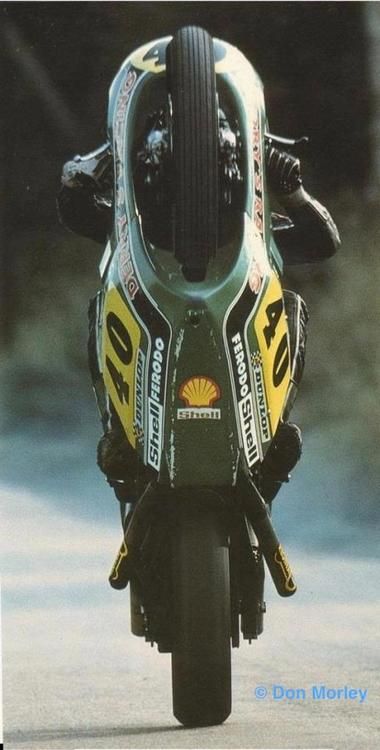
Beyond the call of duty! – Don Morley was lying on his side taking this shot of racer Dennis Ireland on his RG500 Suzuki. Unfortunately the throttles stuck wide open, the machine went out of control just a split second after Morley clicked the button. Don suffered a broken leg, Ireland more serious injuries, spending five months in hospital, having eleven operations on leg, ankle foot and tendons. A truly evocative image taken by a true professional. – Photo: strictly not for reproduction without permission of Don Morley – All Rights Reserved. Worldwide copyright.

© – Trials Guru/Moffat Racing, John Moffat – 2014 (All Rights reserved)

© – Image World-wide copyright: All Sport/Don Morley, Reigate, Surrey UK. All Rights reserved.

© – Image World-wide copyright: Iain Lawrie, Kinlochleven. All Rights reserved.

References:

The Classic Motor Cycle magazine

Fast Bikes Magazine

Motor Cycle News

The intellectual property formerly of ‘All-Sport’ photograph agency is now owned by Getty Images UK.

Please remember, all Don Morley’s photographs and those of his company ‘All-Sport’ are world-wide copyright and must not be used without prior express permission.

Honda Racing Corporation – RTL ‘Racing Trial’

Honda Factory Trials – RTL – ‘Racing Trial’

rsctest

Honda-Racing-Corporation-Logo

During the ninteen-seventies, Honda Motor Company decided to create a purely ‘Racing’ division, separate from their normal motorcycle production activities and core businesses. This saw the advent of Racing Service Center Corporation or ‘RSC‘ for short. Later, in September 1982, they developed from RSC, Honda Racing Corporation or HRC for short, which exists to this day and controls the racing activites of Honda. HRC produce and sell racing/competition motorcycles and spare parts. The parts, although well made and of high specification, are by their nature, not warranted for street use as they are for ‘racing applications only’. HRC European headquarters are based in Aalst in Belgium. The world HQ is at Asaka, Saitama, Japan. Below we can see some of RSC & HRC’s creations over the years.

Honda RTL300 - Short-Stroke from 1977 - Photo copyright: Heath Brindley, England
Honda RTL300 – Short Stroke ‘Racing Trial’ of Nick Jefferies, 1977. Photo by Heath Brindley, Bristol.
Rob Shepherd aboard the factory 305cc short-stroke Honda.
Rob Shepherd aboard the factory 305cc short-stroke Honda. This rare photo was taken by Rob Edwards outside the Espluges Montesa factory in Barcelona. Photo courtesy and copyright: Rob Edwards, Middlesborough.
DSCF1217
Honda RTL 300 Long-Stroke – Marland Whaley (USA) from 1977.
Marland Whaley Ben Nevis
1977 – Scottish Six Days Trial at Glen Nevis – Marland Whaley on his factory Honda RTL300 (305cc) who finished in 13th position losing 102 marks for the week. Photo: Copyright Iain Lawrie, Kinlochleven.
Marland Whaley on Blackwater in 1978
Marland Whaley on Blackwater in 1978 on the Honda RTL300 – Photo copyright: Iain Lawrie, Kinlochleven.
1984 Lejeune
1984 – Honda RTL360 – Eddy Lejeune (Belgium) at Fersit, Scottish Six Days Trial. Factory only machine, not on general sale. Photo: Mark Lamplough, Coventry.
pict0610
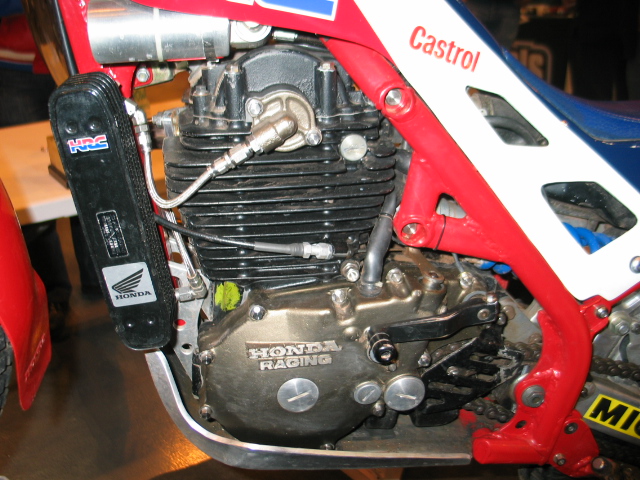
HRC RTL360 motor from 1984. Photo: Patrick Pissis, France.
IMG_2120
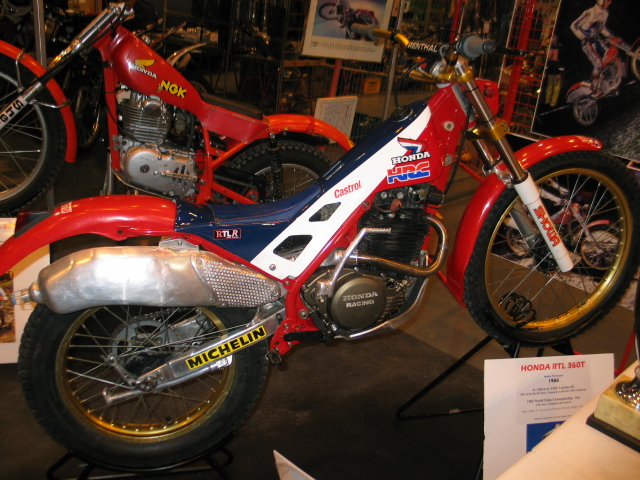
February 2014 – Telford Off-Road & Racing Show. Jean Caillou (left) and Patrick Pissis from France, show their RTL360 from 1984. Photo: Copyright: Trials Guru/MoffatRacing 2014
Telford, February 2014 - RTL360. Photo, Copyright: Trials Guru/MoffatRacing, 2014
Telford, February 2014 – RTL360. Photo, Copyright: Trials Guru/MoffatRacing, 2014
RTL360 generator side close up. Photo, Copyright: Trials Guru/MoffatRacing, 2014
RTL360 generator side close up. Photo, Copyright: Trials Guru/Moffat Racing, 2014
Rob Shepherd (300 Honda RTL300) on Grey Mare's Ridge in the 1979 Scottish Six Days - © - Iain Lawrie, Kinlochleven.
British Honda/HRC factory rider, Yorkshire farmer, Rob Shepherd (Honda/HRC RTL300) tackles ‘Grey Mare’s Ridge’ in the 1979 Scottish Six Days – © – Iain Lawrie, Kinlochleven.
Eddy Lejeune'86 Lower Mamore
1986 – SSDT – Eddy Lejeune (Rothmans Honda RTL270SW) on Lower Mamore – Photo Copyright: Iain Lawrie, Kinlochleven
Eddy Lejeune (270 Rothmans Honda RTL270S) on Ben Nevis in the 1986 Scottish Six Days - © – Iain Lawrie, Kinlochleven.
Three times FIM World Champion, Eddy Lejeune (270cc Rothmans Honda RTL270SW) on Ben Nevis in the 1986 Scottish Six Days – © – Iain Lawrie, Kinlochleven.
Saunders RTL Rothmans
Full factory machine, this is the RTL270SW Honda Racing Corporation/Rothmans Racing of Steve Saunders seen here at Ben Nevis in the SSDT from 1986 Photo: Trials Guru/John Moffat – All Rights Reserved

The RTL250SW was for factory Honda riders only, not available for general sale and had the single down tube frame with offset exhaust port.

Steve Saunders'86 Ben nevis
1986 – SSDT Steve Saunders (Rothmans Honda RTL270SW) on Ben Nevis – Photo Copyright: Iain Lawrie, Kinlochleven


DSCF1224
1986 – RTL270SW (270cc) Honda Racing Corporation/Rothmans Racing – with single down-tube frame and oil cooler. Strictly factory only.

Fourstrokefinale

Tommy Sandham’s Book – ‘Four Stroke Finale?-The Honda Trials Story’ Click… Honda/Four Stroke Finale?

RTL360
John Moffat (Trials Guru) was fortunate to be permitted to take the ex-Eddy Lejeune 1982 RTL360 for a brief excursion at the Highland Classic 2 Day Trial at Alvie Estate in June 2015. This machine is now in the ownership of Jean Caillou.

The 1982 Honda/HRC RTL360 shown above was once the factory machine of World Champion, Belgian, Eddy Lejeune.

Jean Caillou, a French trials enthusiast who has a passion for the Honda brand was fortunate enough to meet with Lejeune at his home in Belgium. It was during this meeting that Eddy revealed that he still had the 1982 ex-factory machine in his possession. The RTL360 was disassembled, but all the parts were there at Eddy’s house.

Jean Caillou: “I met with Eddy Lejuene at his home and he explained that he had just bought his daughter a horse. So he presented me with the invoice for the horse and said that if I paid him the same figure that he had just recently paid for the horse, then I could have the Honda. I did not hesitate further and the deal was agreed. I had effectively paid for Eddy’s daughter’s horse, but I now owned the Eddy Lejeune 360!” 

EDDY LEJEUNE:

Eddy Lejeune from Verviers, Belgium was three times FIM World Trials Champion (1982-1984) and seven times Belgian National Champion (1980-1986). He rode Honda for the majority of his trials career, switching to the Spanish Merlin in 1988 and then to the Honda owned Montesa for 1989/90 when he retired from top flight trials.

photo0955_001
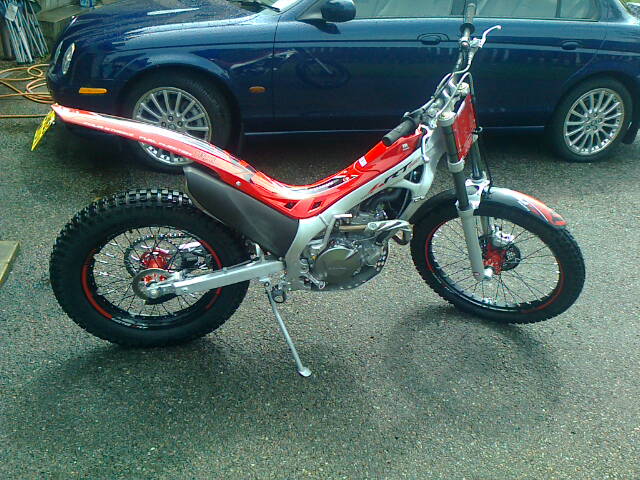
The Montesa Cota 4RT 260cc is the modern day equivalent of the RTL with the motor supplied by HRC. In Japan these machines are sold as Honda RTL260. Photo: Trials Guru/Moffat Racing.
Steve Saunders (RTL270 Rothmans Honda HRC) on Lagnaha in the 1986 Scottish Six Days - © – Iain Lawrie, Kinlochleven.
Cover photo: Steve Saunders (RTL270SW Rothmans sponsored Honda HRC) on Lagnaha in the 1986 Scottish Six Days. Before the days when tobacco sponsorship of motorsport was curtailed and finally banned. – © – Iain Lawrie, Kinlochleven (World Wide Copyright – All Rights Reserved.

© – Article: Trials Guru/Moffat Racing, John Moffat – 2015 (All Rights reserved)

© – Images/Photographers:

– Heath Brindley, Bristol

– Rob Edwards, Middlesborough

– Iain Lawrie, Kinlochleven

– Patrick Pissis, France

– Mark Lamplough, Coventry, England

– Trials Guru/Moffat Racing/John Moffat

Interesting link to the Honda Trials Story: Click… Only Trial

For current HRC information see their website: Click… HRC-Honda Racing Corporation

Responsible Land Use – The facts

Responsible Land Use

Kinlochleven - Loch Leven - Susan Black Photo
Kinlochleven, Argyll a beautiful place and one protected along it’s Leven Valley by a SSSI – Photo: Susan Black, Prudoe

Many words have been spoken, but little written about, responsible land use in motorcycle magazines and periodicals. One could ask the question – Is this a taboo subject?

Not taboo as such, but it is complicated and a very thorny subject that has provoked spirited debate.

The primary intention of this article is not to create further debate, but to be educational and informative for the benefit of the sport of trials, to create a better understanding of not only responsible land use but to recognise what controls it.

Motorcycle sport’s governing bodies such as the Auto Cycle Union, have endeavoured to address and promote responsible land use for well over thirty years, evidenced by its membership of LARA (Land Access & Recreation Association) in 1986. It works with its affiliated clubs through its own Land Access Advisory Service.

Part of the problem appears to be lack of proper understanding of the subject matter and that is probably caused by either people not being able to find relevant factual information, or don’t fully understand it when it is discovered. Perhaps some of the terminology is alien to some of us?

It’s possible to view website forums and dialogue which covers the subject in threads such as “where to practice riding skills” and similar subject matter.

However many of these forums are locked, only viewable by members with passwords or by subscription and for good reason. It is an attempt to stop people abusing the privilege of using land, made available by landowners under certain conditions.

This locking or restriction to access however does give the impression that perhaps something subversive is going on, whereas that is not the case.

Providing details of where to ride legally off-road is outside the scope of this article, so please, don’t get over-excited.

There are however many areas in the UK, specifically set out for legal trials practice for competition training and for leisure trials riding. With full landowner permissions in place, membership fee requirements, codes of practice, restrictions of use and insurance, perhaps even owner/operated, this is without doubt a responsible and sensible approach.

It is important to understand that there is no such thing as ‘waste ground’.

All land in the United Kingdom, including common land, is owned by someone, be it an individual, group of people, company or other legal entity. However, its ownership may not be clear or be a simple task to establish who the owner is.

Let us attempt to clarify matters by examining factual information, in an understandable way, in an attempt to remove any mystique which surrounds such a complex subject.

Hopefully this article will be sufficiently informative, without going into the fine detail of legislation, insurance and such matters.

To explain in simple but factual terminology and restrict it to parts of the United Kingdom and confined to motorcycles, but equally this can apply to other areas in the UK and four wheeled vehicles also.

Also it is important, perhaps crucial, to understand that trials riders do not have any legal right to ride their motorcycles off-road.

Why is this so, what does the law say?

The Road Traffic Act 1988 (Section 34) clarifies it as follows:

Section 34 – Prohibition of driving mechanically propelled vehicles elsewhere than on roads.

(1) Subject to the provisions of this section, if without lawful authority a person drives a mechanically propelled vehicle—

(a) on, to or upon, any common land, moorland or land of any other description, not being land forming part of a road, or

(b) On any road being a footpath, bridleway or restricted byway, he is guilty of an offence.

So, there we have it, any motorcycle activity performed away from, or off the public highway without lawful authority (permission) is recognised as ‘illegal riding’.

We won’t probe, evaluate or discuss matters concerning the legal penalties or remedies, as that would be down to a court of law to decide as appropriate.

For clarity, let us examine a specific example of a sizeable piece of land to assist in the demonstration of how this works and what restricts or even forbids the casual use of land by off-road motorcyclists.

The area is fairly well-known to the trials sport community let us look at one specific area. After all, this is a trials based website and the rationale could be easily be applied and compared to other similar areas in the country.

Billy Tiffen 1954 - RB
1954 – Billy Tiffen from Carlisle on his Velocette, crests ‘Martuim’ in the Scottish Six Days Trial, now part of the West Highland Way and part of the Leven Valley SSSI. Photo: Ray Biddle, Birmingham

The area is in Northern Scotland, known as the ‘Leven Valley’ this name may not be instantly recognisable to the reader, but with further examination its mappings reveal: Pipeline; Blackwater; Corrie Odhair on the south of the River Leven and Loch Eild; German Camp or even Leiter Bo Fionn on the north side, then it will appear familiar. This land whilst appearing to be wild, rugged and fairly remote is actually very closely managed.

German Camp - 2015
German Camp / Leiter Bo Fionn entrance in 2015. The old SSDT section is on the Leven Valley SSSI. Photo copyright Trials Guru – 2015

The name known to trials enthusiasts as the ‘Blackwater Path’ is actually the ‘Ciaran Path’ which is very popular with recreational walkers, hikers and mountain-bike riders, who incidentally do not require express permission to traverse it.

Manel Soler 1981 - JY
SSDT 1981 – Former Spanish Champion, Manuel Soler on his 325 Bultaco tackles Pipeline, part of the Leven Valley SSSI – Photo Copyright: Jimmy Young, Armadale, Scotland.

Access to the countryside was increased by statute with the creation of the Countryside and Rights of Way Act 2000 for England and Wales and the Land Reform (Scotland) Act 2003, in Scotland, these rights exist only if they are exercised responsibly, as specified in the Scottish Outdoor Access code. Some will know, or have heard of the Ciaran Paths’ famous catch net, constructed by members of the Scottish Six Days Trial committee in the late 1960’s with the prime intention of prevent riders competing in the event and their machines from falling into the deep gorge as they climbed the path towards Blackwater and beyond.

The Blackwater (or Cairan Path) catch net, constructed by members of the Scottish Six Days Trial committee in the late 1960s. - Photo Jock McComisky
The Blackwater (or Cairan Path) catch net, constructed by members of the Scottish Six Days Trial committee in the late 1960s. – Photo Jock McComisky

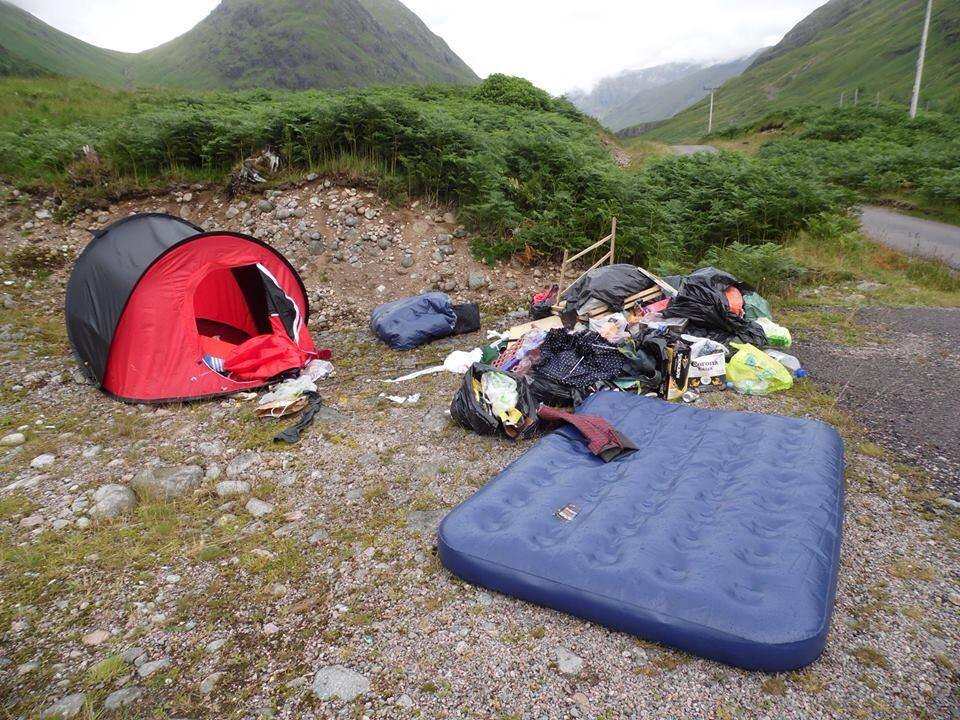
Access to the countryside requires responsibility, sometimes this is absent.

Glen Etive - Rubbish
“… Access to the countryside requires responsibility, sometimes this is absent.” Photo Copyright: Mark Shona, (Glen Etive the dirty truth)

The construction was simple, perhaps even crude, but very effective, being fashioned from scaffolding pipes cemented directly into the bed-rock on the edge of the gorge.

No doubt there have been many wayward hikers and bikers caught by its netting since its construction. Whilst this has most probably gone unreported it was a useful safety addition to the Ciaran Path for many of its users since its construction some forty years ago.

Photo 2
The Leven Valley is covered by an SSSI – Photo: Neil Mackenzie, Inverness

This is an area with an industrial heritage and history. These paths and the German Prisoner of War encampments were constructed to provide the manpower to build the various dams, culverts, penstocks and conduits in the area together with the associated infrastructure for the development of the aluminium smelter.

Bernard Cordonnier
Bernard Cordonnier from Belgium with Kinlochleven and the Leven Valley visible in the background – Photo: Iain Lawrie, Kinlochleven.

These paths do erode over time, due to the severe winter weather in the area and by the constant use by walkers and cyclists. Parts of the Ciaran Path are already eroded, undercut in places and in need of repairs.

Photo 5
Leven Valley is an area dotted with traces of industialisation, here is the ‘Conduit’ carrying water to Kinlochleven from Blackwater Dam. – Photo: Neil Mackenzie, Inverness

Prisoners of War were used during their interment during the First World War, to construct many of these paths and there is a display within the Post Office in Kinlochleven which gives more information on this. These paths have been established for more than a century. Here ends the history lesson.

All these places described above are on a Site of Special Scientific Interest (SSSI, usually referred to as Triple- SI). In Northern Ireland the designation is ‘Areas of Special Scientific Interest’ or ASSI.

Pipeline - IL
Pipeline is one of the world’s most iconic of trials sections. It is however on an SSSI named ‘Leven Valley’ which requires various express permissions and careful management for legitimate use – Photo Copyright: Iain Lawrie, Kinlochleven.

The reader would be astonished to learn how much of the SSDT route makes legal use of SSSI’s. Many will have watched, observed or even ridden in this particular area.

Many hours are spent each year in meaningful discussion and negotiation between trial organisers and both the local land agents and SNH personnel.

Photo 8
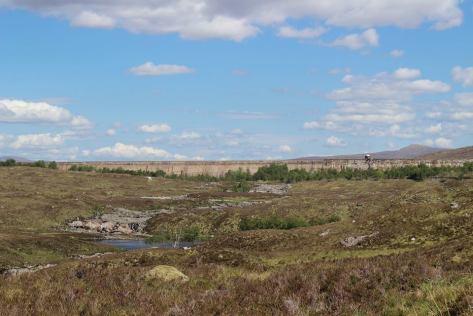
Blackwater Dam, high above Kinlochleven. The Leven Valley SSSI stretches right up to the dam face – Photo: Neil Mackenzie, Inverness

What statutory instrument created SSSI’s and when?

Originally notified under the National Parks and Access to the Countryside Act 1949, SSSIs were re-notified under the Wildlife and Countryside Act 1981. Improved provisions for the protection and management of SSSIs were introduced by the Countryside and Rights of Way Act 2000 (in England and Wales) and (in Scotland) by the Nature Conservation (Scotland) Act 2004 and the Wildlife and Natural Environment (Scotland) Act 2010. (Source: DEFRA).

How many sites and how much land is controlled by SSSIs?

Scotland has over 1,400 sites designated as SSSIs, representing approximately 12.6% of the total land area of Scotland. Approximately half of these sites are located in the lowlands and uplands area.  There are over 4,000 sites in England, covering around 8% of the country.  (Source: Scottish and UK Government).

Let us look more closely at this area of land and in particular its SSSI status, with the help of resources freely available in the public domain.

In the Site Management Statement issued by Scottish Natural Heritage (SNH), the Leven Valley (Site Reference 927) is denoted as being a SSSI.

Here are some details:

The Leven Valley SSSI forms part of a larger 3000 hectare woodland grant scheme and the interest lies in both trees and rock formations, so described as: Upland Birch Woodland and Dalradian rock, but the scope is of course much wider, covering the flora found in that area.

To give an indication of the extent of the SSSI it is approximately 10 kilometres in length and 6 kilometres wide, so it is very large indeed.

There are no less than eleven specific activities that require not only the landowners’ permission, but permission from SNH, which is funded by the Scottish Government, its purpose being to care for Scotland’s nature and provide support to those who manage it.

However, this consent is not required if the organisers have been given prior ‘planning permission’ from the local authority, under Part III of the Town and Country Planning (Scotland) Act 1997.

For motorcycle events such as the SSDT, the Pre’65, promoted by Edinburgh & District Motor Club Limited plus any other localised events organised by Lochaber & District MCC who promote the annual Ian Pollock Memorial Trial in the Leven Valley area.

IL photo - Loch Eild Path
The Leven Valley area is one of beauty and home to many plants, wildlife and industrial history. Its use is controlled. Here a rider competing in the annual Pre’65 Scottish in 1998, rides one of the many paths in the area. Photo copyright: Iain Lawrie, Kinlochleven.

The specific requirement to apply for consent from SNH is under reference number 26: ‘Use of motorised vehicles likely to damage vegetation’.

Why do we need to legally protect these areas described as SSSIs, why is this particular area deemed sensitive, why is it important and why is it necessary to have such controls?

Private research reveals that the Leven Valley SSSI is home to many different mosses and liverworts, collectively known as bryophytes. Some are very rare, dating back to pre-historic times.

Bryophytes play a part in protecting us, as these soft plants form a huge sponge on the valley floor, slowing down the flow of rain water from the surrounding hills which runs into the burns and eventually the River Leven.

This water slowing effect protects the Kinlochleven area from potential flash floods, given the high annual rainfall locally.

Thinking about it logically, conversely this explains why there are so many flash floods in residential areas nowadays. The ground has been waterproofed by buildings, structures, roads and footpaths so that rain water now planes off faster, causing localised flooding and worse. Flooding can affect us all.

The beds of mosses, blanket bogs and wetlands found in the Leven Valley SSSI area also absorb and effectively lock up, many tonnes of harmful carbon dioxide from the atmosphere, potentially for thousands of years, into the peat below. That is providing that they are not disturbed, depleted or destroyed, hence the protection provided by SSSI status.

Depletion can occur through invasion by non-native plants such as the Rhododendron, which can spread rapidly, is difficult to control and covers large areas of ground. Similarly, animals such as deer, sheep or cattle roaming free or even inappropriate use by vehicles, can cause damage if not properly controlled or managed.

Now we can see the rationale for protection of this and other areas like it, we can begin to fully understand and appreciate why these areas are deemed sensitive and significant.

Protection does not automatically mean total exclusion of all activities, hence the continued use of the area by major trials events, but this is only achievable by proper application for permissions, negotiation and mutual agreement.

The SSDT has been running since 1911, the Pre’65 since 1984 and the Ian Pollock under its former title ‘Spring Trial’ since the late 1950’s. These events make legitimate use of the Leven Valley.

This does not however give their promoters any legal rights to continue using this ground, purely because of the length of time the events have been in existence.

Most of the ground described above and used in these motorcycle trial events is under the current ownership of Rio Tinto Alcan, a multi-national company whose principal office is in Montreal, Canada.Rio Tinto Alcan is the result of many company mergers and take-overs over the years, tracing its roots back to the British Aluminium Company in 1894 the entity that originally purchased the ground in what is fundamentally the Mamore hill range for the water rights, thus ensuring sufficient water to create power generation for the Aluminium smelter based down in the town of Kinlochleven itself.

Pipeline Alcan
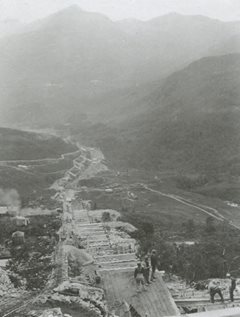
The pipeline under construction. The Leven Valley has an industrial history. Photo copyright Glasgow University Archive (Rio Tinto Alcan)

The SNH Site Management Report in 2008 stated:

“During monitoring in 2002, the SSSI was found to be subject to a number of detrimental influences, the most important being: the spread of rhododendron; grazing/browsing pressure (due to deer and, probably to a lesser extent, stray sheep); annual burning; and motorcycle scrambling”.

In the above statement, let us simply replace the words ‘motorcycle scrambling’ with ‘off-road motorcycle activity’ for additional clarity, for that is what the report eludes to.

By giving cognisance to the above information, we can now begin to appreciate and understand what legislation event organisers have to consider and address fully when promoting a motorcycle trial in this area.

This is why such organisers stipulate that no unofficial following of the event by motorcycle is permitted or condoned, as only insured riders and officials may take machines onto the ground as allowed by the owners and ultimately SNH.

Similarly this is why all event officials must ‘sign in’ with the event control so that they are accounted for, have contact details and are insured under the governing body’s insurers for the permitted event.

Are things now falling into place?

During the research for this article, we spoke with Cathy Mayne, the locally based Operations Officer with Scottish Natural Heritage and the person charged with the task of negotiating with the motorcycle clubs.

Cathy explained: “In terms of use, there is no assumed permission for this, or any other off-road area for motor vehicles. Prior permission from the landowner and where relevant, consent from SNH, would be required for any trials rider accessing any area off the public highway.

There are some issues with casual use on the SSSI, as we have for other areas of land that is so designated and a focus of trials or other off-road vehicular use.

Hence the sensitivity of these areas. Permission for events such as the SSDT, the Pre’65 and Pollock trials are given only after careful consideration, planning and negotiation, with quite a few restrictions and stipulations put in place”.

We have used a land example from Northern Scotland, but of course there will be thousands of similar examples dotted throughout the country.

The Scott Trial, another event over 100 years old, held in the North Yorkshire National Park is another where planning permission is required and for a finite period at that.

Scott Trial action from Sid in 1974. Photo Alan Lampkin Archive.
Scott Trial action with Alan Lampkin (Bultaco) in 1974. The Scott is run in the North Yorks National Park and requires very careful management and permission – Photo Alan Lampkin Archive.

So, we as riders of trials motorcycles do not have any rights to roam, unlike walkers and cyclists, but express permission is required from landowners and even governmental bodies to enable us to ride off-road.

Consider these matters, as illegal riding does directly harm our sport.

There are many other organisations committed to individual and group off-road motorcycle activity other than organised events, for example the Trial Riders Fellowship of England and Wales who make use of BOATS (Byways Open to All Traffic) and UCRs (Unclassified Country Roads), so their members don’t actually ride off-road, they encompass forty-two regional clubs. But in the example we have examined, permission is granted for organised events because of the level of controls afforded by an event and the frequency of such events.

We hope that the reader will now have a more detailed knowledge of this issue and a better understanding as a result.

Do you now understand more about land use restriction and the rationale than before you read this article? If so, then this article has been worthwhile.

Article copyright: Trials Guru/Moffat Racing/John Moffat – 2015

Photograph and Image Copyright:

Iain Lawrie, Kinlochleven

Jimmy Young, Armadale

Alan Lampkin Archive, Silsden.

Neil Mackenzie, Inverness.

Susan Black, Prudoe.

Glasgow University Archive (Rio Tinto Alcan)

Mark Shona

Acknowledgements and Research Sources:

Scottish Natural Heritage (website): www.snh.gov.uk

SSSI general and specific Information for Scotland : www.snh.gov.uk/protecting-scotlands-nature/protected-areas/national-designations/sssis/

Scottish Outdoor Access Code (SOAC): http://www.outdooraccess-scotland.com

Statute: Road Traffic Acts 1988

Auto Cycle Union website: www.acu.org.uk

LARA(Land Access & Recreation Association) website: www.laragb.org

Flood Information (Scottish Environment Protection Agency)

Map of  Leven Valley SSSI 927 – Registers of Scotland:

Trail Riders Fellowship: http://www.trf.org.uk

ARIEL HT500 – Sammy Miller – 786GON

786_back
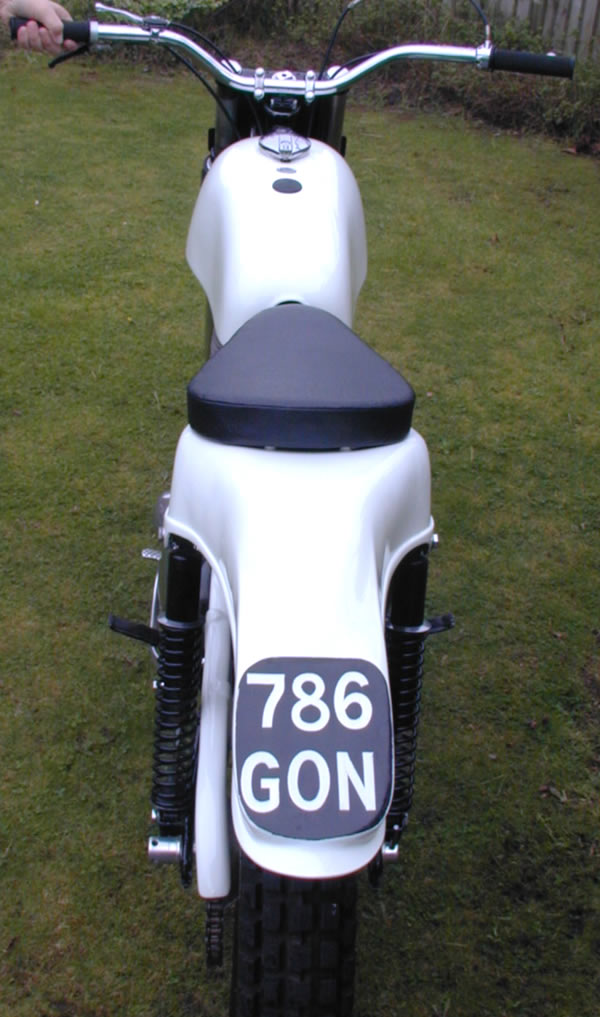
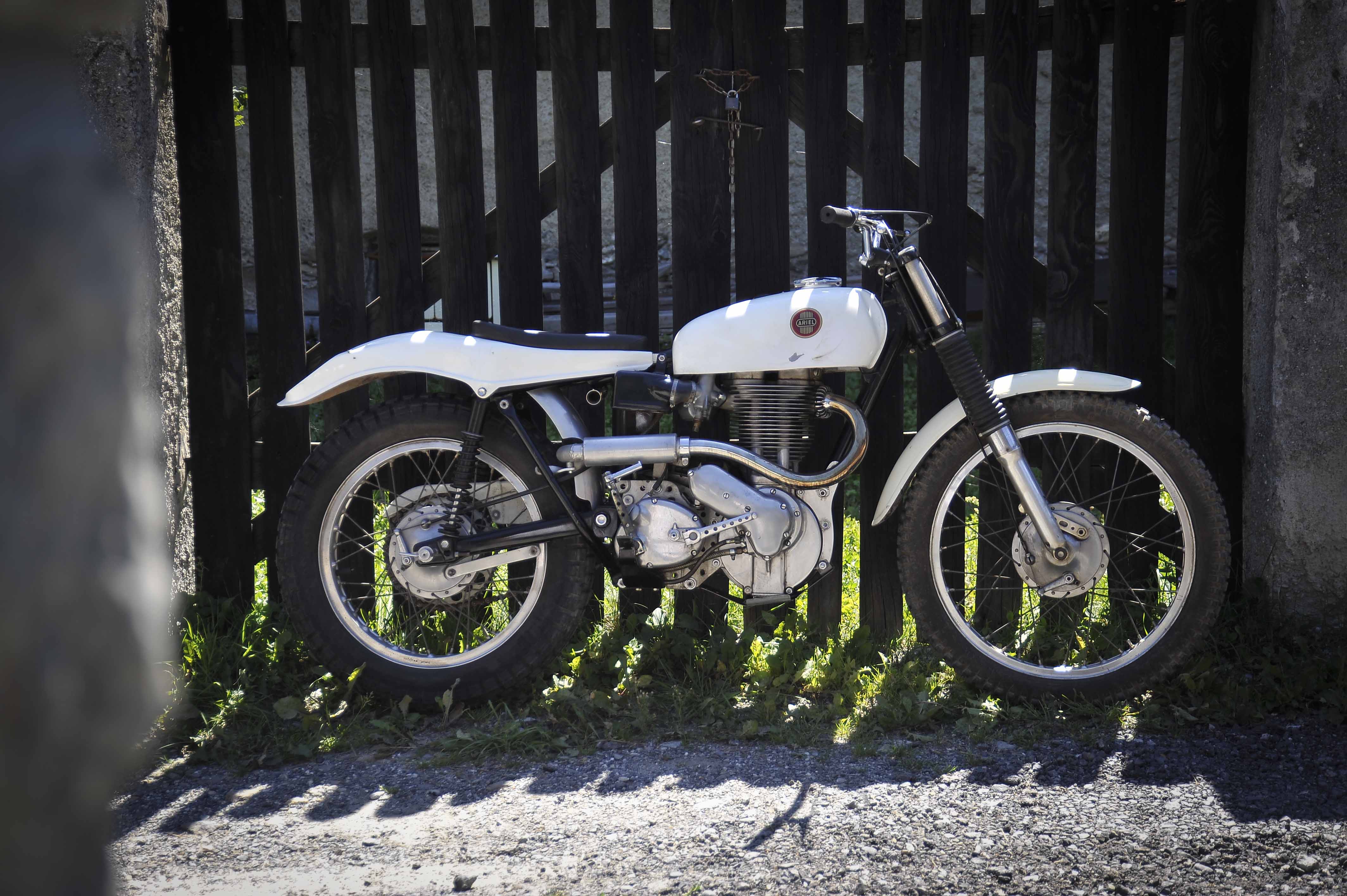
Rear view of 786GON showing the fibreglass mouldings by Butler. The Ariel was not a replica, it was Sammy Miller’s second string Ariel he used as often as GOV132, it is rumoured that Sammy simply changed the numbers over for different events. Photo courtesy of Roy A. Kerr.

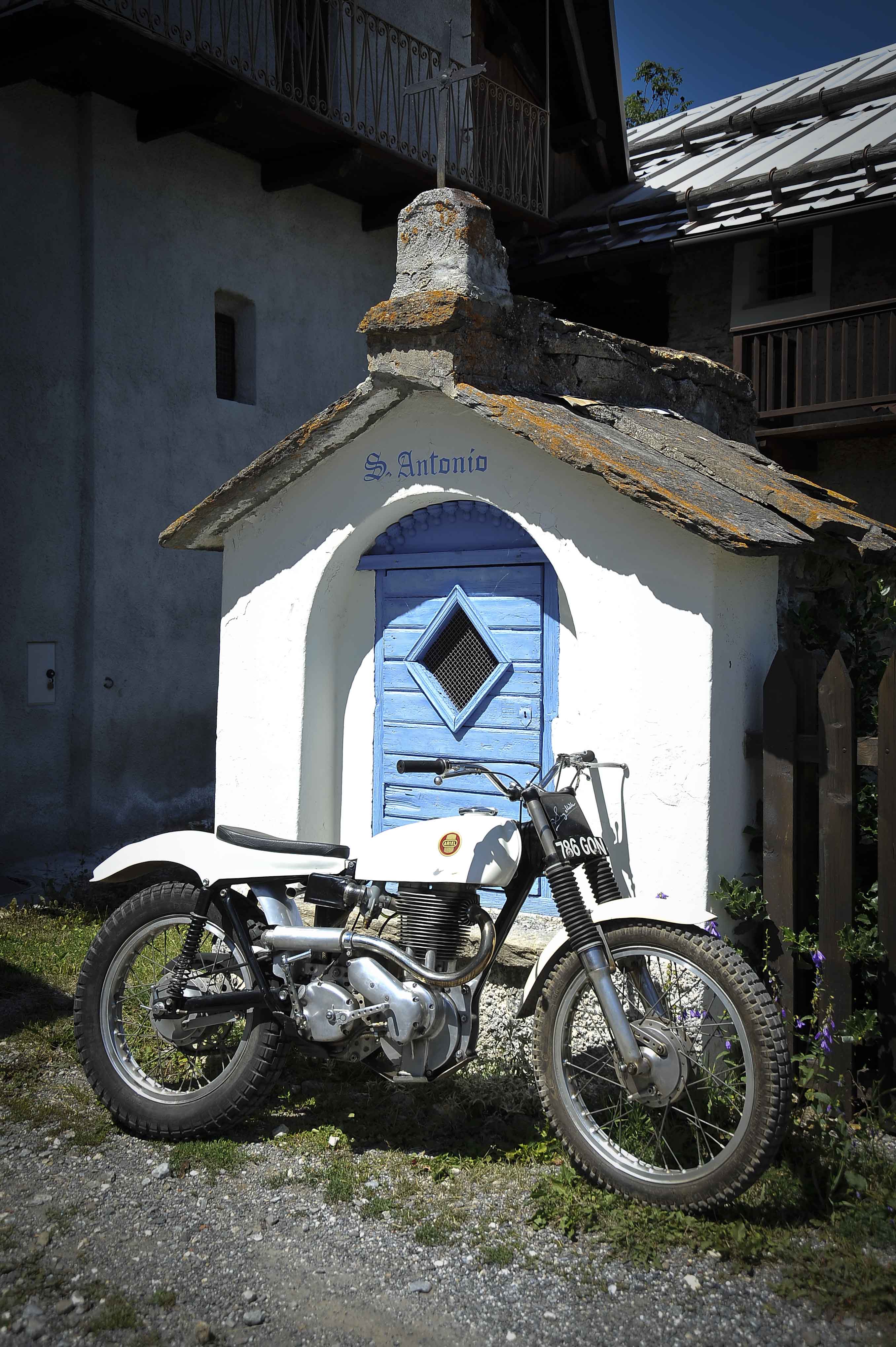
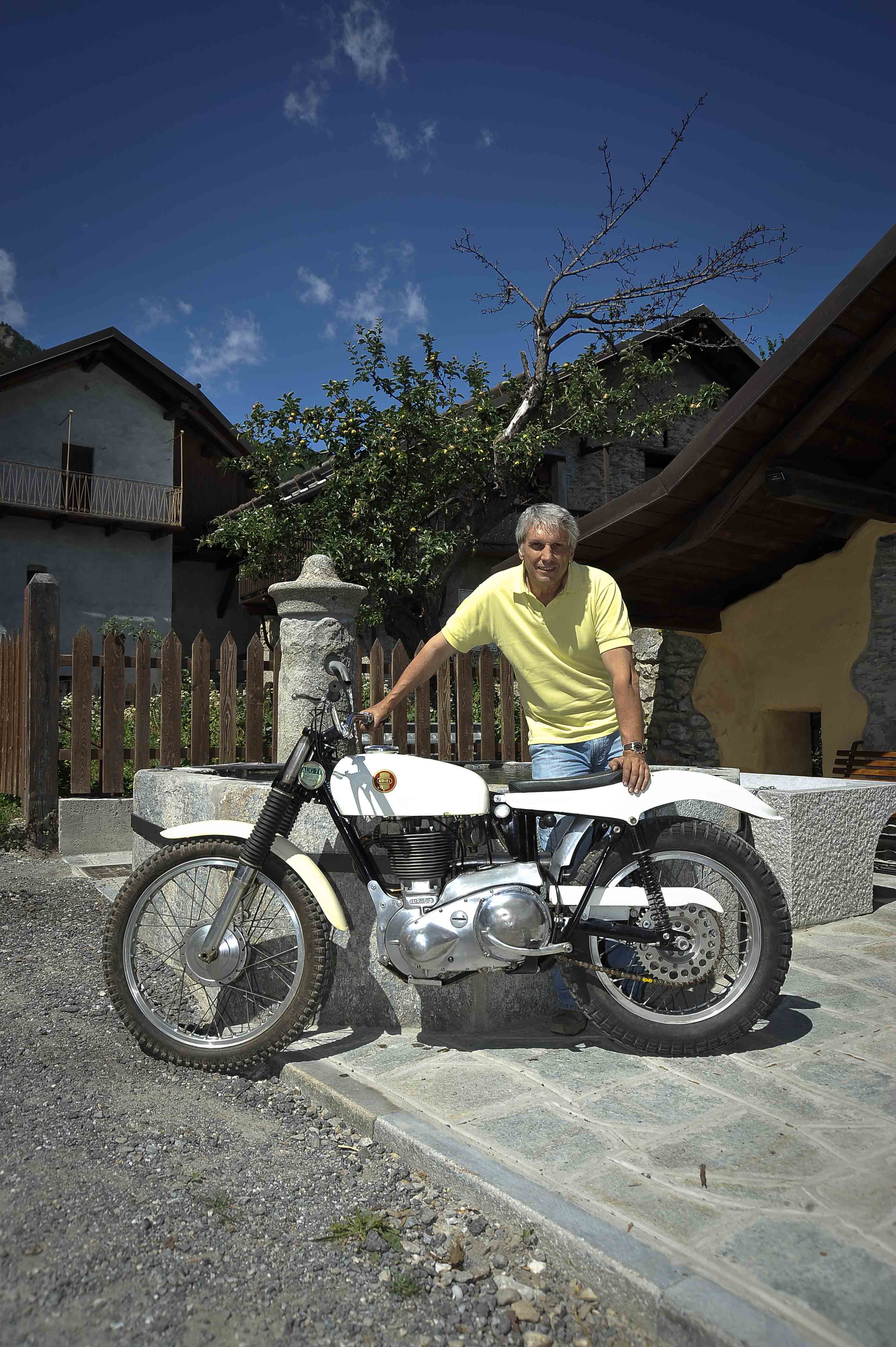
Not generally known, but here we have Ariel HT500 registered as 786GON, known as ‘Sammy’s other Ariel’. During the late 1950’s and 1960’s Sammy Miller had access to two HT500 Ariels, his famous version GOV132 and the machine pictured here. The bike is now in Italy in the possession of a collector, having been owned by Jock Wilson (Comerfords) Ernie Page, Roy Kerr and Tim Beaven, plus some other individuals

786_lhs
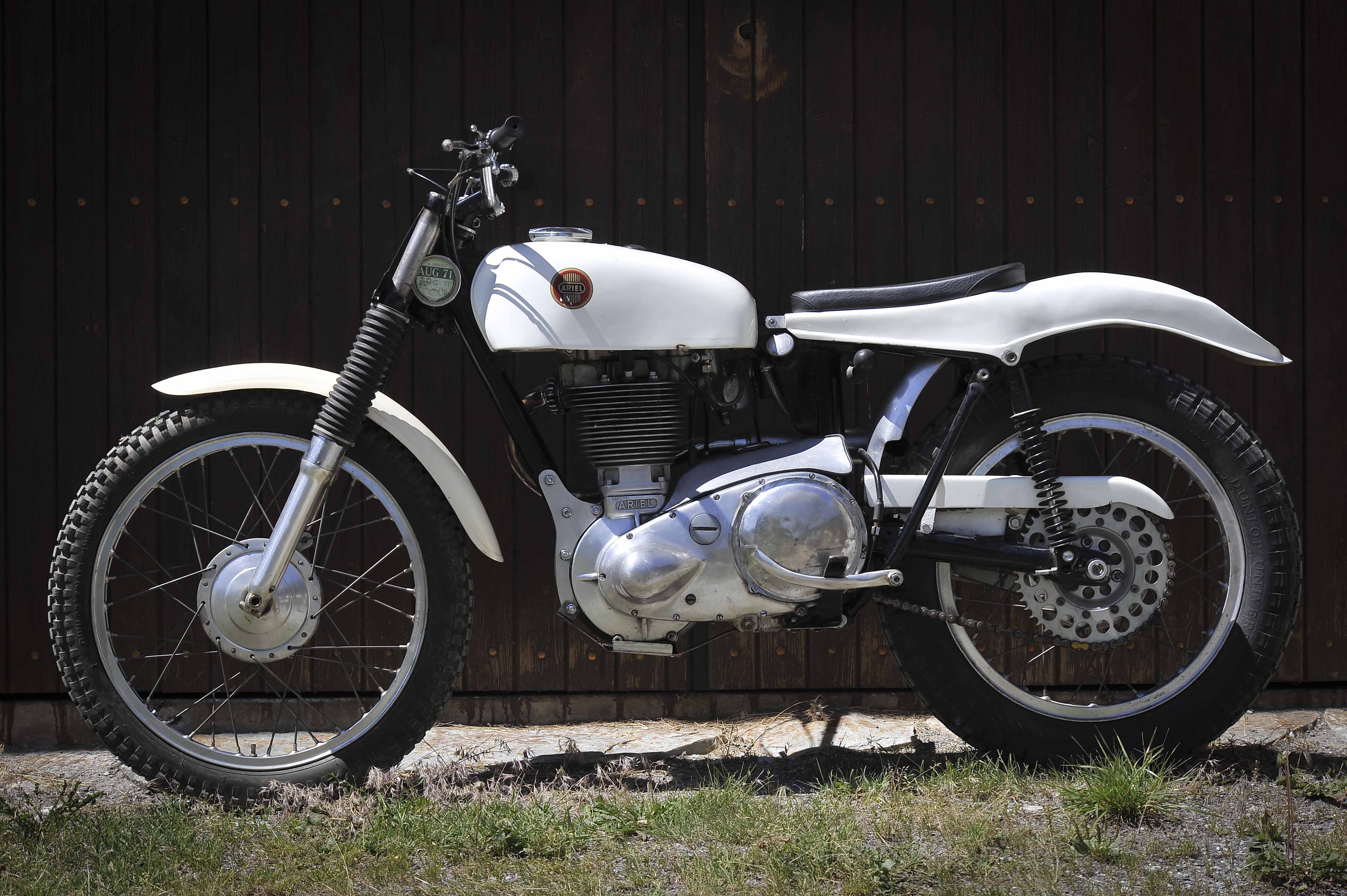
Timing side view of 786GON when it was owned by Roy Kerr. The exhaust was made to blow mud off the rear tyre. The machine was fitted with Ariels alloy ‘Leader’ type hubs. Photo courtesy: Roy A. Kerr.

The machine was put on sale in early 1965 by motorcycle dealers, Comerfords Limited in Portsmouth Road, Thames Ditton, Surrey along with GOV132. Comerfords having taken over the support from Ariels to Sammy Miller when the factory had ceased manufacture of trials machines. 786GON was for sale at £350, which was almost £150 more expensive than a brand new Greeves two-stroke at that time.

Arthur Fowler bought 786GON, but returned it for sale at the end of 1965 to Comerfords and Jock Wilson purchased the machine.

The motor shows its pedigree. The engine number indicates that this is no ordinary HT5, but an experimental motor. (Photo copyright: Roy Kerr)
The motor shows its pedigree. The engine number indicates that this is no ordinary HT5, but an experimental motor EXHS 99. (Photo copyright: Roy Kerr)

After selling the bike to Harry Rayner, Wilson bought it back from another owner, John Parry, at which time Jock Wilson slowly restored the machine to its former glory.

Wilson sold 786GON to Scotsman Ernie Page, himself an accomplished trials, scrambles and ISDT competitor, who owned Page Motors in Edinburgh, who at that time had a sizeable motorcycle collection. After a period of time, Page sold the Ariel to former employee, Roy Kerr, himself a former Scottish trials champion.

_DSC4707-9

After some years under the ownership of Tim Beaven, the bike was then sold to a private collector in Italy called Carlo Ramella. The Ariel lives on but in its new home in the Italian alps.

_DSC4343-5
786GON at it’s current home in the Italian Alps with current owner/collector: Carlo Ramella. Photo copyright: Justyn Norek, Turin.

Justyn Norek a design consultant from Turin, made the following observations of 786GON when a test of the machine was undertaken by the German ‘Trialsport’ magazine in March 2014, here they are:

“Frame: In Reynolds 531 tubing, modified with steeper steering angle, oil in frame.

Fuel Tank: Beautifully styled in fibreglass, very light and slim design, one bolt mounting with depression in front part to allow full lock of the steering, with the fork coming close to the tank. Perfectly done by Butler Moulded Laminates, the creation of Chris Butler. Also the builder of the Butler trials machine. It has a metal logo on the top of the tank a real work of art.

Seat Base: Integrated with the rear mudguard, another artwork in fibreglass by Butler. Very slim viewed from the top, in cream white finish, synonymous with Miller’s Ariel. It also had the integration of the rear registration number plate. The seat is perfectly designed to be light and slim, but still comfortable.

Exhaust system: Starting with the beautiful curve, extremely compact and well tucked-in to the motorcycle. It terminates with a small silencer breathing out the hot expelled gasses on to the rear tyre knobs. This ingenious idea allows for cleaning of the rear tyre from any mud and leaf-mould and also warms the tyre rubber for better grip.

engine_1
“… extremely compact and well tucked-in to the motorcycle. It terminates with a small silencer breathing out the hot expelled gasses on to the rear tyre knobs.” – Justyn Norek (Photo copyright: Roy Kerr)

Kick-starter and Gear Shift levers: Bored out to shave more weight from the machine.

Speedometer: Mounted to the engine plate and protected by the aluminium shield from mud etc. It is not the easiest to look at when in operation, but who looks at the speedometer during an event. This was merely an attempt to keep the machine street-legal.
Chain guard in fibreglass, neatly styled with simplicity, weight-saving and functionality.
786_rlh
“…Chain guard in fibreglass, neatly styled with simplicity, weight-saving and functionality.” – Justyn Norek. (Image copyright: Roy Kerr)
Front mudguard: Again in cream white fibreglass by Butler. minimal and beautifully shaped and in perfect aesthetic harmony with the fuel tank, seat base and rear mudguard units. This creates an unforgettable aesthetics of this historic motorcycle.”
 
_DSC4764-10.jpg
 

Technical Specification of 786GON:

ARIEL 786GON – Technical Specifications:

Engine layout: Single cylinder, vertical cylinder in light alloy.

Capacity: 497cc

Bore & Stroke 81.8 X 95 mm

Compression ratio: 8.5: 1

Max power: 24 hp at 5800 rpm

Carburetor: Amal monobloc.

Oil system: Dry sump with double oil pump and separate oil tank.

Primary drive: Chain.

Clutch: multiple discs in oil bath.

Gearbox: Burman – separate, 4 speed ratios: 6:1; 9.5:1; 14.7:1; 19.3:1

gearbox
Gearbox: Burman – separate, 4 speed ratios: 6:1; 9.5:1; 14.7:1; 19.3:1

Frame: single down front tube in Reynolds 531 steel – Weight around 14 kg.

Suspension:

Front: Hydraulic telescopic forks with sliders shortened from Norton road-holder, yokes from BSA shortened to shorten wheelbase.

Rear: Rear swing-arm on silent-block bushes with chain oil system incorporated, Armstrong shock absorbers.

Wheels: steel rims, tyres front: 2.75 x 21, rear 4.00 x 19.

Brakes: Front: drum type 180 mm – Rear: drum side type 180 mm

Main dimensions: wheelbase 1340 mm

Ground clearance 220 mm

Seat high: 810 mm

Steering head angle 63.5 degrees

Weight: 111kg.

_DSC4541-6.jpg

The magazine Trialsport in Germany carried a full report using material from Justyn Norek Snr and his son Justyn Norek Jnr. If you can read German language, here is a link to the article on the internet, (you may need to right click on the link to open it):

Article 786GON – Trialsport ©

PDF version of article from Trialsport Magazine DE: Ariel 786 GON (1)

Photos courtesy: Roy Kerr, Kelso, Scotland, UK.

Photos courtesy: Justyn Norek, Turin, Italy.

For more photos of 786GON – See Justyn Norek Photos

Please be aware that the article on Ariel, 786GON which appeared in Trialsport magazine is copyright – Trialsport March 2014 – © 2013 TRIALSPORT Verlag, Odenwaldstraße 5, 97896 Freudenberg-Ebenheid

Additional information Words and photos copyright – Justyn Norek, Turin, Italy.

Article ‘Ariel HT500 – Sammy Miller – 786GON’ is copyright of Trials Guru – 2015.

Apart from ‘Fair Dealing’ for the purpose of private study, research, criticism or review as permitted under the Copyright, Design and Patents Act, 1988, no part of this article may be copied, reproduced, stored in any form of retrieval system, electronic or otherwise or transmitted in any form or by any means, electronic, electrical, mechanical, optical, chemical, photocopying, recording or otherwise without the prior written permission of the author as stated above. This article is not being published for any monetary reward or monetisation, be that online or in print.

SSDT 2015 Nevis Radio Coverage

The annual Scottish Six Days Trial starts on Monday 4th May until Saturday 9th May in Fort William and surrounding Lochaber and down into Perthshire.

The event which has been organised by the Edinburgh & District Motor Club Ltd since 1911 is always over-subscribed and covers some 600 miles during the week long excursion.

Dubbed many years ago as the ‘Sporting holiday in the Highlands’ it is far from being a holiday for most of the riders as it is still regarded as a fairly hard event to compete in.

The clerk of course is Jeff Horne from Perth and he has found some interesting new hazards for 2015.

Jeff Horne
Jeff Horne is the SSDT Clerk of the Course 2015

There is a new event secretary, Mieke De Vos, a Dutch born mathematics teacher who lives not far from Edinburgh. Mieke has been around the SSDT for a few years now and was the finish marshal at last year’s event.

Mieke De Vos H&S
Mieke De Vos is the new SSDT Secretary for 2015

Nevis Radio will once again be covering the SSDT live every morning from the Parc Ferme situated in Fort William’s West End. Nevis Radio is the only media group covering the event. You can listen live on your mobile device or home computer. Coverage begins every morning at 07.00 GMT.

The presenters will be Station Manager David Ogg, Si Abberley and The Moffster (aka Trials Guru – or John Moffat if you prefer!). Security will be covered by ‘Big’ John Weller another of the regular Nevis Radio weekly presenters drafted in for SSDT week!

NR team
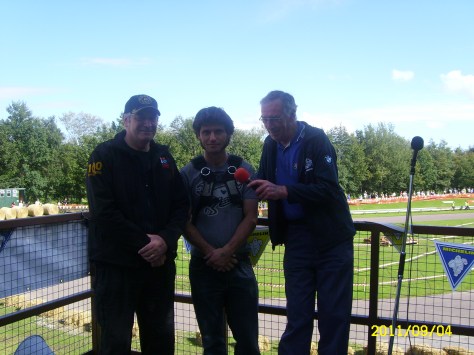
The Nevis Radio Crazy Outside Broadcast Team for the SSDT – From left: David Ogg (The Oggster); John Moffat (The Moffster) & ‘Big John’ Weller – The Security Man!

The coverage will once again be sponsored by Michelin Competition and Trial Magazine, Britain’s foremost trials only full-colour magazine.

DL
The Moffster (Left) interviews 12 times World Trials Champion Dougie Lampkin on Nevis Radio.

Keep tuned to NEVIS RADIO during Scottish week, whether you are in attendance or at home working!

Nevis Radio

Listen to Nevis Radio