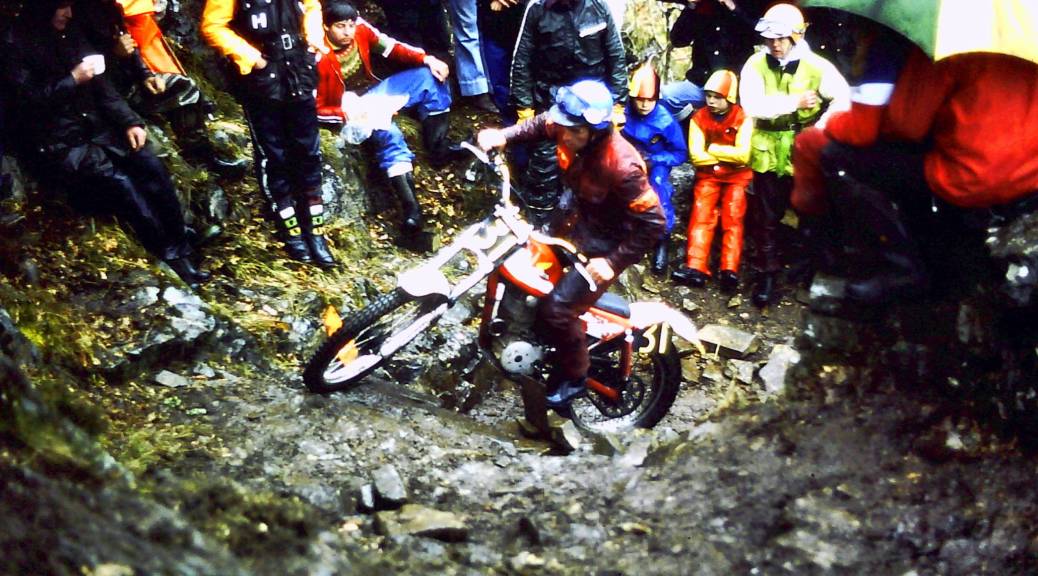
Latest release from Trials Guru is Trials Legends – Volume 2, which will be extended over the next few weeks.

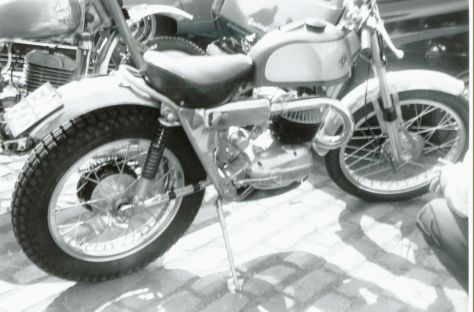
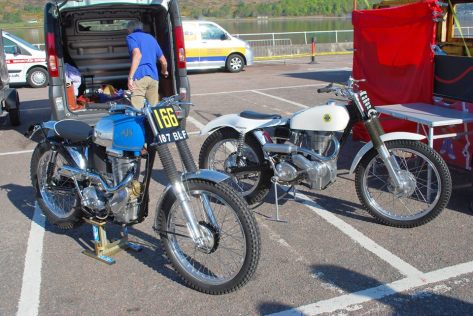
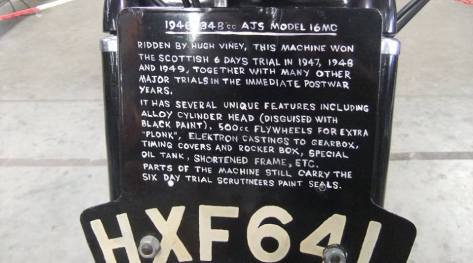
1946/47/48 – HughViney’s 350 AJS (HXF641)

1957 – Johnny Brittain’s 500 Royal Enfield Bullet (HNP331) – National Motorcycle Museum.
1962/64 – Sammy Miller’s 500 Ariel (GOV132) – Sammy Miller Trust.
1961 – Gordon Jackson’s 350 AJS (187BLF) – Sammy Miller Trust.
1963 – Arthur J. Lampkin’s 249 BSA C15 (XON688) – Owned by A.J. Lampkin.
1965 – Sammy Miller’s Bultaco Sherpa (669 NHO) – Owned by Sammy Miller Trust.
1966 – Alan R.C. Lampkin’s 249 BSA C15 (748MOE) – Owned by A.R.C. Lampkin.
1967/1968 – Sammy Miller’s Bultaco Sherpa (EAA60D) – Owned by Yrjo Vesterinen.
1969 – Bill Wilkinson’s 250 Greeves – (WWC 169F) – Owned by Bill Wilkinson.
1981 – Yrjo Vesterinen’s 349 Montesa Cota – Owned by Yrjo Vesterinen.
2005 – Sam Conner’s 290 Sherco – Owned by Paul Rays
So where are the rest?
1954: Artie Ratcliffe’s 350 Matchless (OLH721)
1959: Roy Peplow’s Triumph Cub (RUE923)
1970-1971 : Mick Andrews’ Ossa (B775073 – Barcelona registration)
1972 : Mick Andrews’ Ossa (B-1681-C – Barcelona registration)
1973: Malcolm Rathmell’s 250 Bultaco (XWW34L)
1974: Mick Andrews’ 250 Yamaha (CRA33L)
1975: Mick Andrews’ Yamaha (JGF729N)

Thirty years in the world of trials, if one man has made his mark it’s the Belgian, Charly Demathieu. The absolute reference point for the scorecards at both the Belgian and Spanish Championships as well as all the World rounds, he is the true living memory of our sport. The guardian of trials history he has put his treasured archive on his fabulous website www.trialonline.org This is the story of an encounter with a genuinely passionate individual that does not only live by numbers.
“I was the first minder in the history of trials with Jean-Marie Lejeune.” – Charly Demathieu
“Trialonline has 4000 pages and almost all the results of all the big events since the birth of our discipline.” – Charly Demathieu
Who is Charly Demathieu?
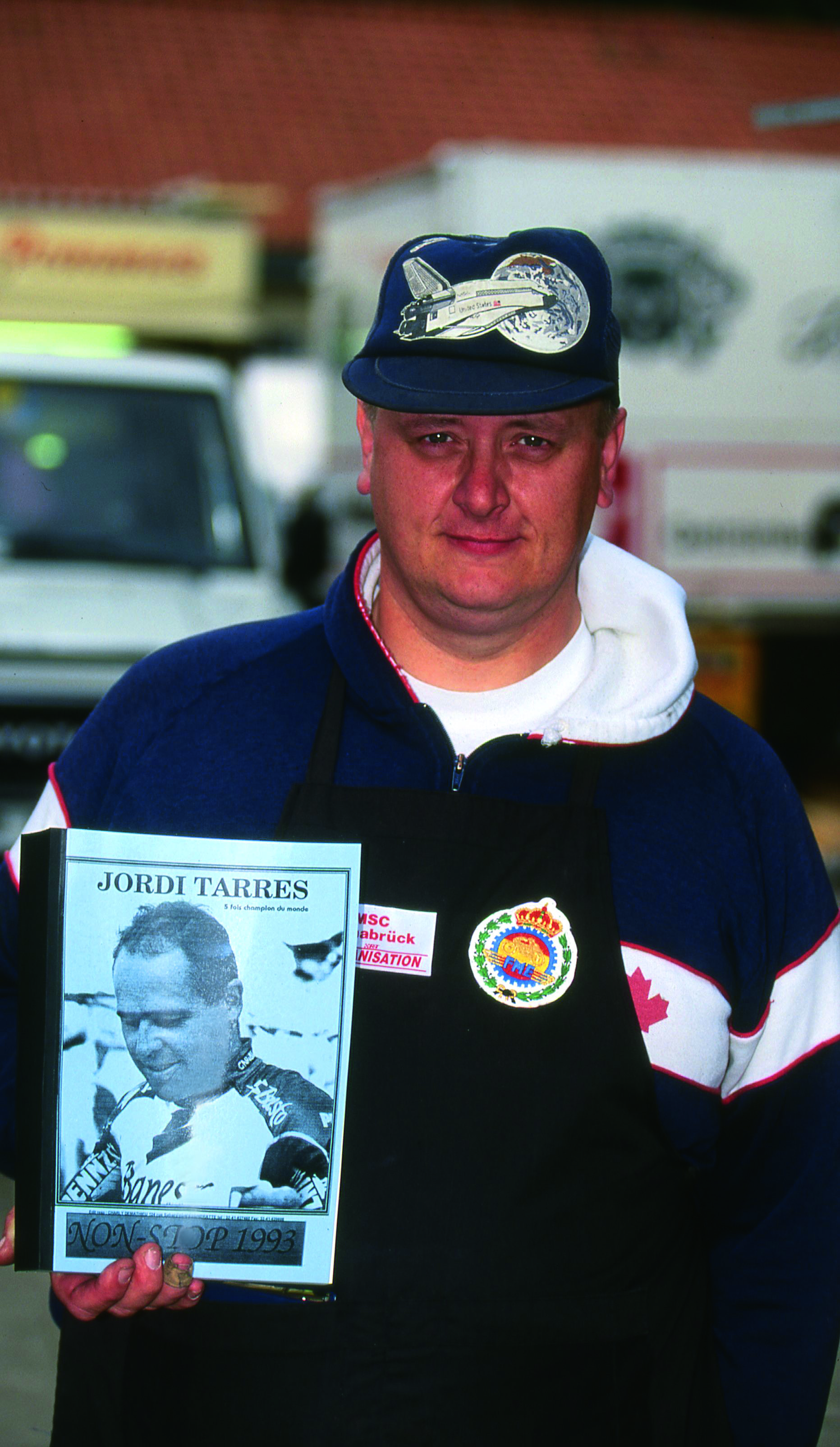
Charly: “I was born on 12th June 1952 at Cheratte (North of Liege – Belgium), in fact I still live there. I followed my humanities course until the sixth year, which is the equivalent of ‘A’ levels in the UK. Then I got my driving licence and I became a truck driver for the Public Welfare Centre of Liege for whom I worked for twenty years. The centre later closed and I found myself as an archivist in a psychiatric hospital, completely different but really not an obvious career change at first but it was a very rewarding experience to live in contact with patients with severe drug and alcohol problems. I learned a lot through these people that we really do not need to be afraid of them, yet they frighten almost everyone … Another twenty years passed very quickly and for the last two years I have been a pensioner, but not quite retired!“
Which is the source of your passion for trials?
Charly: “Oh, I feel a bit like Obelix, I fell into a tiny cauldron filled with a potion (passion!) for the magic of trials. Still in my pram, my mother often took me to see my godfather, Rene Georges, and my cousin Roger ride. Later there was one man who gave me a really genuine passion for the sport, Jean-Marie Lejeune (Eddy Lejeune’s elder brother). In 1975 I was a spectator at the Grand Prix held in Sommieres and Jean-Marie was looking for a driver to take him to the next round in Sweden. It started well and I was soon driving the Lejeune family truck to all the Grand Prix’s and once there I tried to occupy myself so I started making small rankings of the results.“
You rode trials in the seventies … why did you stop?
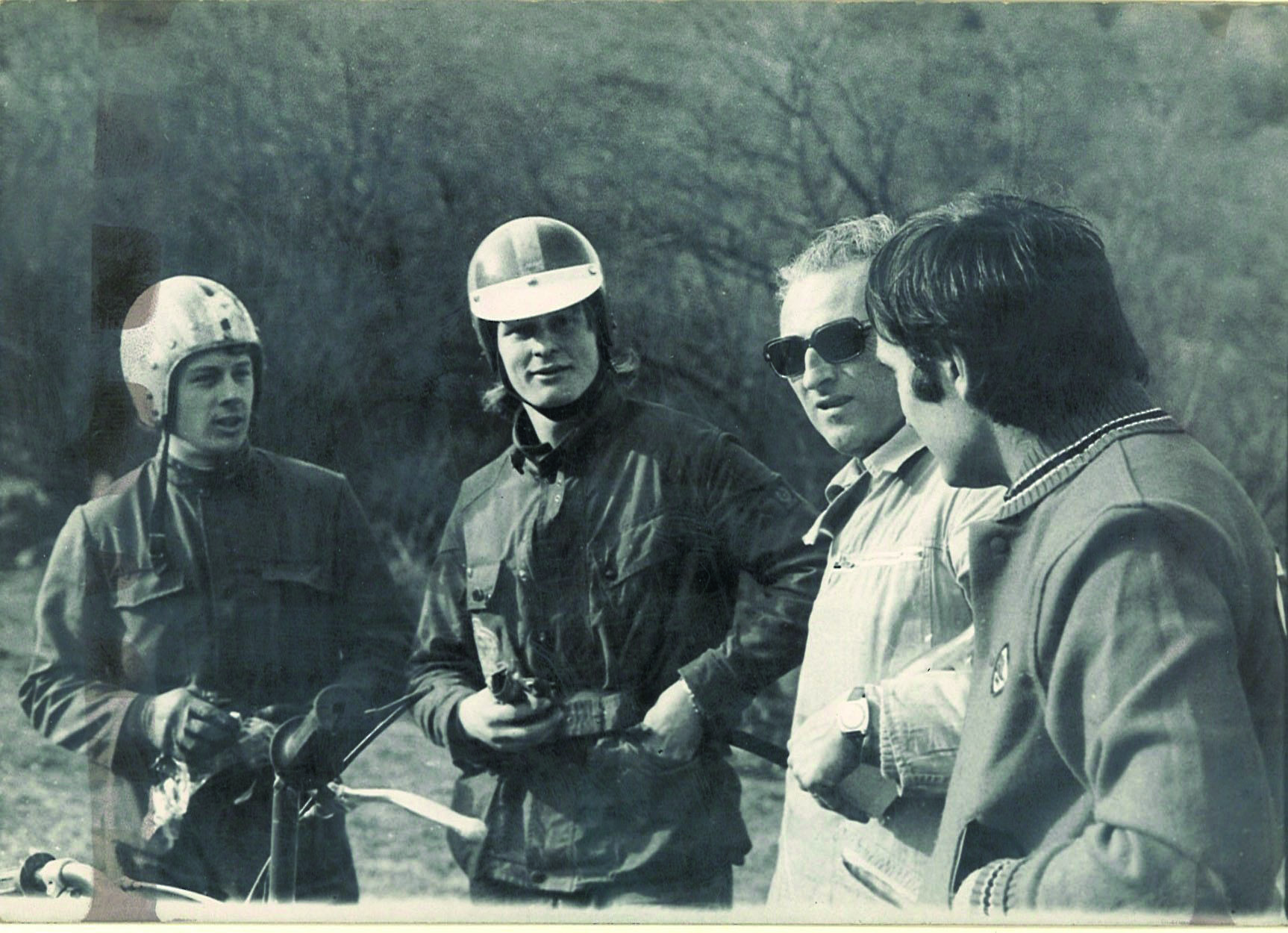
Charly: “I just rode as a Novice and then Intermediate but without any impressive results. In fact at the time I was especially fond of my road cycle. My claim to fame is that I was the first minder in the history of trials with Jean-Marie but my job was so very different from their current duties. I followed my rider between sections with my backpack filled with essentials as this was the time when motorcycles were much less reliable than today. I helped with repairs for Rathmell, Lampkin and Karlson. Solidarity amongst riders was much stronger than today. I was almost never seen in sections, I stood at the ends cards, ready to intervene if necessary. I watched the lines and rides of his competitors but I never set foot inside the section. I remember one time when Jean-Marie made me stand in the middle of a river with water up to my waist to mark the deep hole where he should not ride. We were very close to each other and then we lost contact for nearly fifteen years since I was often on results duty in Spain and rarely in Belgium. We met again by chance in 2011 during the GP of France at Isola 2000.“
How do you convert from competitor to official – organiser?
Charly: “I rode events for a few years. I drove the Lejeune family to all events using holidays that I could earn by working on other weekends of the year. For a long time I looked after the Belgian Championship but I finally stopped because it took me too much time. I was race director, timekeeper, starter and closer of the event too, you know the one who leaves after the last rider to remove and collect the section markers. I also worked with the setting out of sections; at the time we marked the inter-section route with methylene blue mixed with plaster. You finished the day blue all over; the colour did not want to wash off! I also managed entries for the GP’s, allocation of riding numbers; I standardised the various documents for the Championship so we could use the same media everywhere.“
You became the “Grand Vizier” of the scoreboard with your famous magnetic board?
Charly: “It was with Jean-Marie Lejeune that we came up with the idea of a magnetic board to display the scores but I did not actually put into practice until 1982. On one side there were the rankings of the day, on the other those of the Championship and I got to the final result by sliding my magnets up or down. I managed to calculate the score very quickly so when riders brought me their score card I put the results on the famous board and everyone could see where they had finished compared to their competitors in almost real time. I was doing all this alone at many events. At Bilstain for the Belgian GP I arrived with a large format magnetic board that I installed on the podium. The Italians asked me to do the same at their home round: I said yes, then it was the turn of the Finns … and I was away, I did it all over the world. It lasted nearly twenty years and then one day the truck of the Spanish Federation was stolen in Poland along with the famous scoreboard that was in it. I then finally moved onto the computer but suddenly I could not see the riders as I did before and I was no longer on the podium with the public: I was tapping on my keyboard in a corner.“
What is your current status? Are you an employee of the FIM, do you still work for the Spanish Federation?
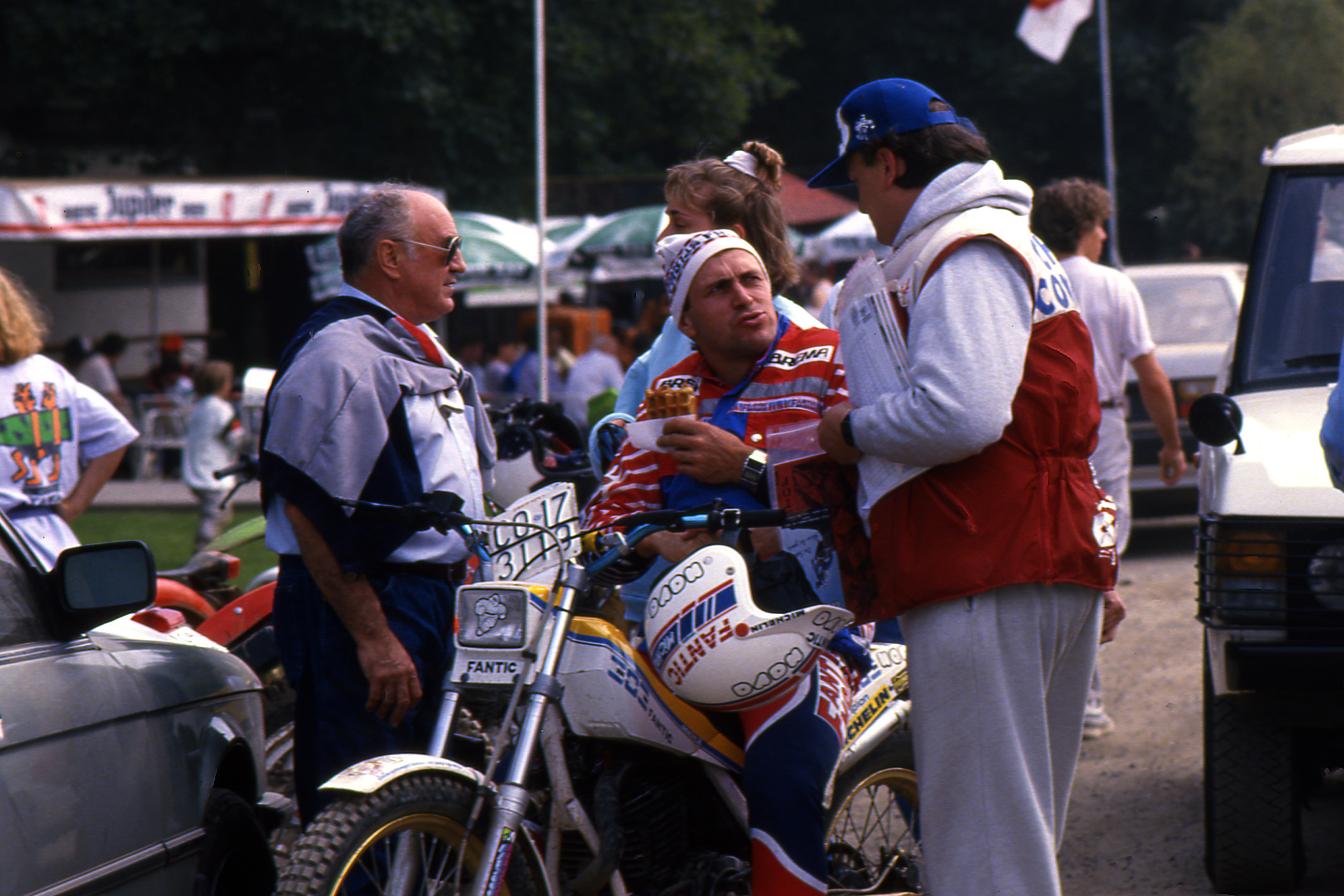
Charly: “I work for the FIM at the World rounds. I am in a team of three with Jordi Pascuet and Jake Miller: it’s a package imposed by the International Federation (FIM), it is not I who makes the decision to go or not to a particular GP. It may not suit the organisers who prefer to use the services of ‘locals’ who are more often than not very competent, but they do not calculate the overall rankings throughout the season. In addition we represent for them a significant cost. A few years ago I took my car and I went to the other end of Europe but with age I can no longer do things in the same way. So the organisers of the GP must support our airfare, accommodation etc… This represents a budget they would like to distribute down to the volunteers already in place. I did the same job for the Spanish Championship for eighteen years; I stopped only four years ago. I was away twenty seven weekends a year. Since I am a pensioner I have more time but there were still two years that I spent all my holidays to travel. I was always away but I loved it. I loved certain events such as the trial of Montmartre in Paris in the nineties. I found it wonderful to be able to bring trials machines here! They should have done the same thing in Barcelona. The urban trial at Cahor’s in France is superb it seems but I never went there. We must find a way to introduce trials to the public who know nothing of our discipline.“
What were the various stages or changes in your work?
Charly: “There came a time when I was forced to stop organising events in Belgium due to a lack of time, I was spending so many weekends at the Spanish Championship whilst working at the hospital in Liege during the week. I was often with Jordi Prat; it is we two who have defined the current format of the Trial des Nations. Before we took only the top three total scores of the four members of the team, later we decided to only take into account the three best results of the four teammates in each section. Our principle was tested and finally accepted by Ignacio Verneda then President of the FIM, it was he who insisted on my presence at each Grand Prix. That gave me more time to spend on the road.“

Any anecdotes, vivid memories?
Charly: “Many, inevitably, there are often amazing things that happen at a trial! For example at the GP of San Marino in 2008 when the local club wanted to refuse the technical controls being undertaken by the Italian Federation as it obviously did not please them, they had a real zealous approach, so they thoroughly checked all the dates of various documents (insurance, motorcycle registrations etc) of all foreign riders, it was a massive panic, as some of the riders feared they would be excluded from starting! Eight days later in Foppolo for the Italian Grand Prix, it was again the same controllers; they finished at lightning speed without any real checks. Still at the same event, we went back home on Sunday evening without being able to send out any results. Italian TV had saturated all internet connections; it took ten minutes to send an email of three words.“

You created ‘Trialonline’ and have written dozens of books: you’re a pretty verbose boy!
Charly: “It is only for personal pleasure that I did all that. I’ve always loved creating stories from the passion that I witnessed. I have written fifteen books on Belgian, Spanish and World events, but I have even more to give. I have created a CD Rom containing all the results from around the world, which works in the same way as my website that I created at the request of the FIM in 2004. Since then I keep feeding Trialonline the results of trials in the most diverse countries such as Israel, New Zealand and even some South American countries. I update the results of the latest events even those held last weekend. You click on the flag of a country and you get the corresponding results, you click on the photo of a rider, you know his record. Trialonline has 4,000 pages through which we find almost all the results of all events since the birth of our discipline: it is only missing 21 ranking events! Sometimes it is very difficult to obtain results; I often prefer to speak to organising clubs rather than National Federations who are not really making big communication efforts in this area. You can find the results of the year, but not those from previous seasons! In France, it is Oliver de la Garoulaye who took the trouble to dig through the archives of the FFM to find the results since the first World round. Here I absolutely have all the results, but only thanks to fans like him, not because of the Federation.“
What are your plans for the future?
Charly: “To finalise my archives, finding the 21 results I am still missing. I am also concerned about what will happen if I stop Trialonline work with the FIM. I renew the partnership each year, but I may not want to one day, it worries me to leave because there would be nobody to take it on after me. I’m also a big fan of Asterix: I have 600 volumes published in 42 different languages, I am very proud of my collection and I have some very rare specimens. I need to update my rankings for Trialonline; right now I’m working on a trial in New Zealand. I also plan a new grading program offering a choice between two or three rounds, a variable number of sections, all this is a lot of work.“

What is the state of health of Belgian trials?
Charly: “As elsewhere, is too often a single person who takes care of everything in his club and when this guy stops, the club dies. We also have the organisation related to ecological constraints that are huge in Belgium, much worse than your problems. For example, in the province of Liege, in the eighties, there were more than ten events per year, now we have only one quarter and in the rest of the country, it is the same problem. There is still a trial in Mons, Aywaille, and Bilstain and in Wavre and that is almost everything. You really have to go to private land such as Bilstain for young people to ride legally. This is the only way forward. Obviously the financial crisis is even worse for young people who have much difficulty in finding the budget to ride. It is certain that Belgian trials have seen better days.“
How do you feel about the disappearance of the GP in Belgium?
Charly: “This is something that really saddens me the as last GP was already six years ago and I look forward to the next one in Comblain-au-Pont close to Aywaille on the 13th July this year. At the last Bilstain round there was a strong divergence between the organisers and the FIM in particular with regard to the departure time. Since then the FIM does not want to go back. There was later a GP at Spa – Francorchamps in 2006 but that also ended badly. In the late afternoon there was an anti-doping control which lasted a long time and the prize ceremony could not take place until the test results were known. Inevitably the public became impatient and left without waiting for the podium presentation, the party was spoiled! It struck me as a tough decision as the results had been ready for a long time…. So I’d like to set the record straight, contrary to what has been said by many, it is not the fault of Charly Demathieu that there were no more Belgian GP’s! In 2007 the request by the organisation for a date was too late and the GP has not occurred since. This is obviously very unfortunate, if only because of the central location of our country, it is not such an expensive event for the vast majority of participants.“
If you could see the realisation of your three wishes, what would they be?
Charly: “To make the most popular trial by creating attractive and free to spectator trials, so not really like our current indoor circus … Reaching out to people I do not know and of course find the 21 results I miss between 1964 and today.“

What else would you want to say?
Charly: “I wanted to tell you about my favourite riders. Obviously there is Jean-Marie Lejeune but Mick Andrews for his ability to adapt quickly to different machines whilst remaining competitive. I love Yrjo Vesterinen, the first truly professional rider. I also appreciate Fujinami as he is someone who respects everyone and always passes by to say hello. Thank you and hello, they cost nothing, but it is important to all the hard working enthusiasts who create our sport. I would also like to take my hat off to people who have the courage to write about trials.”

This article was first published in Trial Magazine, France and we thank them for the cooperation and use of this article.
For Charly Demathieu’s Trialsonline website – HERE

Apart from ‘Fair Dealing’ for the purpose of private study, research, criticism or review as permitted under the Copyright, Design and Patents Act, 1988, no part of this article may be copied, reproduced, stored in any form of retrieval system, electronic or otherwise or transmitted in any form or by any means, electronic, electrical, mechanical, optical, chemical, photocopying, recording or otherwise without the prior written permission of the author as stated above. This article is not being published for any monetary reward or monetisation, be that online or in print.

An addiction in life usually needs a fix, something to make your life feel good. Motorcycle trials becomes an addiction for many people, be it young or old. They may need a new machine, maybe some new riding kit, who knows? In many cases the older you become the more the addiction takes hold as more time becomes available in your life. Many years ago a Spanish motorcycle trials rider by the name of Carlos Casas came to ride in the Scottish Six Days Trial. A foreign adventure to the ‘Highland’ trial. The pleasure and enjoyment of riding in this location became so strong that over thirty years on, this enthusiastic man returns every year to the ‘Scottish’ for his fix to feed his addiction for motorcycle trials.
John Moffat of Trials Guru was the SSDT secretary in 2002 and that year at the Highland Council reception in Fort William, Moffat introduced Carlos Casas to guests and councillors as “the Ambassador for Spain for the Scottish Six Days.

Why the Scottish Six Days Trial?
Carlos: “For many reasons, it’s the biggest trial in the world, I love Scotland, the scenery, I love trials, good sections, friendly people as riders, observers, public, organisers and friends from all around the world…and all of this I can meet in the SSDT. This is my favourite event by far and my best holiday every year”.

How well do you remember your first trip to the ‘Scottish’?
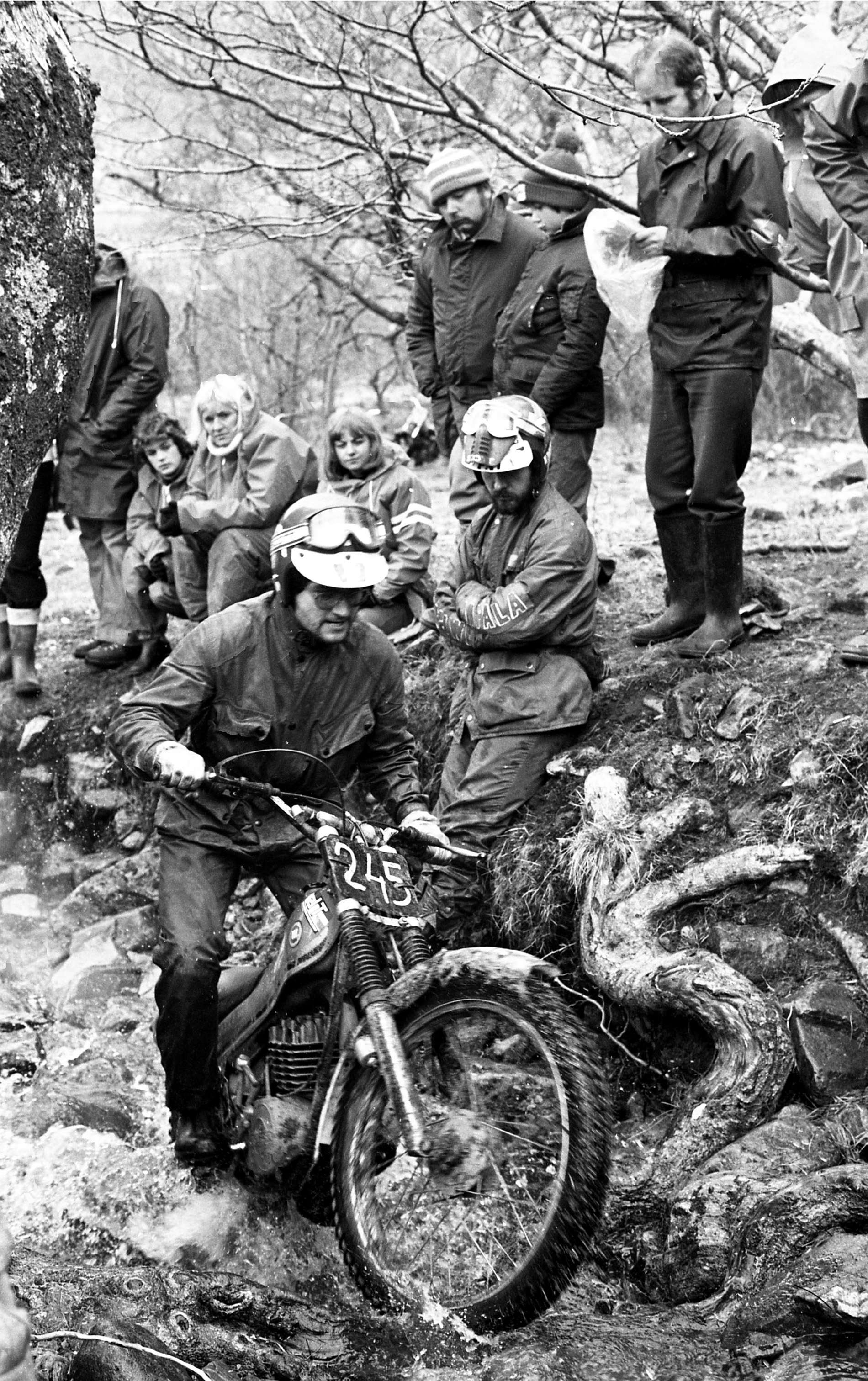
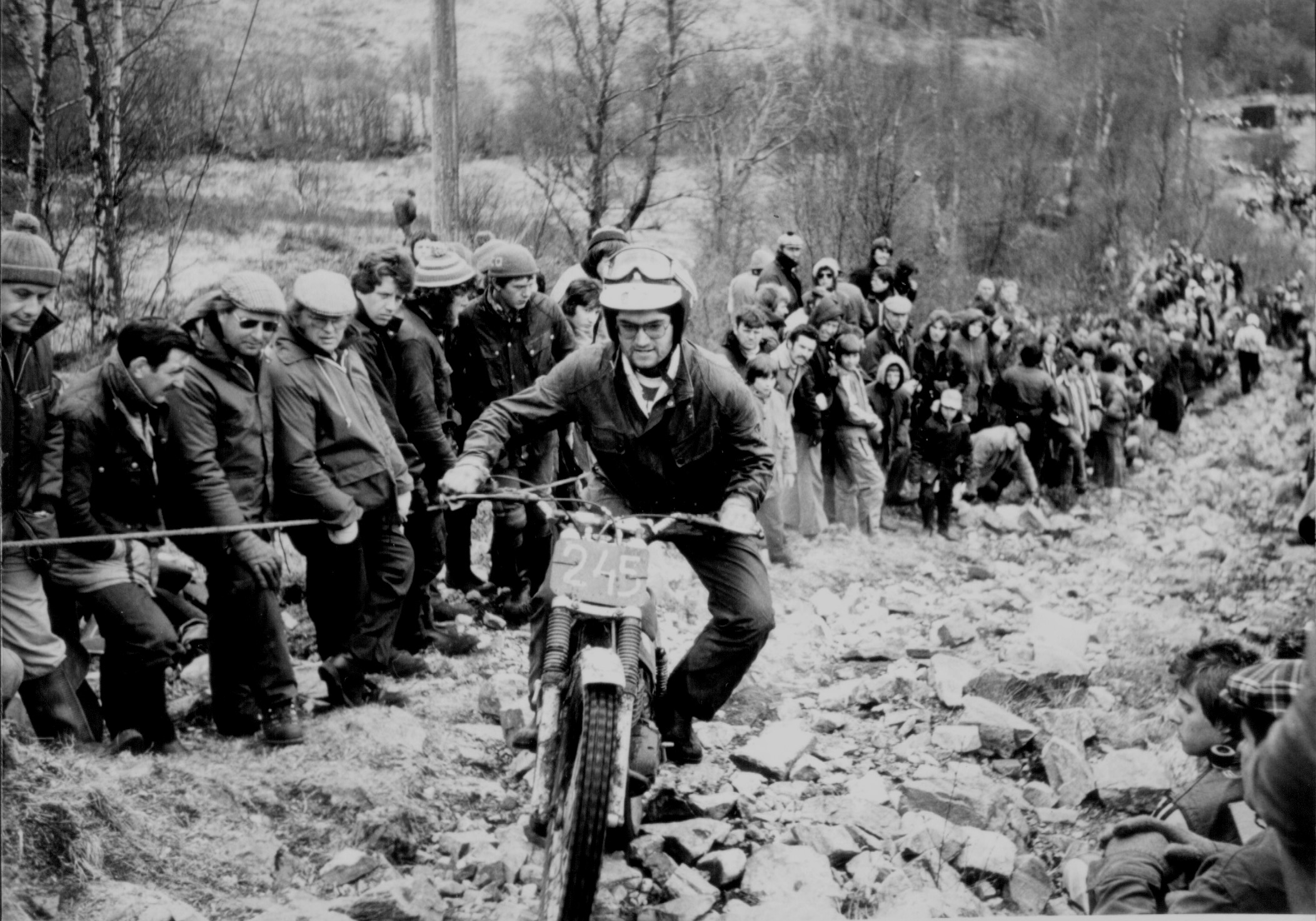
Carlos: “My first trip to ride the SSDT was in 1979. I was the winner of a challenge/competition for the best private rider at the Santigosa Three Days and Cingles Three Days trial in Spain. We travelled with the Montesa factory riders who were Jaume Subira, Miquel Cirera, Pere Olle and Josep Jo. I remember that we travelled by car and van and it was a long trip from Spain”.
Was the week’s competition a tough one?
Carlos: “I rode a Montesa Cota 348 and the weather was horrible as each day the route was very long and it was extremely cold with rain and snow. At the end of the week I was happy about the experience and finished in the top fifty with a Special First Class award”.
When you returned home did many people ask you about the event?
Carlos: “Yes, all the trials riders and many people asked me about the SSDT – I was a minor celebrity – Carlos laughs at this! This event is very popular in Spain and for many trials riders it is like a dream. It’s incredibly expensive to travel and compete from Spain but at every event we are always talking about the ‘Scottish’. It’s an event that you’ll love or hate. I always say that every trials rider must ride this event at least once. The problem could be that if you then enjoy it, you’ll repeat the experience every year and that’s when the addiction begins or as I always say, an incredible experience”.

Did Montesa support you in the early days?
Carlos: “I have always had good support from Montesa. I have never been a good enough rider to make a wage from the sport but I won the Spanish Veterans class over twenty eight years ago, a championship I have won fourteen times. I have also had some other good results and based on this and my loyalty to the brand, they are always happy to loan me a machine. I think of Montesa as family”.
How good did it feel to win the Best Foreign rider award?
Carlos: “I can remember it like it was yesterday, the first time I won the Best Foreign rider award. I have won this award four times and my highlights from the event are two thirteenth place finishes. The last time I achieved this result I had tears of joy in my eyes on the last sections on Ben Nevis I was so happy”.
You continued to support the event even when it went back to full ‘No-Stop’ in the nineties.
Carlos: “Yes, I like the ‘No Stop’ rules at this event and I believe it was the correct decision”.
Carlos: “The last years of the event when they were using the ‘Stop’ rules the sections became tighter, difficult, dangerous and boring because of delays at the sections. Each year less competitors entered and I think the SSDT committee made a good job and the decision to go back to ‘No Stop’ was correct for the future of the event. Since then the SSDT is oversubscribed every year and it needs a ballot. One year I suggested to the committee that there should be two SSDT trials, one in May and one in October – Carlos laughs again as he explains he just loves the event!”
How important in Spain and to Montesa was the win of Amos Bilbao in 2002?
Carlos: “It was very important for Montesa/Honda to win the SSDT as it’s a very prestigious event, classed by many as nearly as important as the World Trials Championship. Montesa won the SSDT in 1979 (Rathmell), 1980 (Vesterinen), 1983 (Toni Gorgot) but for both Amos and Montesa/Honda the victory in 2002 was more important because it was a Montesa Honda machine and Dougie was contesting the World Trials Championship”.

Have you ridden all your Scottish Six Days on Montesa/Honda machines?
Carlos: “I have ridden the Montesa Cota 348, Cota 314, Cota 315 and Cota 4RT, twenty four times in total. I rode a Gas Gas one year because there was no support from Montesa. My good friend Manel Jane loaned me his Gas Gas. It’s very important for foreign competitors to know that the manufacturers, through the importers, have full facilities available”.
When did you first ride the Pre-65 Scottish?
Carlos: “My first year was 2004 and since then every year after”.

What machines have you ridden in the Pre-65 Scottish?
Carlos: “I have always ridden a Triumph Tiger Cub usually loaned from my good friend Walter Dalton, but one year I used a ‘Cub’ loaned from Peter Remington. I love all the machines and one year I’d like to ride in the event on a rigid”.
Many people think you can win the Pre-65 Scottish – Is this your dream?
Carlos: “Around twenty riders could win the Pre-65 Scottish. It’s one of my dreams to win it but the most important thing for me is to be there and enjoy every section and every minute of this fabulous event – you would not believe the smile on his face when we talk about the Pre-65 Scottish”.
We know you are very good friends with the Vertigo brand owner Manel Jane. How do the Spanish trials riders feel about Vertigo?
Carlos: “People in Spain waiting patiently for the Vertigo to arrive because they understand that it would be well made, good quality, lighter and perform well. They were not disappointed. Manel is a real trials enthusiast and his dream was to build his own machine and build a good strong team”.
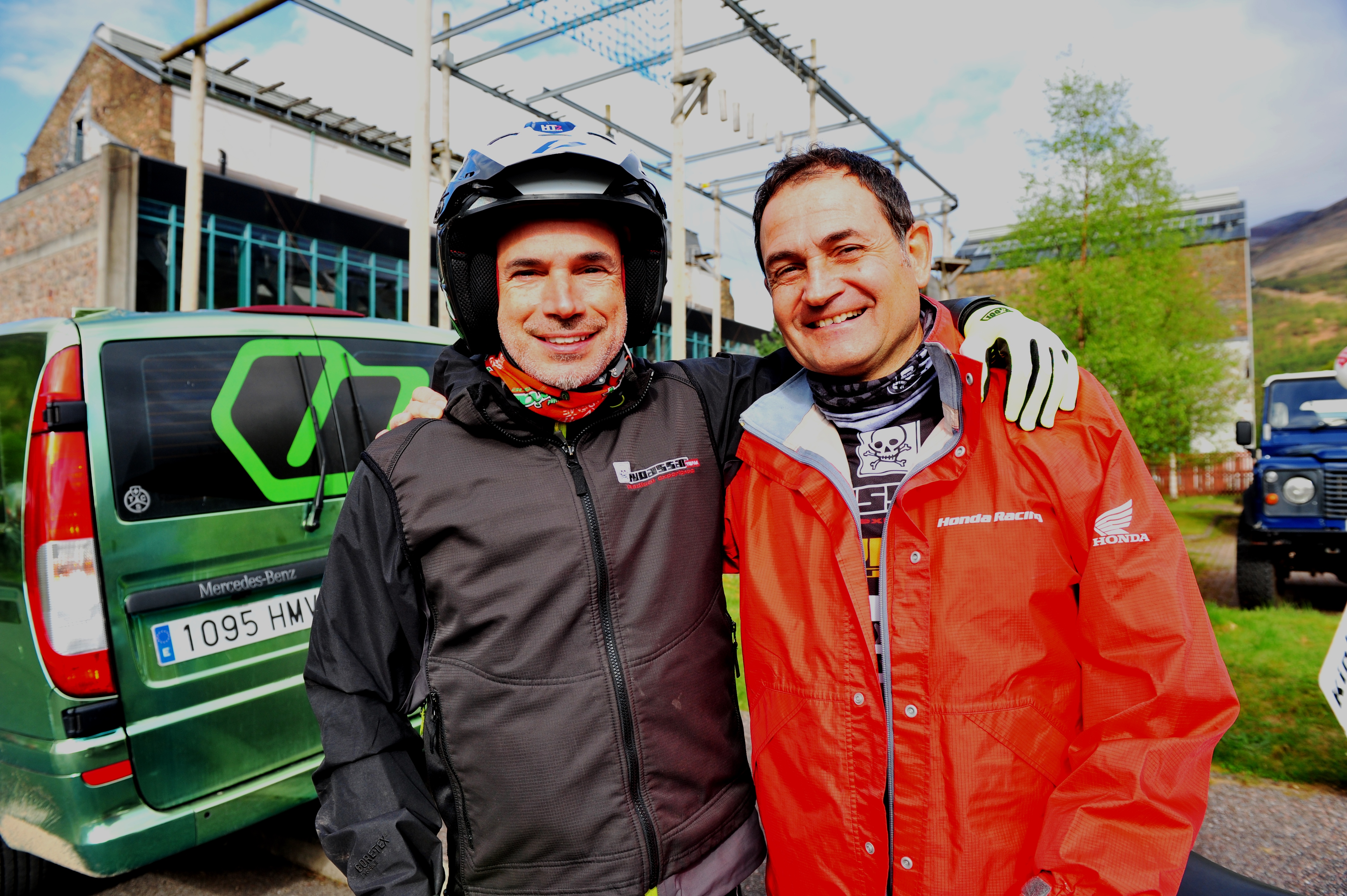
Why the loyalty to Montesa?
Carlos: “Because the motorcycles produced are always superb quality, very reliable and nice to ride. The people from the Montesa factory are always very good, friendly and professional”.
How much longer will you come to Scotland and compete in the Six Days and Pre-65 events?
Carlos: “As long as my body allows me to! I love both events and every year the memories are with me forever. I am getting old but the addiction just gets stronger”.

Before we finish; the question that gets asked so many times – Stop or No-Stop?
Carlos: “For me as a rider, No-Stop, it is without doubt correct. But sections whatever the rules must be well thought out to make them challenging and interesting, you must try to always make the rider think about the challenge”.

This article was generated for Trial Magazine issue 50 in April/May 2015 and we at Trials Guru thank John Hulme for the use of his article on this website.
Why not subscribe to Trial Magazine or Classic Trial Magazine, contact: www.trialmaguk.com
…
…

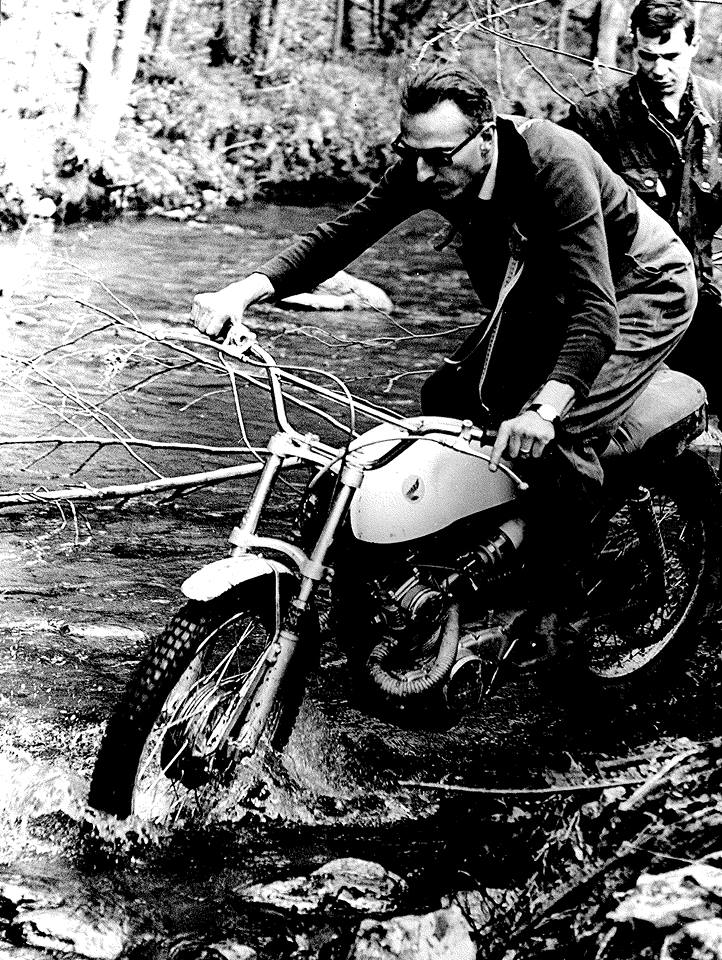
Jean ‘Pepe’ Lejeune, known by the moniker ‘Papa’ by UK trials enthusiasts, but he was also known to all in Belgium as ‘Pepe’ the father of the three famous Belgian trials riders, Jean-Marie, Eddy and Eric Lejeune and daughter Chantelle, has passed away at the age of 89 years. He was the undisputed head of the Lejeune family.
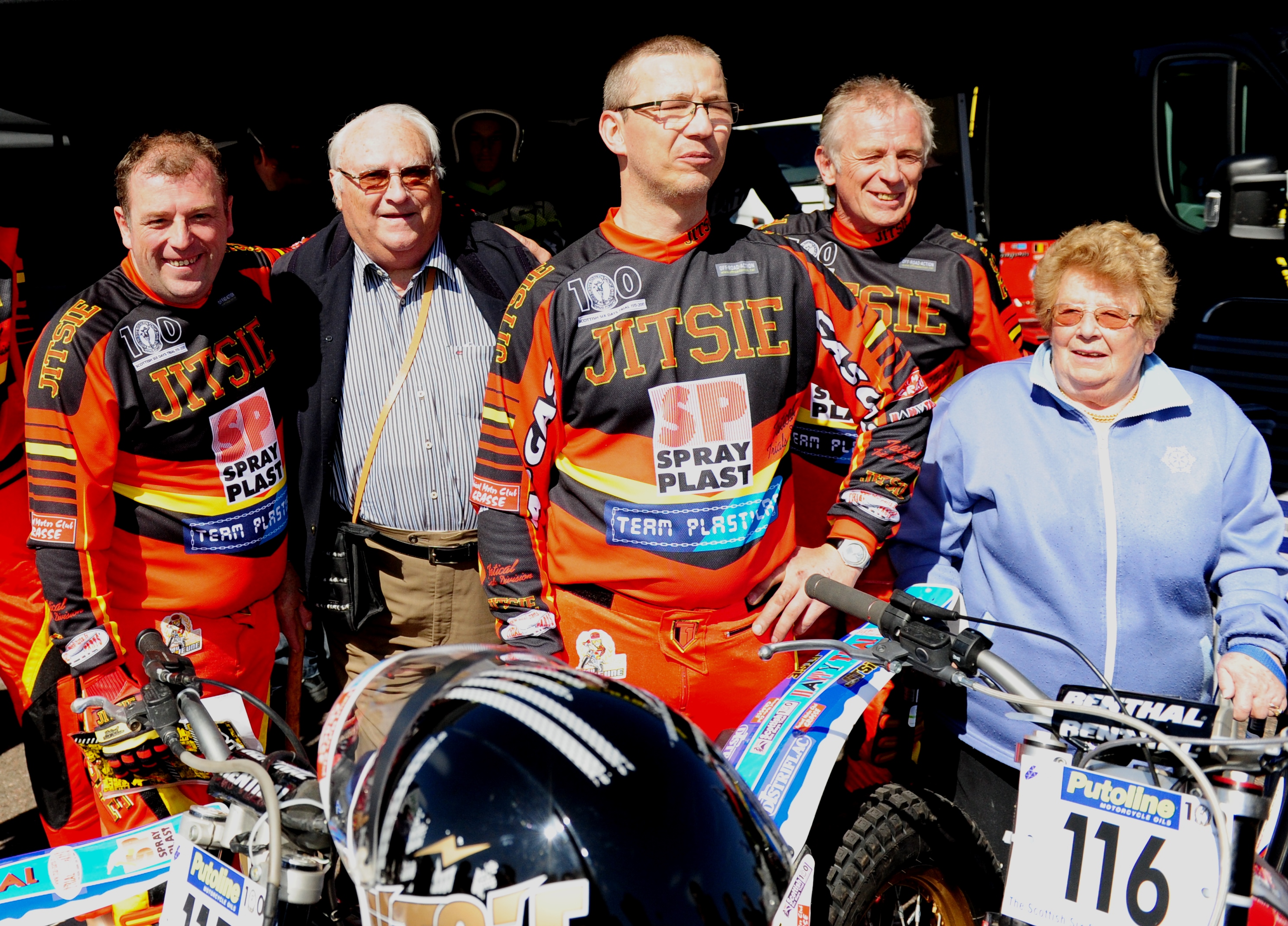
Lejeune was an enthusiastic competitor on home built Honda machines and was a passionate supporter of the sport of trials in his own country and world-wide effectively creating a trials dynasty. He ran the successful family plastics business in Dison, near Verviers which was called Plastiflac-Lejeune B.E, this helped to finance his middle son, Eddy to contest the world trials series. Eddy became world champion three times in 1982-1984 during a career riding for the mighty Honda Racing Corporation with whom he signed in 1979 at the age of sixteen. Eddy was also Belgian national champion seven times and eldest son, Jean-Marie was Belgian national champion three times and was brother Eddy’s mentor.

The ingenious Lejeune made Eddy his first trials machine based on an SS50 Honda. In fact he built many special Honda trials machines for himself and his sons over the years.
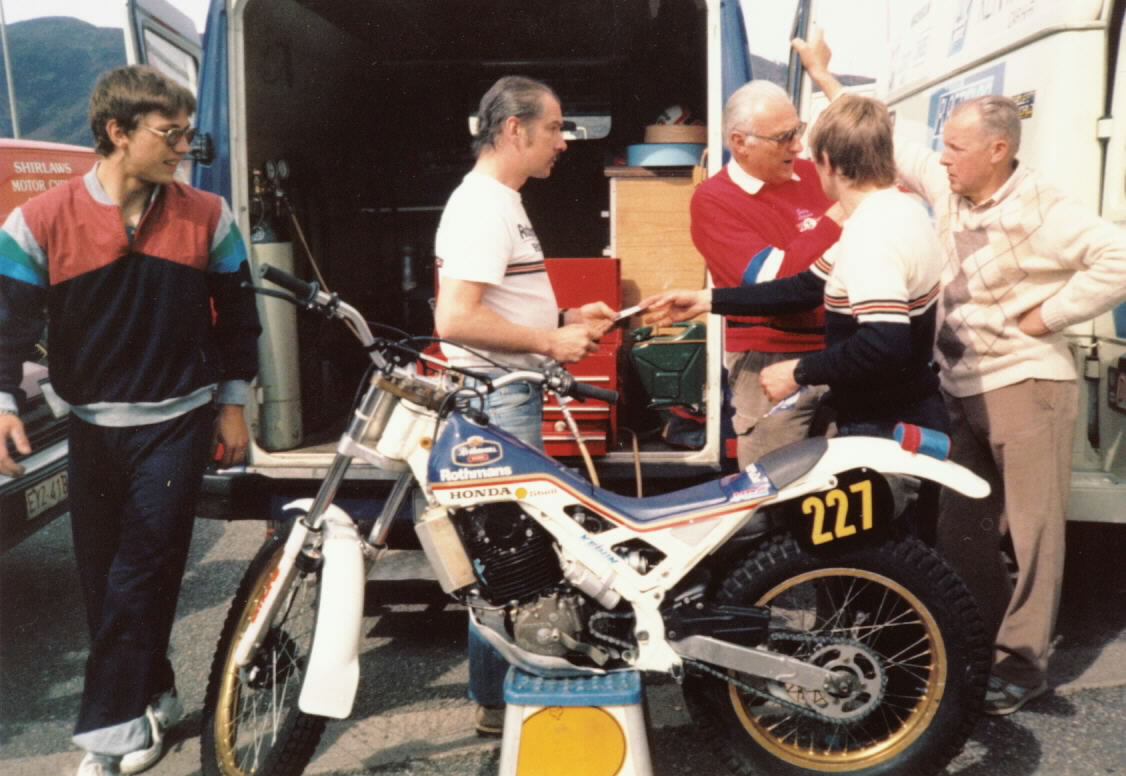

Former World Trials Champion, Yrjo Vesterinen paid tribute and said: “The first time I had the pleasure of meeting ‘Pepe’ Lejeune was in 1970 in a bar in Dison, where the organising committee was based for the European Championship. It didn’t matter to him that I was a seventeen year old unknown youngster, who was struggling to understand where our Hotel was situated. Pepe straight away offered to take us there. It was the first time in my life I had sat in the back seat of a big Mercedes car. What a nice start for a memorable week-end in Belgium. ‘Pepe’ Lejeune was a larger than life character, a great ambassador for Belgium and the world of trials”.
Trials Guru will surely not be alone in sending sincere condolences to the Lejeune family at their loss.
13/07/2016 – Sadly, only seven days after the death of her husband, Mrs Lejeune slipped away.

Photos: John Hulme/Trial Magazine UK
: Mark Lamplough, Scarborough
: Lejeune Family, Dison, Belgium
We always like to bring you something different here on Trials Guru, so here we go again. There will be a special Honda debuted at the Inverness & District 2016 Highland Classic 2 Day Trial ‘Yamscot Edition’ on June 11th and 12th on the Alvie shooting Estate, near Aviemore.
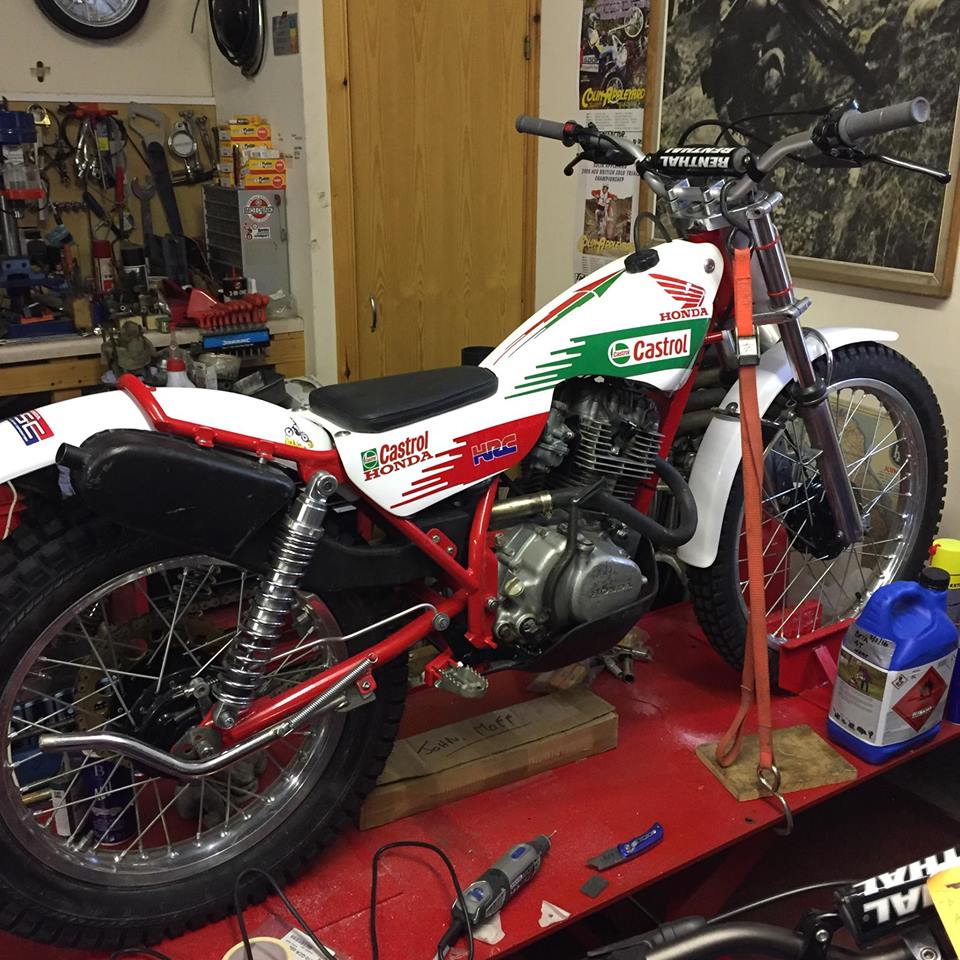
The machine is a 1981 Seeley Honda TL200E, originally owned by Scottish enthusiast, Jock McComisky up until 2005, but now with a special paint job on the tank seat shelter as a tribute to the late Steve Hislop who rode the Castrol Honda RC45 in the 1994 Isle of Man TT races, his last TT race.
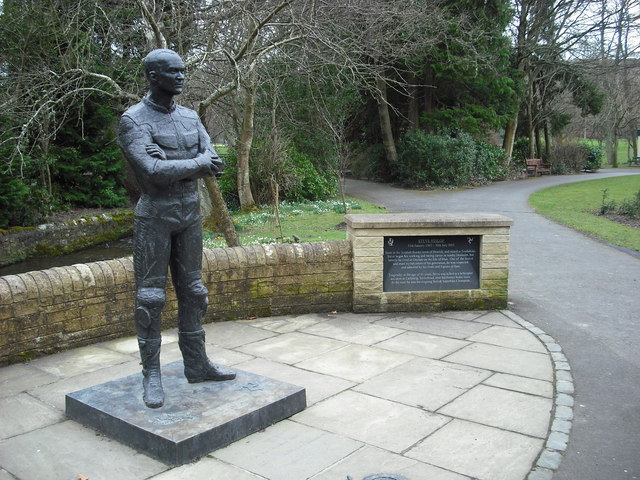
Hislop was from Hawick and lost his life at 41 years of age in a helicopter accident in 2003 near his home town in the Scottish borders. He gave Nortons their first TT victory after many years, known as the ‘long dry spell’ in 1992.
Steven Moffat will ride the machine at the Highland Classic and said: “I have ridden the last few years on one of my father’s Bultacos, but I have wanted to ride a four-stroke Honda and the 200 Seeley is just the machine. I wanted to have a little tribute to my hero Steve Hislop and the tank cover was sent to Bike Paints at Cupar Muir in Fife. Bike Paints do all Paul Bird Racings race fairings and have had much of their excellent work at world superbike, TT and North West 200 races, on many of the winning machines”.
Moffat is 25 years of age and a Civil Engineer who had to give up riding trials for four years due to university commitments which resulted in a masters degree in Civil Engineering at Edinburgh Napier University in 2015.
Moffat added: ” I am delighted that the Honda is finished in time for the Highland Classic, I should have ridden a Yamaha due to the Yamscot theme, but I thought the rival Honda would be something different”.
Recently, we created a Trials Guru ‘section’ on Colin Bullock who has been taking trials photos for many years and we were proud to feature some of his most excellent images. It was when we were studying one of Colin’s photos from the 1985 Scottish Six Days of Steve Saunders on his Honda Britain supported RTL250 Honda. In the photo was a man well-known to Trials Guru’s John Moffat, that man was Bob Paterson, former Scotland and Northern Ireland Sales Executive with Honda motorcycles and power equipment.

Bob Paterson, known as ‘Big Bob’ to the Scottish trials community of the period was a keen trials rider of the old school. He was a stalwart of the Lanarkshire Motor Cycle & Car Club which is based in west-central Scotland and had a history as being a scrambles and trials club which could trace it’s roots back to the 1930s. In the early days it was a joint club, for motorcycles and light cars.
The Lanarkshire MCC was the first Scottish motorcycle club to organise ‘scrambles’ events.
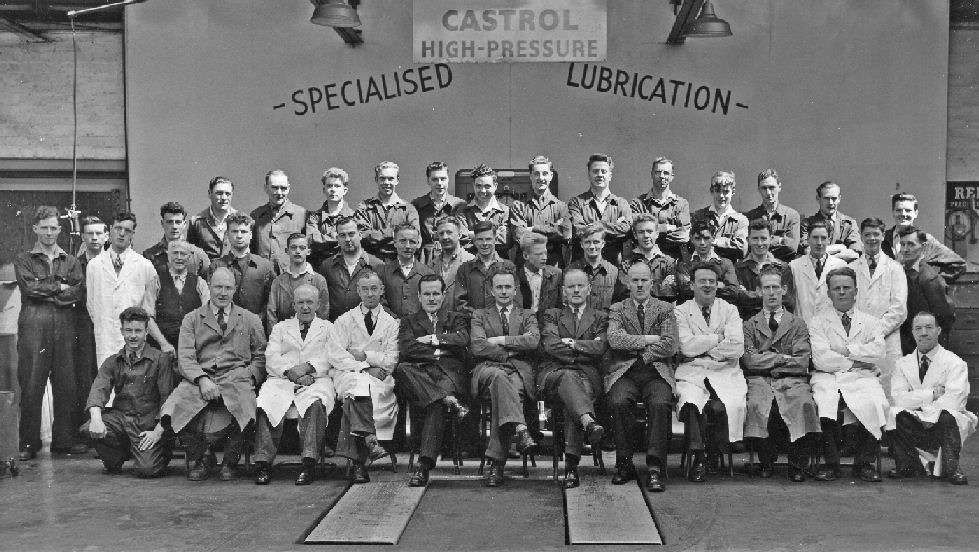
Back in 1998, John Moffat was writing some articles on Scottish motorcycle personalities for a magazine and visited quite a few former riders to get their story. These riders included Ian Bell, John Davies, Jackie Williamson and Bob Paterson. They were all people that knew John well, through his father T. Arnott Moffat, secretary of the Scottish ACU.

Bob Paterson had by this time unfortunately passed away, but Moffat went to visit his widow, May Paterson at her home at Luggiebank, near Cumbernauld. Moffat had also by this time started collecting material for his first book which was to be called Scotland’s Rich Mixture, Memories of Motorcycle Sport 1945-1975. May Paterson has since passed away.

Bob Paterson was brought up in Glenmavis, a village in North Lanarkshire two miles north-west of the town of Airdrie. He took up employment at Watson Brothers in Airdrie and was a faithful employee for thirty-eight years before moving to Honda of which Watson’s had a dealership in their Cumbernauld branch.
It is believed that Bob became frustrated with Watsons when a promise of a directorship in the family run business failed to materialise. Paterson resigned, moved on and became the Scotland and Northern Ireland Sales executive for the Japanese car and motorcycle giant. Bob was a well-known face amongst the motorcycle trade, he was a valued sales-person with years of experience gained in a busy motorcycle then a large Vauxhall-Opel multi branch dealership.

Bob and May had a daughter, Shona and son Robert Junior, but they also adopted May’s younger brother, Kenneth who had been orphaned when May’s parents died suddenly. A very difficult decision to make for a couple, but ‘Big Bob’ and May just took it in their stride.
Paterson rode in both scrambles and trials, he had a particular liking for ‘colonial’ type trials which would form the basis of time-trials and latterly enduros. His favourite was the Edinburgh St. George Colonial Trial at Gifford, East Lothian. He rode several Scottish Six Days trials and rode in the 1952 Scott Trial on his 350 Matchless (HSG211).

Paterson was a great supporter of the Scottish Six Days, he had ridden the event, his first being 1950 course marked it in the 1960s and was an SACU steward in the 1970s. He sat on the International stewards jury when the event was at it’s pinnacle and was over-subscribed and all the factory riders had it written into their contracts that they rode the Highland classic.
Bob for many years assisted in the course marking from Stirlingshire up over Fersit to Fort William, a run he thoroughly enjoyed either on his own Matchless G3C or a machine supplied by the Edinburgh & District club.

Paterson enjoyed setting the course for the Lanarkshire MCC’s annual Valente Trial held at Kilsyth, he used his Matchless to set the moor and road work for the event which had a lap of approximately 15 miles.
Bob was elected President of the Scottish Auto Cycle Union upon the retiral of the haulage firm owner from Markinch, Fife the late Jim Birrell, Bob held the post until 1983.
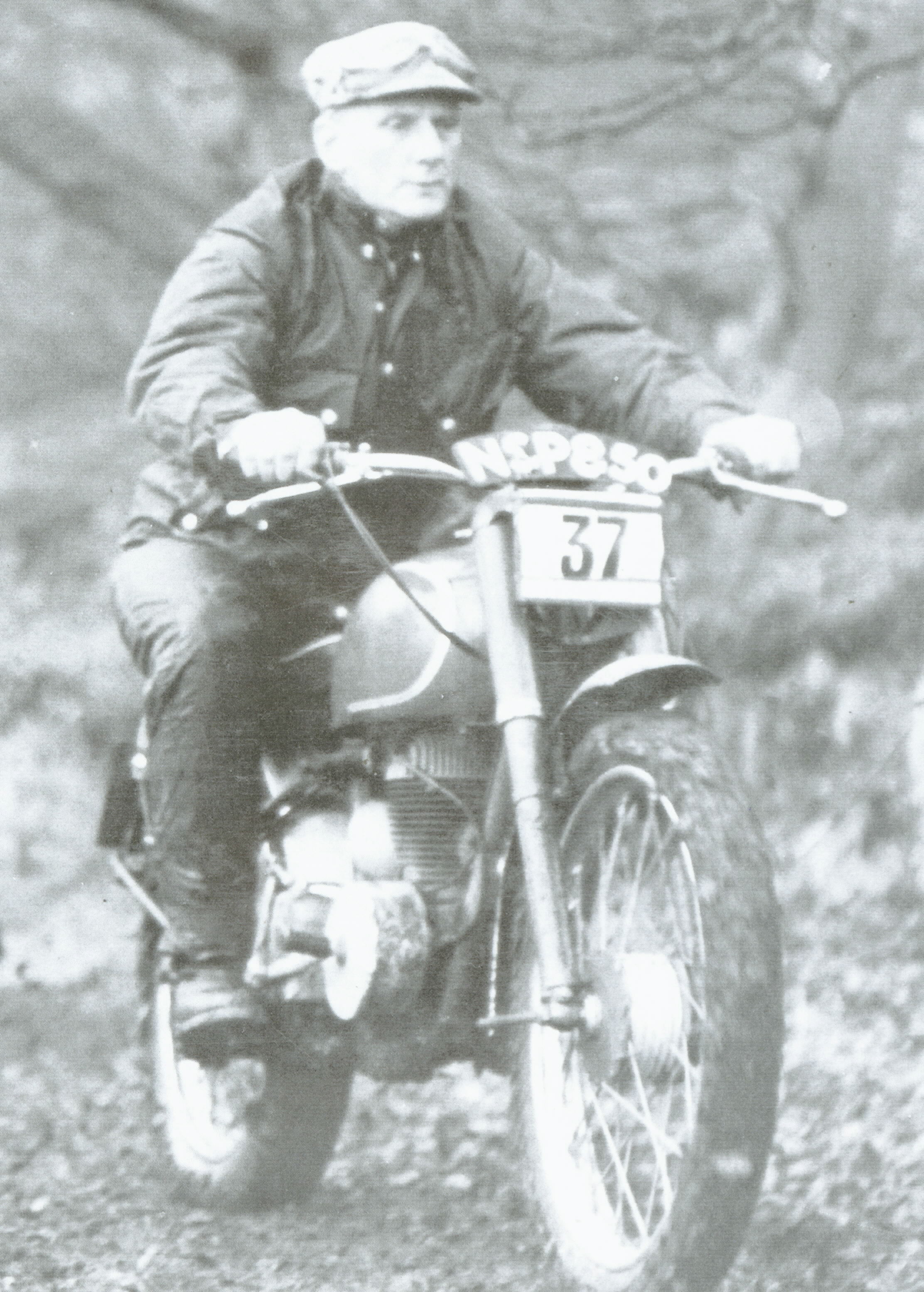
He was asked by the SSDT Secretary, Jim McColm in 1983 to write an article for the official programme when he was president of the Scottish ACU, in it he wrote a fascinating account:
“I feel priviledged to be asked to write this article for this years’ Scottish Six Days programme and probably like many contributors before, find it difficult to begin. As a layman at this kind of task, I feel hopelessly inadequate to try and put into words the feeling one gets in attending the SSDT. Be that as it may, there is no doubt if one rides or even attends the Scottish, forever after come hell or high water, the first week of May will be reserved for the Sporting Holiday in the Highlands or as the late Allan Jefferies once described it ‘A religion or an incurable disease.
It was 1950 before I had the good fortune to enter the SSDT and as over the previous few years I had listened awestruck to older hands talking and reminisce regarding this great event, the big day rushed nearer with all the attendant forms, what with signing up for oil and petrol etc and then obtaining my international licence. I was beginning to feel taller than my then 6′ 1 1/2 ” frame. Finally being allocated riding number 53 only one place behind the great man himself, High Viney at 52.
This was to prove a great benefit, for B.H.M.V actually came over and spoke to me at the weigh-in and from then on throughout the week I felt quite at home. The fact that I was to lose 100’s of points to his tens or was it single figures? Didn’t matter.
When the great man took the time to advise and follow him, like getting up onto the pegs and into top and blasting over the Mamore Road it made it feel like a main road compared to my 1st and 2nd gear slitherings, prior to his advice.
Sometimes the lessons learned from the big boys were well driven home certainly I never forgot one occasion when after leaving Altnafeadh and heading down the main road for about 46 miles to Camushurich on South Tayside past Killin, I found myself at the front of a long line of the big names and feeling quite proud to be heading a procession of about a dozen machines in close company, that was until I spluttered to a near stop and had to go on reserve with the string passing and waving their thanks for the tow, probably getting them to a lonely pump somewhat short of Lix Toll
Those were the days of course when the petrol and oil tankers followed the route of the trial and one drew alongside when suction pumps emptied the 4 stroke oil tanks, replenished with fresh oil and tanks were topped up with petrol. The International flavour created by the properly sited tankers and trade barons in those days were much better than many varied vehicles we see today, spread all over the countryside to give the necessary support to their riders. it is a great pity that the petrol barons have withdrawn from our sport and of course new legislations also prevent some of this assistance.
Within days of the trial the newcomers are seen in close contact with the stars and while today I’m sure some of the big names are easy to converse with and obtain some guidance, there can be no doubt the stars have more pressures, with all the backing, sponsorship and manufacturers to contend with than in earlier times.
As trials are no longer a British sport but International, we can now gauge the strengths and expertise of our overseas visitors by their performance over the pas few years and one never ceases to be amazed by the severity of sections we now see in national and World rounds of our trials sport.
The Edinburgh & District Club have managed to accommodate this welcome involvement from our overseas and home top runners and yet provide possible sections which continue to ensure a fully subscribed entry, made up in the main from club riders and most importantly newcomers.
It may be that a special section per day to fully test the top runners will soon be required and the rest of the sections something less than the crankcase breakers we are now seeing in World rounds, whatever is decided I’m sure the E&D will live up to the test, requirements and pleasures the Scottish has provided over the years.
One could not exclude from this article the efforts, work and hours the organising committee put into the running of this event, from the many long, hard, wet, snow covered and just occasionally dry weekends covered by the scouts who are out and about in the area of the trial on motor-cycles, visiting landowners, looking at new hills etc. and during the trial out marking the hills, to the hard pressed office staff in getting the results out as soon as possible. All their efforts must of course be assisted by the voluntary observers and other officials during the week, ready and willing numbers of people to fill those duties are always available and speak volumes for the popularity of the event, Having experience on most of those duties, i.e. to route marking and back marking, I can recall, as this years assistants will, the pleasure of getting back to the Hotel, having a bath, catching a meal (sometimes) and as in the past, off to the bar for a small talk of the day.
Having had previous experience as a steward of the trial, I wish this years’ jury a good trial with not too many nights on duty into the ‘wee sma hours’ and above all trust that our secretary of the trial, Jim McColm keeps his cool as usual and has yet another successful trial under his belt.
I look forward to being with you all this year in Fort William and trust that our Scottish greeting of haste ye back will be remembered as the first week in May keeps coming around“.
In the 1980s he was a spectator, but also a Honda representative and took an close interest on the Honda factory riders of the day, especially Eddy Lejeune and Steve Saunders. Bob would be found standing silently wearing his deer-stalker style hat at the side of many of the sections eagerly awaiting the arrival of the Honda mounted riders. He would continue to watch the riders walk the sections and then ride them. Bob enjoyed a small cigar called a cigarillo and would smoke one while waiting for the riders to arrive.
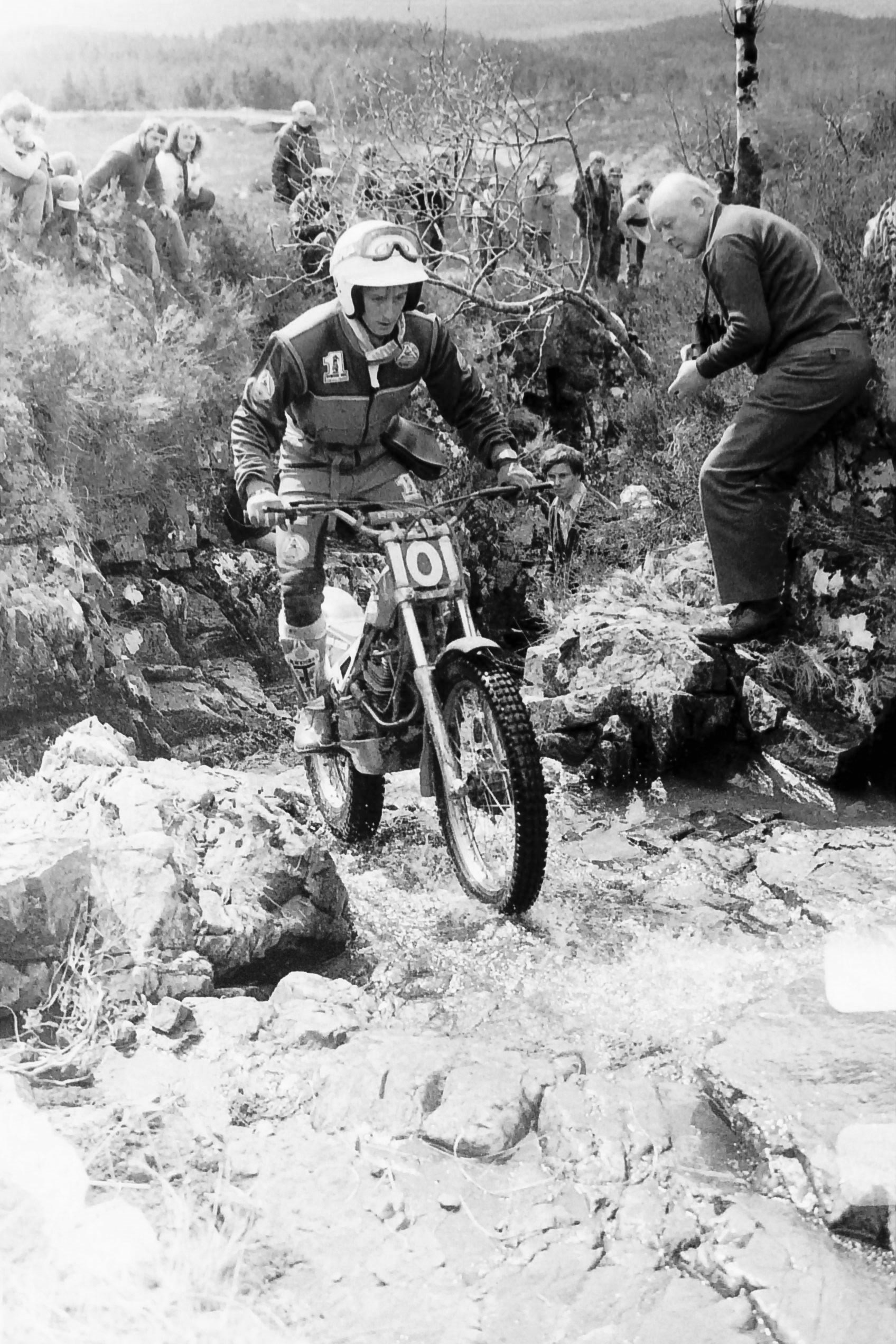
On quite a few occassions in later life, Bob would take his specially imported 1976 Honda TL250 up with him to the SSDT to observe and used the machine as transport instead of his car. Often he rode around to follow the trial for a number of years with fellow SACU man, Adam Brownlie, but never off-road.
There was a rider called Fransisco ‘Paco’ Nistal who came over to compete in the SSDT in 1986 from Guatemala who stayed with the Macgillivray family at Muirhearlich just outside Fort William. He was having trouble coming to terms with the machine he had entered for the event and wanted to buy a Honda RTL which was a machine in short supply. Alastair Macgillivray mentioned this to Bob Paterson, who knew Tom Robinson of Robinsons of Rochdale, a main Honda dealer and one of a select few chosen by Honda UK to handle sales of the specialist machine. Robinson’s happened to have a brand new RTL250S in stock. The RTL was sent up to Scotland for the Guatemalan to ride, all due to Bob’s interaction.
The Pre’65 Scottish Trial accepted a trophy from his son Robert and widow, May to remember Bob and his significant contribution to Scottish motorcycle sport. Called ‘The Bob Paterson Trophy’, it is awarded annually for the best performance of a competitor riding a machine up to 500cc.
Article Text Copyright: Trials Guru / Moffat Racing – John Moffat 1997-2016
Photos:
Coming soon to Trials Guru, an article taken from the Trials Guru’s original notes made in 1999 on the life and times of trials rider and former SACU President, Honda Motorcycle & Power Sales Manager for Scotland & NI – Bob Paterson.

A new ‘section’ is being added to Trials Guru for your enjoyment. Entitled simply ‘Eric Kitchen – The Maestro’, it says it all!
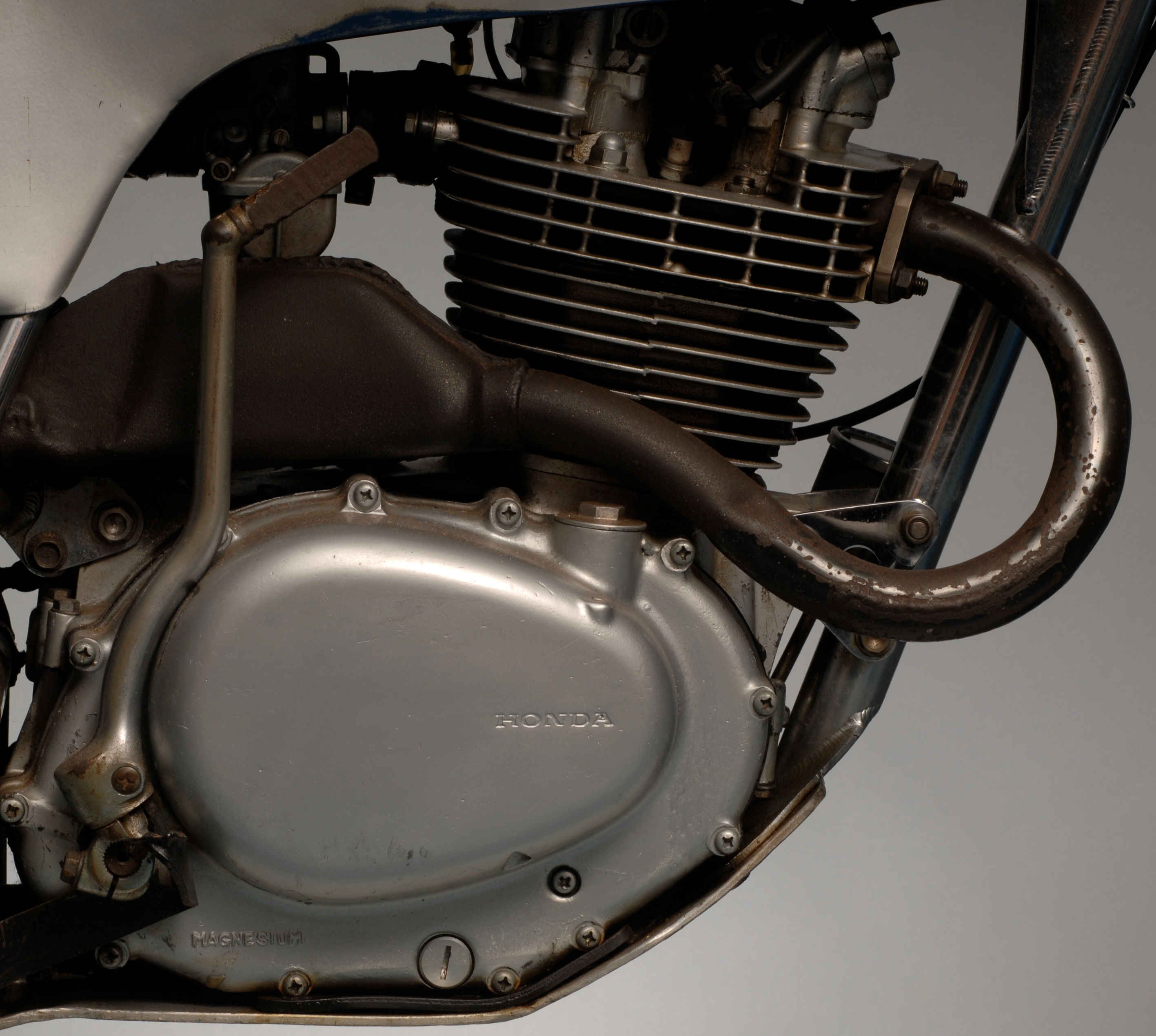
Recently opened, the new ‘section’ on Trials Guru – dedicated to the Honda trials effort over the years.
With direct co-operation to Trials Guru from ‘The Honda Trials History’ website, Honda author Tommy Sandham and many more!

Exclusive to Trials Guru – Dedicated to the sport.
Go straight to the new ‘section’ for you to ‘observe’!


 TRIALS GURU - DEDICATED TO TRIAL