Gas Gas UK has received their first consignment of new machines following the recent purchase by Torrot, the Spanish electric motorcycle manufacturer of the Salt, Gerona made motorcycle brand.
The GGUK crew unpack a shiny 2017 Gas Gas at their Derbyshire HQ – Photo courtesy of Judith Mellor/Gas Gas UK
GGUK’s Kevin ‘Factory Kev’ Hipwell is seen here ‘unloading’ the first batch of crated machines at their Derbyshire headquarters.
GGUK has continued trading successfully as UK distributors of spare parts for the Spanish marque which has a very strong brand loyalty.
The return to market is welcome news for the UK trials buying public.
Torrot became the main and eventual successful bidder for the stricken Gas Gas concern after several bids collapsed early in 2016.
Gas Gas UK will be supporting the 2016 SSDT
The arrival of machines also co-incides with the announcement that Gas Gas UK will again be represented at the annual Scottish Six Days Trial (Monday 2nd – Saturday 7th May 2016) at Fort William where the usual support will be available to private Gas Gas owners as in previous years.
Kevin Hipwell unloads new crated GasGas machines at their UK headquarters
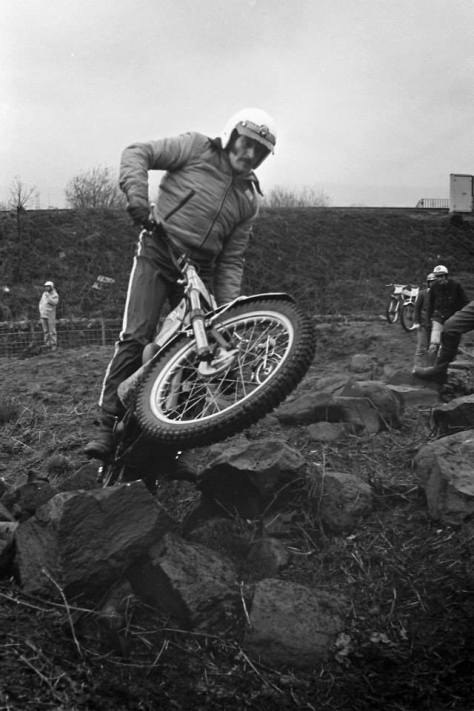
Bill Brown in 1981 with his special Triumph engined Maico. Brown imported the German made Maico to the UK – Photo Wulfsport International
The annual Bob MacGregor Memorial road run takes place on Tuesday 26th April at Killin, Perthshire.
Organised by the Cumbria Classic MCC under the guiding hand of Peter Remington, the run takes in 130 miles of rural Perthshire roads and stretches over some of the old Scottish Six Days Trial routes from the 1950s and 1960s.
The guest of honour this year is Bill Brown or Mr. Wulfsport as he is affectionately known in off-road motorcycling circles. Bill was an accomplished pole-vaulter in his youth and then a motocross rider who opened Bill Brown Motorcycles in Whitehaven, Cumbria in the 1970s.
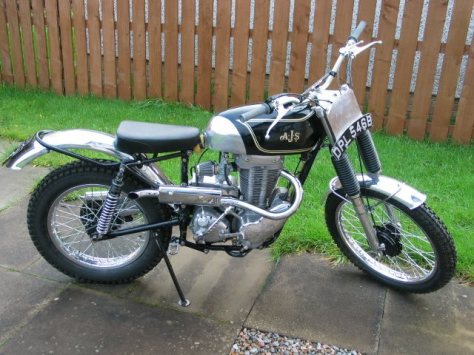
Double British Motocross champion Vic Allan will ride his very special NSU/Greeves and Trials Guru will be there riding his 1964 AJS 16C short-stroke, the machines first real long run since a rebuild in 2011.
Trials Guru’s John Moffat will ride this 1964 AJS at the Bob MacGregor run – Photo: Trials Guru
The start is the MacLaren Hall in the centre of Killin and pays homage to the ony Scotsman to win the Scottish Six Days Trial, Bob MacGregor who owned the local greengrocers shop in the village. MacGregor rode factory Rudge machines and won the SSDT twice, 1932 and 1935.
Vic Allan (British MX Champion in 1974) will ride this NSU/Greeves – Photo: J. Vic Allan
Sandra Gomez Cantero joins Gas Gas Trials Team 2016
World Women’s SuperEnduro champion Sandra Gómez joins the Gas Gas trial team
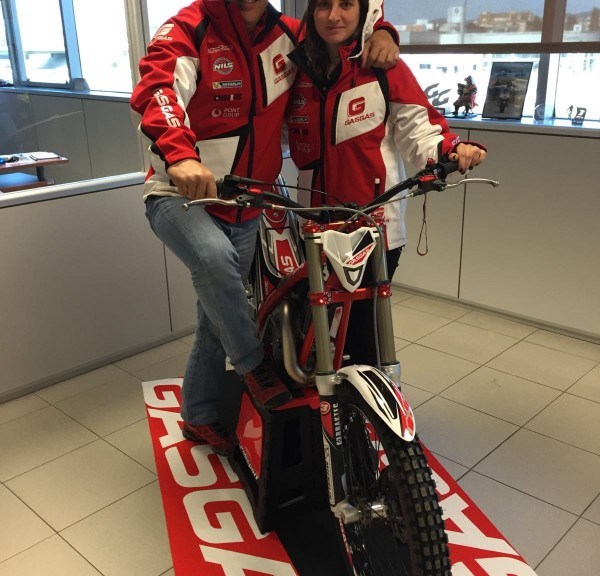
The newly proclaimed world champion of Women’s SuperEnduro joins the Gas Gas Factory FG Trial Team to fight for the World and National Championships and long distance trial events on the new Gas Gas TXT 300 Racing. This marks a firm commitment by the Spanish brand to female competition.
Gas Gas announces the signing of Sandra Gómez. The current world champion of SuperEnduro and AMA of Enducross joins the Gas Gas Factory FG Trial Team, where she is going to fight for the national and world trial titles. The rider from Madrid is also to participate in long distance races such as the Scottish Six Days Trial (SSDT) or the Dos Dies d’Arinsal, (The Arinsal Two Days event in Andorra).
Sandra Gómez joining the Gas Gas family means yet another step in the right direction by the Spanish manufacturer in its commitment to trial and its support of women’s competition, something which has been in a state of growth lately. The rider from Madrid gets back on track after a successful story in trial after the 2015 season when she concentrated all her efforts into winning the two most prestigious titles in enduro: the World SuperEnduro, in Europe, and the AMA Enducross Championship, on the other side of the Atlantic, in the USA.
But written down on the next pages of her agenda is her entry for the SSDT 2016, from 2nd to 7th May in Fort William (Scotland), where the rider from Madrid is to have her first taste of competition with Gas Gas. Meanwhile, from July, Sandra Gómez will also be participating in the National and World Trial Championships.
The rider from Cercedilla is set to fight for the crown of the Trial World Championship this coming July in Tong, UK, and which this year has three double events: the first in Tong, a second in Valchiampo, in Italy, and the last in Isola 2000, France. As well as all these races, the new Gas Gas rider will also be taking part in the events left in the Women’s Spanish Trial Championship: Pobladura de Regueras (León), Vall de Lord (Lleida), Carnota (A Coruña), Valdemanco (Madrid) and Antas (Almería).
Sandra Gómez: “I’m just so excited to be back with Gas Gas, the brand that I started off with in trial. And the truth is that I’m really motivated and looking forward to beginning my training and fighting to get my first world title in trial. My first race is going to be the ‘Scottish’ in just 2 weeks. So I’m going to be using this time to get used to the new Gas Gas TXT 300 Racing, which I’ve heard so many good things about. I’m absolutely thrilled at the thought of competing”
SANDRA GÓMEZ CANTERO ( born:23rd March 1993, Cercedilla – Madrid)
Personal Achievement
2015
World SuperEnduro Champion
AMA Enducross Champion
7th Trial World Championship
World runner-up in the Trial de Nations
2014
X Games Silver medallist
3rd World SuperEnduro Championship
3rd Trial World Championship
Spanish Trial Champion
World runner-up in the Trial de Nations
2013
Barcelona X Games Bronze medallist
Munich X Games Bronze medallist
2nd Trial World Championship
Runner-up Spanish Trial
World runner-up in the Trial de Nations
2012
3rd Trial World Championship
Runner-up Spanish Trial
World Champion in the Trial de Nations
2011
5th Trial World Championship
5th Trial European Championship
Spanish Trial Champion
World Champion in the Trial de Nations
2010
5th Trial World Championship
Runner-up Spanish Trial
Champion of the “Comunidad de Madrid de Trial”
2009
8th Trial World Championship
5th Trial European Championship
Runner-up Spanish Trial
World runner-up in the Trial de Nations
2008
13th Trial World Championship
3rd Spanish Trial Championship
World Champion in the Trial de Nations
Sherco UK Importers will once again be in attendance at this year’s Scottish Six Days along with the factory Sherco truck which will be parked in its usual place in the Parc Ferme. They will be providing their personal service and back up to all Sherco riders.
MRS personnel Malcolm Rathmell and Phil Hammond will be joined by David Sarras (Cabestany’s mechanic) and they will all be on hand to assist riders in any way needed to try to help them complete the week. They will also be providing their usual catering service solely to Sherco listed riders so when you arrive back in the Parc Ferme after a cold day on the roads and moors you can be sure of some good hot soup, along with sandwiches, snacks, fruit and the usual famous doughnuts!
It is essential that to receive this service you have to register with MRS before 27th April with address, telephone number and card details. Anyone not providing these details will not be able to enjoy the service Sherco give during the week.
Tribute to H.M. Lampkin – By Colin Bell (former Irish Trials Champion)
In 1977-78 I found myself living in Silsden, It was not by accident that I wanted to live and compete in Yorkshire with some of the best trials riders in the world.
Martin knew I was coming from Belfast so it was a great relief when I arrived late one evening in the dark that Martin was there to soften the transition and get me settled with digs.
Although we had only met a few times at a couple of events we immediately hit it off, he was so generous to give me the time to show me the ropes . I got to know Ping, Sid and Martin who pointed me in the right direction, I was soon learning the local dialect and was introduced to words I had never heard before like beck, fettle, Buffs, Tetley’s and Geoffrey Boycott – it was a crash course in Yorkshire-isms for an Ulster man.
I was soon trained to say- ‘All right lad’- and I was given the nickname ‘To be sure’.
1977 was an amazing year for Martin he seemed to win everything that year The Scott, The Scottish and The British Experts and more. I remember the morning after the British Experts, I hadn’t heard the results but met Martin outside the engineering workshop in Silsden washing my bike when he came up with a smile on his face and congratulated me on a 6th. That was typical of Martin even though he had won the event he still had time to say well done and offer encouragement. Martin was a larger than life person, a true and proud Yorkshire man for whom I had great respect and admiration. I send my sincere condolences to all the Lampkin Family and the wider Trials Community – He will be sorely missed – Colin Bell
Colin Bell in 1978 at the SSDT, SWM mounted. – Photo: Jimmy Young, Armadale.
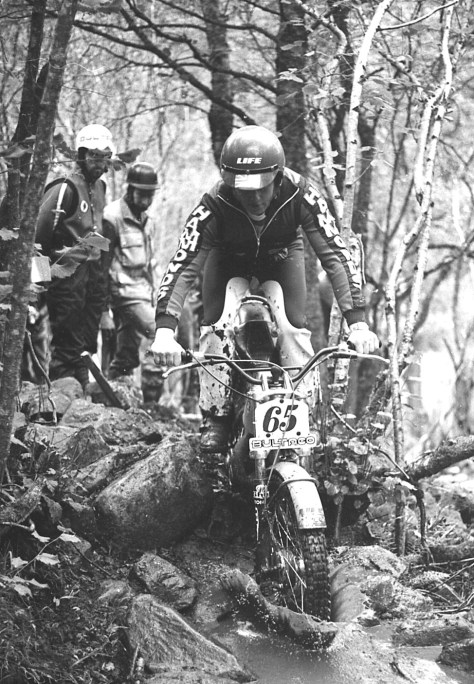
Martin Lampkin (Bultaco) 1976 SSDT – Photo courtesy: Eric Kitchen
On behalf of the Lampkin family, it is with great sadness that Trials Guru website announces that H. Martin Lampkin, the very first World Trials Champion (1975), passed away today, Saturday 2nd April, 2016, aged 65 years.
It goes without saying that the Lampkin family’s loss is also a loss to the world of motorcycle sport.
Our sincere condolences go to Martin’s immediate family, widow Isobel; sons, Dougie and Harry and the extended Lampkin family.
The funeral service for Martin was be held on Monday, 11th April 2016 at 1.30pm at St James Parish Church, Kirkgate, Silsden, West Yorkshire, BD20 0AL.
Donations in Martin’s memory, were made to the Manorlands Hospice, Keighley Road, Oxenhope, Keighley, West Yorkshire, BD22 9HJ.
Martin Lampkin, his life in photographs, a tribute by Trials Guru’s Photographers & contributors:
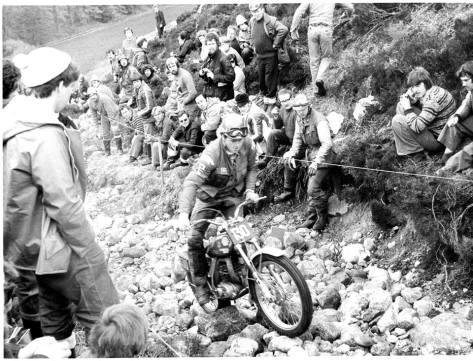
Motorcycles were always a part of Lampkin family life. This is Arthur Lampkin’s factory trials BSA Gold Star being tried out by family friend, Tim Aaron (left), H. Martin Lampkin (middle) & Veronica Lampkin (right) – Photo by kind permission and copyright of Janet (Lampkin) Pawson (Sister of Martin Lampkin)1967 – Martin Lampkin (250cc BSA) in his first Scottish Six Days Trial aged 17, aged 26 in 1976 he would win his first SSDT.1978 – Martin Lampkin (348 Bultaco) – Photo: Mike Rapley1978 – Martin Lampkin hoists the Bultaco upwards with a steady dab – Photo: Mike Rapley1978 – Martin Lampkin on his factory Bultaco – Photo: Mike Rapley1978 – A truly atmospheric shot of Martin Lampkin – Photo: Mike RapleyMartin Lampkin on Blackwater in the 1984 Pre’65 Scottish, riding brother Arthur’s 1963 SSDT winning BSA C15T – Photo: Iain Lawrie, KinlochlevenMartin on the Honda RTL250S in the 1987 Scottish – Photo copyright: Graeme CampbellMartin Lampkin (World Champion in 1975) smiles at the camera of Iain Lawrie on his way down from Chairlift at the 1988 Scottish Six Days on his Colin Appleyard supported Honda RTL250S – Photo copyright: Iain Lawrie, KinlochlevenScottish Six Days Trial 1979 – Martin Lampkin inspects the rear tyre of his Bultaco, with Reg May offering advice. John Metcalfe is watching closely. Martin was narrowly beaten into second place to Malcolm Rathmell (Montesa) – Photo world-wide copyright: Eric Kitchen – all rights reserved.Martin Lampkin testing his 325 Bultaco in 1975 – Photo by kind permission and world-wide copyright of Barry Robinson, Ilkley (All-rights reserved)Bultaco publicity photo of Martin Lampkin on his factory Sherpa T model 92 in 1973 – Image courtesy of Bultaco MotorcyclesMartin Lampkin (Bultaco 325) at the Scottish Clubman Trial at Newcastleton in 1978. Photo: Jimmy Young, ArmadaleThe 1975 World Championship winning Bultaco of Martin Lampkin – Photo courtesy: Heath Brindley, Bristol1979 – Martin Lampkin in full control of his 348 Bultaco – Photo: Mike RapleyThe ‘gritty’ determination of Martin Lampkin (Bultaco) Photo: Mike RapleyMartin Lampkin fettling his Bultaco at the 1975 Scottish Six Days – Photo: Rainer Heise, Germany1975 Scottish Six Days on Laggan Locks – Photo: Rainer Heise, GermanyMartin Lampkin (Bultaco) on Laggan Locks 1977 at the Scottish Six Days Trial – Photo: Iain Lawrie, KinlochlevenMartin Lampkin (SWM) on Cameron Hill in the 1981 Scottish Six Days Trial- Photo: Iain Lawrie, Kinlochleven2004, Japan World Round – Martin (right) with son Dougie (left) and nephew James (middle top) – Photo courtesy and copyright, Jean Caillou, France1994 Belgium round of European championship, Martin’s new job of being minder to son Dougie, who went on to win 12 World titles – Photo copyright: Oliver Barjon, FranceJohn Moffat (left) with H. Martin Lampkin in 2013 – Photo courtesy: Trial Media/John Hulme
As a mark of respect, please feel free to leave your personal message in the comments section below in remembrance of a fine sportsman, a true Yorkshireman and one of the world’s all time great motorcycling competitors, a true ambassador of the sport – HAROLD MARTIN LAMPKIN 1950-2016
David ‘Tubby’ Allinson (left) with good friend Keith Blythe captured at the SSDT – Photo: Heather Mead Photography
David ‘Tubby’ Allinson 1935 – 2016
A true enthusiast of trials passed away on 25th March, David Allinson from Reeth, affectionately known in the sport as ‘Tubby’ was a prime mover for many years in the Richmond Motor Club, having been a rider and event organiser.
Tubby was also a great supporter of not only the Scott Trial, but also was an observer at the Scottish Six Days when teamed up with Ripon members, Keith & Judy Blythe.
Allinson was instrumental in the Richmond club taking over the running of the Scott Trial on behalf of the Yorkshire Centre ACU in 1991. A weighty decision for the club at that time, but Tubby was insistent and the Scott Trial has been run by the Richmond club ever since. He was a past Scott Trial secretary and treasurer,
David, as well as being a committee member, was also a regular master of ceremonies at the Scott Trial presentation of awards evening, post trial.
Having celebrated his eightieth Birthday in August 2015, David was the Richmond club’s longest serving member.
The club presented Tubby with an Honorary Lifetime Membership and a specially commissioned gold Scott spoon in recognition of his dedicated service and positive contribution to Richmond Motor Club and the sport since 1958.
David had held most of the club’s roles during his long membership, including that of Chairman, President and also President, Yorkshire Centre ACU.
Tubby played an active role in the Richmond club, being one of the prime movers behind the creation of the Reeth Two Day Trial, which was dreamed up over a pint in Fort William. Over the years, this has evolved into the very successful three day event it is now.
The funeral arrangements are as follows: Funeral service at St. Andrew’s Church, Grinton, Richmondshire at 1.00 pm on Monday 4th April.
May we convey our sincere condolences to his family, son Robert and daughters Andrea and Tracey.
On October 22nd 2016, the Scott Trial will be missing an important component and the void created by the passing of David ‘Tubby’ Allinson will be noticeable.
The annual Scottish Six Days Trial is only a few weeks away now and preparations are building up in the usual ‘SSDT Fever’.
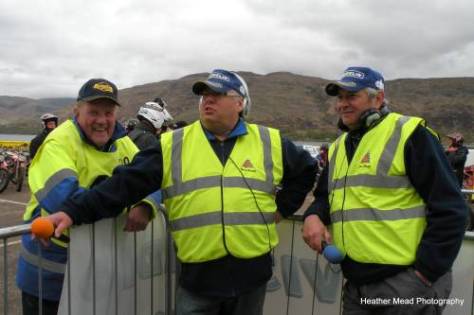
Arrangements have been made to once again have national radio coverage provided by the local station, NEVIS RADIO based in down-town Fort William which hosts the event.
Follow the Trials Guru on Nevis Radio – May 2nd – 7th
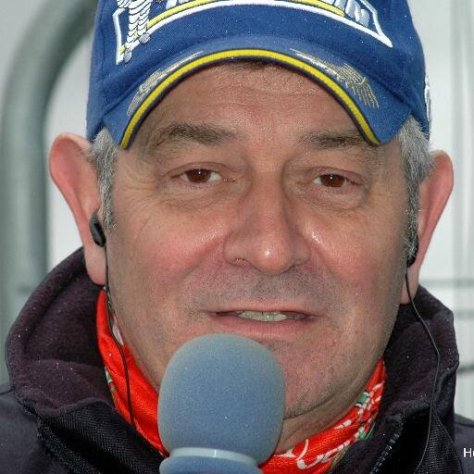
Each morning between 07:00 and 11:00 hrs GMT the Outside Broadcast Team comprising of David Ogg, John Weller and John Moffat will keep listeners up-dated with rider interviews, daily results and information about the trial. The station ‘anchor-man’ is Si Abberley who usually hosts the Nevis Radio ‘Drive-Time’ show in the afternoons.
You can listen to the action from the Parc Ferme on your radio if you are attending the trial or if you aren’t then ‘Listen Online’ by logging into the Nevis Radio website – nevisradio.co.uk
NEVIS RADIO Outside Broadcast SSDT 2016 is sponsored by MICHELIN and TRIAL MAGAZINE UK
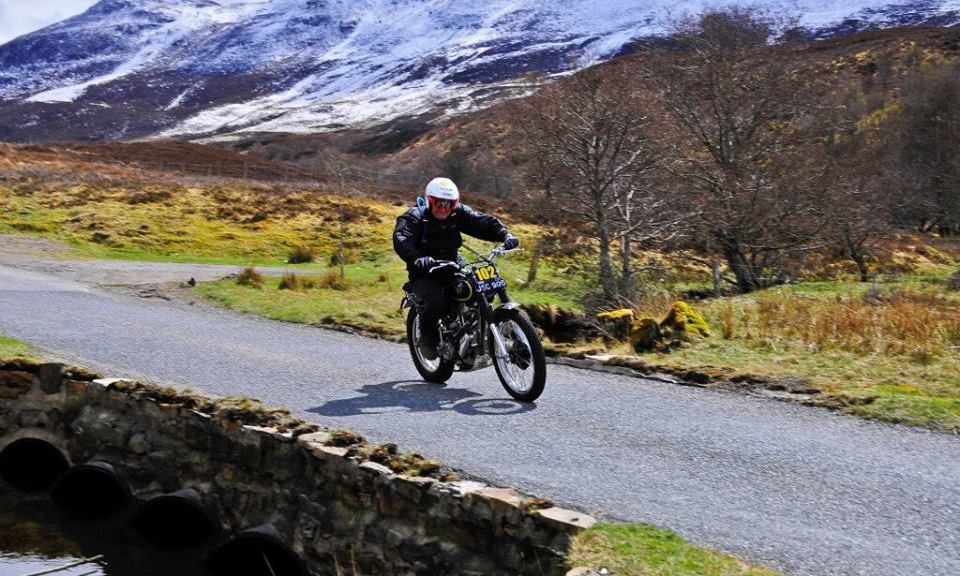
2015 Bob MacGregor Memorial Run with ‘Trials Guru’ representative John Moffat thoroughly enjoying the run on his late father’s 1951 AJS 16MC machine with the riding number carried in the 1953 SSDT and 2013 Pre’65 Scottish – Photo courtesy of Ron Allner, Killin.
The annual Bob MacGregor Memorial road run for 2016 will take place on Tuesday 26th April, the week prior to the Pre’65 Scottish and the Scottish Six Days Trial.
The 2016 will have guest of honour, Bill Brown from Egremont, known affectionately as Mr. Wulfsport or even Mr. Maico given his connection with the German motocross marque and the world famous Wulfsport clothing brand which he created back in the 1970s.
Bill was a top motocross rider who raced predominately in the North West and Scotland, who ran Bill Brown Motorcycles.
The Greeves/NSU that Vic Allan will use in the 2016 Bob MacGregor Run on 26 April at Killin. – Photo: Vic Allan
The main organiser is of course Peter Remington, himself an accomplished trials and motocross rider who enjoys the road run which takes in approximately 130 miles of rural Perthshire public roads.
Peter Remington (Kendal) Saffire Bultaco 325 at the Lanarkshire Valente Trial in 1981. Photo: Jimmy Young, Armadale.
It is a circular route which goes from Killin to Aberfeldy and into the Loch Rannoch area. There is also a lunch break on route for the participants.
Peter ‘Rem’ Remington enjoys the fruits of his labour by taking part in the 2015 Bob MacGregor Memorial Run on his 644 CCM – Photo: Ron Allner, Killin.
The event starts and finishes at the McLaren Hall, Main Street, Killin FK21 8UH. Entry forms will be available from Peter by post: Peter Remington, Kenbrig, Levens, Kendal, Cumbria, LA8 8DT or by e-mail: premington2@gmail.com
The entry fee is £15 with £2 going to the local Bob MacGregor Motorcycle Club who provide local assistance.
Trials Guru representative, John Moffat took part last year on his father’s 1951 AJS 16MC and enjoyed it so much, he will be back in 2016 for another helping, this time on a 1964 AJS 16C short-stroke.
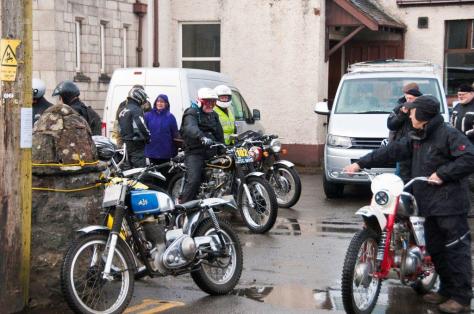
Riders preparing to leave the McLaren Hall in Killin for the 2015 event – Photo courtesy of Ron Allner of Killin
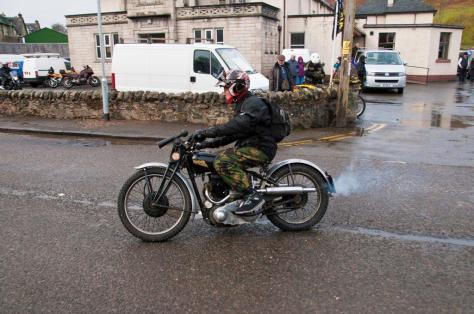
Mark Whitham leaves the start area on his Rudge in 2015, a machine similar to that which Bob MacGregor rode to SSDT victory in 1932 and 1935 – Photo courtesy of Ron Allner of Killin
Coming soon to Trials Guru, an article taken from the Trials Guru’s original notes made in 1999 on the life and times of trials rider and former SACU President, Honda Motorcycle & Power Sales Manager for Scotland & NI – Bob Paterson.
Steve Saunders on the Honda Britain RTL250S at the 1985 Scottish Six Days on Achlain section – watched by Honda UK representative Scotland & Northern Ireland, Bob Paterson – Photo copyright: Colin Bullock/CJB Photographic
The Premier Trial Website – Recording the History of the Sport 'Established 2014'






















 TRIALS GURU - DEDICATED TO TRIAL