2016 is almost at an end and we are all looking forward to the new year, 2017.
It’s always good to look over the shoulder to see where we have come from and the sport of trials is always interesting to revue.
It has been a busy year for Trials Guru with some news, reports and most of all, new articles from the sport of observed trials, all brought to you – free of any charge.
So have a look at our archives and view articles, comment and great photographs from the sport worldwide.
We have plans for 2017 and hope you will continue to pop in and have a look at Trials Guru’s pages, whether that be on a regular or occasional basis, you choose, you will be made most welcome!
With sympathy, we report the passing of Bernard Cordonnier, Belgian Trials Champion 1987 on Fantic, former world championship contender and rider of Bultaco; Fantic; SWM & JCM on Saturday 17th December 2016 aged 56 years.
Bernard’s best position was 7th in the 1983 World Championship on an Italian SWM machine.
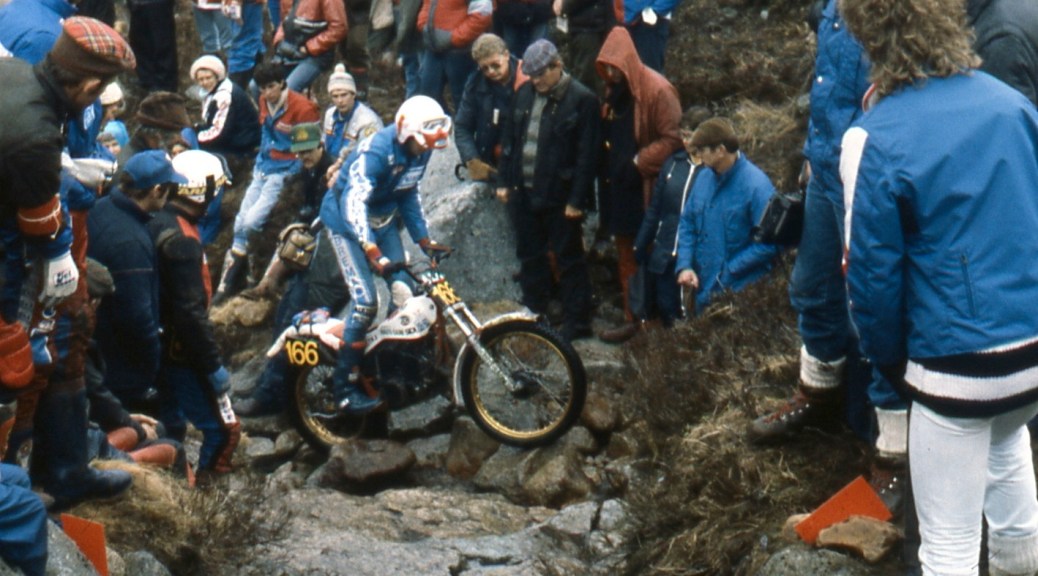
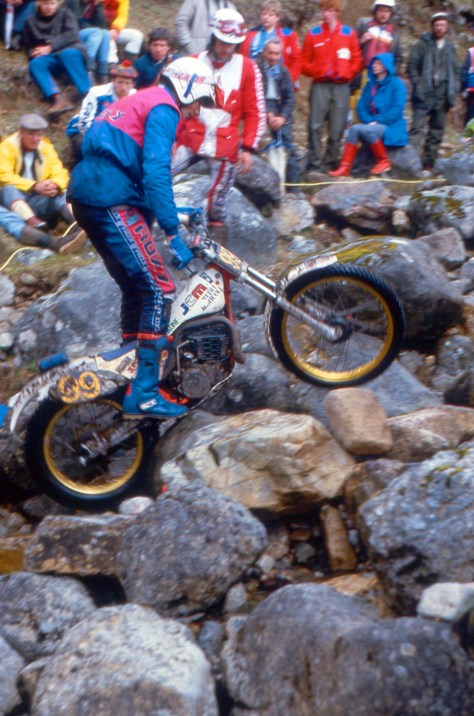
Bernard Cordonnier (SWM) in the 1983 Scottish Six Days at Kinlochleven – Photo: Iain Lawrie, Kinlochleven
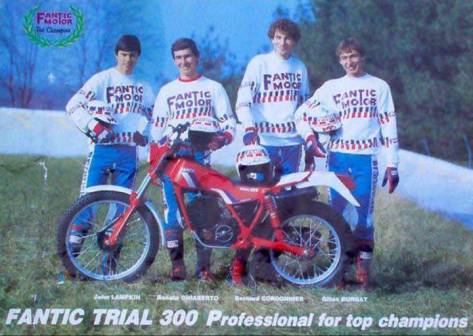
Former World Trials Champion 1981 and three times French National Champion, Gilles Burgat sent Trials Guru these words in memory of his friend: “On 17th December, the trial family lost a great rider and I lost a great friend. I met Bernard when I was eighteen years of age and he was a little older. This was in 1980 for my first season at the world championships. We rapidly became good friends as we were speaking the same language. Bernard was the most French of the Belgian riders and he was always hanging out with the French riders. He became my team-mate at Fantic Motor a couple years later”.
Fantic Motor Team – John Lampkin (GB); Renato Chiaberto (I); Bernard Cordonnier (B) & Gilles Burgat (F)
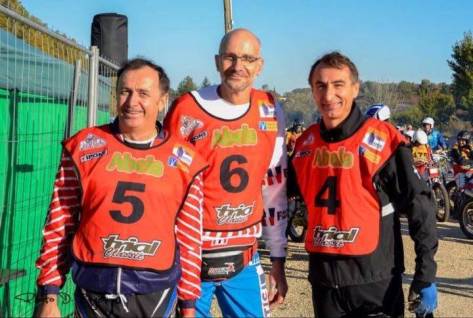
“He was such a great person and a great rider. We frequently travelled together for the world championships or to go to the SSDT. When we stopped riding, we lost contact but a couple of years ago we met again for a trial classic in the Mont Ventoux in France. He was the same Bernard, always in a good mood and always very nice. Last year he was my team-mate along with Fred Michaud for the 2015 VTC classic trial in Mont Ventoux”.
Mont Ventoux 2015 – Fred Michaud, Bernard Cordonnier & Gilles Burgat – all good friends in the sport of trial
“This was probably the last time he rode a trial competition. Bernard leaves behind two children. They can be very proud of their Dad. I present my sincere condolences to his family”. – Gilles Burgat
Our sincere condolences go to the Cordonnier family at this difficult time.
…
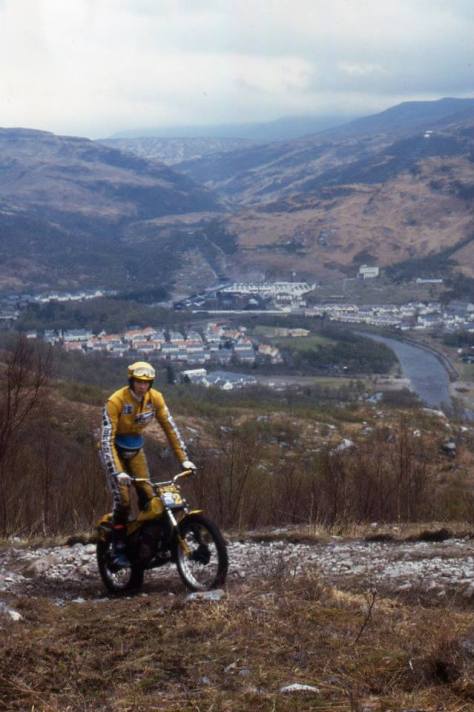
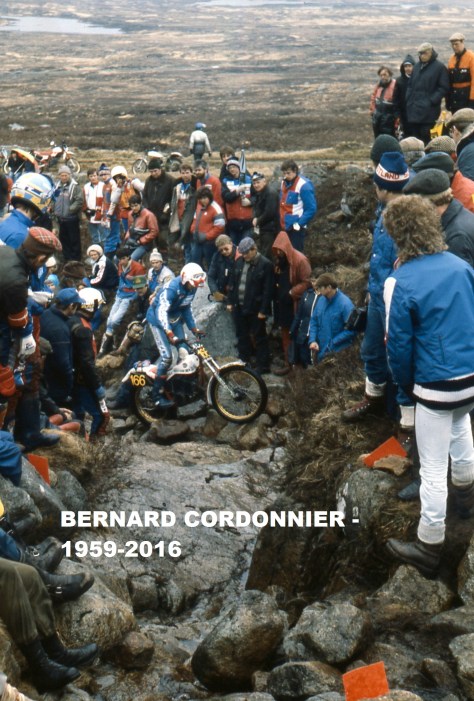
Bernard Cordonnier (JCM) in 1986 during the Scottish Six Days Trial on ‘Lagnaha’ – Photo: Iain Lawrie, Kinlochleven
Trials Guru is always looking for something different, so we have been actively seeking information concerning what was probably the furthest north promoted UK mainland motorcycle trial, the White Heather in Sutherland.
Watched by ‘Big Phil’ Paterson, Raymond Leitch from Culloden on his Bultaco, sponsored by Cawdor Castle in the 1979 White Heather Trial at Rogart – Photo: Iain Lawrie, Kinlochleven
Stay tuned to Trials Guru – Release date Christmas Day 2016!!!
Readers of Trials Guru will know of Rob Edwards and if you don’t then may we suggest that you have a read through Rob’s story by clicking on the link here on Trials Guru
Rob was probably best known as a factory rider and brand ambassador for the Spanish Montesa, but he started off as a local rider who competed on the international stage as his skills were honed.
Rob did however ride a multitude of machines in his early years, one of which was a 1963 350 AJS 16C which he bought from the Surrey dealers, Comerfords.
Words: John Moffat & Rob Edwards
Photos: All from Rob Edwards’ Private Collection – Photographers credit where known on each photograph, all rights reserved.
Rob Edwards cut his teeth on this 350cc G3C Matchless, winning his first award on the machine that was borrowed from his elder brother – Photo: Rob Edwards Private Collection
Edwards was to ride his AJS week in – week out and, having cut his teeth on his elder brothers’ Matchless, he knew how a big four-stroke performed.
…
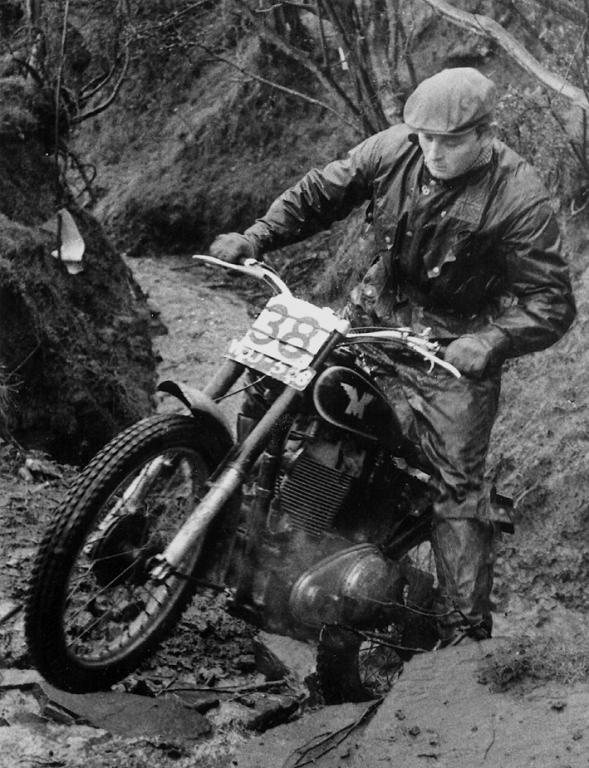
Rob Edwards on his 350 AJS – 970PL in the 1964 Cleveland trial which he won.
A lucky break came in 1965, when Rob’s name was put forward to the AMC competition chief, Hugh Viney by factory riders, Gordon Blakeway and Gordon Mclaughlan who rode works machines for the Plumstead factory.
Rob was well known to the two Gordons as he lived in Thornaby with local noteable riders Blakeway and Mclaughlan, who had a business in Guisborough, young Edwards was a known quantity.
Rob had ridden the AJS registered as 970PL as a private entrant in the Scottish Six Days Trial in 1964, the following year, factory rider Mick Andrews had moved over to ride the two-stroke James, which was part of the AMC group, this left a spare berth in the AJS team for the 1965 Scottish.
Rob Edwards takes up the story:
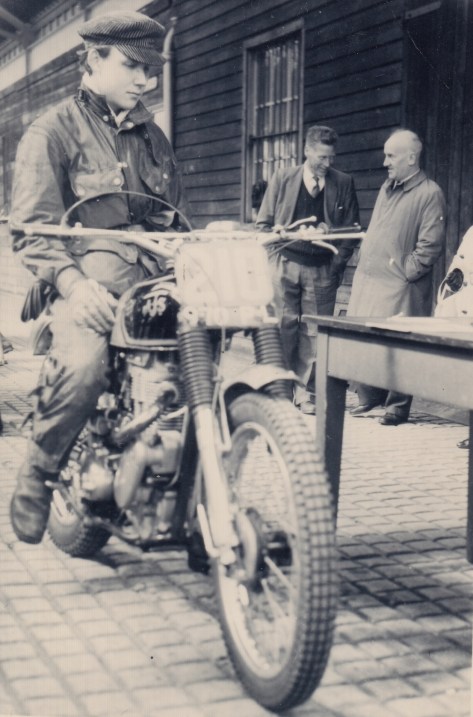
At the start of the 1964 SSDT at Edinburgh’s Gorgie Market, Rob Edwards on his 16C AJS that was to be updated to woks specification for the 1965 SSDT – Photo: Rob Edwards Private Collection
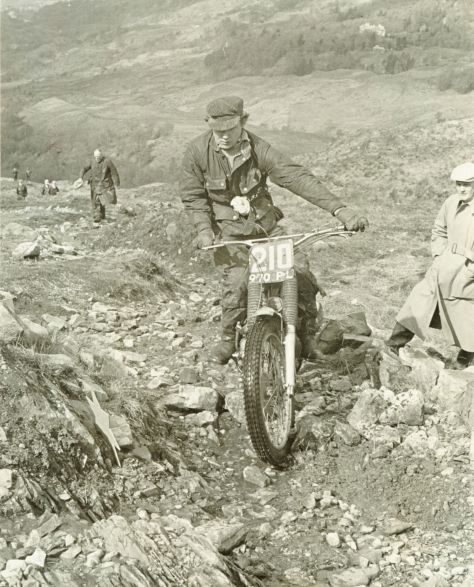
“I was allocated number 210 in 1964 on my AJS 350 that I bought from Comerfords, I entered as a ‘privateer’ and rode under the Middlesbrough & District, my home club. The event still started and finished in Edinburgh. On the Thursday, we went over the Corrieyarrick Pass. I think I had been following behind Peter Gaunt and what happened next I wasn’t to find out until sometime later. I found myself sat on a banking at the side of the Pass, which is an old General Wade military road. I had no idea at all how I came to be sitting there.
Alan Morewood from Sheffield, who became a top sidecar driver, came along on his 500 Ariel as he was number 205 that yea. He stopped and asked if I was Okay? ‘Yes, fine’ I said; ‘Bye’ he said and rode off”.
Loch Eild Path in the 1964 Scottish Six Days with Rob Edwards on his AJS 16C – Photo Brian Holder, Teddington (Supplied by Rob Edwards)
“A couple of minutes later and Alan was back. ‘Rob, are you sure you are all right, you look dazed?’ said Alan. ‘No problem’ I said and off he went again. Somehow I managed to get back to Fort William to finish the day’s run.
The first person I spoke to asked what I had been doing to scratch my face? Then someone said, ‘never mind his face, look at the back of his bike!’
The rear end was totally out of line. I then realised that I must have hit a pothole in the road with the front wheel over Corrieyarrick, cartwheeled and that explained my rest on the bank.
We pulled the bike back into line with a length of pipe that we found. Apart from a bit of a headache, it was back to business as usual.
The rest of the week was not as eventful and had a good old needle match with my mate Sid Lampkin who was on a factory Cotton that year”.
1965 SSDT:
Edwards:“A few weeks before the 1965 SSDT, I had an out-of-the-blue phone call from Hugh Viney, the competitions manager at Associated Motorcycles (AMC) who owned the AJS & Matchless brands; wanting to know if I would ride in the ‘works’ team in the forthcoming Scottish.
It seemed that they wanted Mick Andrews to concentrate on scrambling and ride the 250cc James in trials, which AMC’s also owned.
And so it came to pass that I became the third member of the AJS factory team.
However, there was no time for them to prepare me a bike and Mick’s bike 644BLB wasn’t available for some reason, so I would need to ride my own AJS which for me was not a problem.
Both the ‘Gordons’ – McLaughlan and Blakeway, had put my name forward to be in the team to Hugh Viney, so a big ‘thank you’ to them both for that gesture, which I have treasured all my life since.
My week was going well, I was clean on the Tuesday.
Later in the same day, we were looking forward to riding the new section ‘Pipeline’, introduced the previous year.
There were so many stories about ‘Pipeline’ that I wasn’t really sure if it had been cleaned yet or not.
I had teamed up with Alan Chant from Bexley-Heath who was on a 350 Matchless.
In those days all the ‘big bikes’ were grouped at the back of the field.
As we rode up to ‘Pipeline’, the spectators were all heading back into Kinlochleven.
Alan and myself walked the hill and both agreed on bottom gear.
Alan went first and he cleaned it.
I went next and after a bit of a shaky start, by trying to go too fast too soon.
I settled down and at the right speed things were a lot easier and guess what, I cleaned it.
I bet the spectators who left early were a bit peeved!
On the Thursday, I parked my bike close to the first section on ‘Mamore’ and went off to view the sections.
When I returned to my bike, there was a large pool of oil on the floor underneath!
A stone must have flicked up from the front wheel and hit the small alloy casting that the oil feed to the cylinder-head connects to and smashed it.
There was no way of fixing it, so I set off free-wheeling down to the road, expecting to retire from the trial.
I was sitting by the road side at the gate, that is the entrance to the famous Mamore path, when a car and trailer pulled up.
‘Whats up Rob’ the chap shouted over, I explained my plight.
‘No problem mate, give me two minutes and I will take the one off my bike’ he said.
In all the confusion and despair, I hadn’t noticed that the bike on the trailer was a 350 AJS, what a stroke of luck – for me anyway.
The engine had ‘gone bang’ and the fellow had retired from the trial.
You don’t have to be good with luck like that!
He got me going and I forget the lads’ name but I am indebted to his sportsmanship and generosity that day.
On the sixth day, we did Town Hall Brae in the centre of Fort William. We were then faced with the long ride back to Edinburgh.
For me it had been a great week thanks to Gordon Blakeway and Gordon McLaughlan”.
In the 1965 Scottish, Rob Edwards rode number 207 as part of the works AJS team comprising of Edwards, Gordon S. Blakeway (No. 178) and Gordon O. McLaughlan (No. 177).
Rob rode his own machine registered 970PL with many of the works style modifications carried out.
However, history records that it was Triumph that won the 1965 Manufacturers Team Prize, the Blackford Challenge Trophy.
Taken from the Official Results of the 1965 Scottish Six Days Trial:
Award 16 – For the best performance by a competitor on a solo motor cycle from 251-350 c.c. – R. Edwards (A.J.S.).
In the 1965 Scottish, Rob lost sixty-three marks and gained a Special First Class Award, just six marks behind his friend Alan Lampkin who went on to win the following year.
…
Rob on his 350 AJS at Achintee Farm, Ben Nevis, in the 1964 Scottish. The AJS supplied by Comerfords, hence the Surrey registration number 970PL. If you look closely the front wheel spindle nut has the ISDT type tommy-bar, obviating the need for a spanner. It also has the works style prop-stand tied to the front downtube by rubber bands and a small spigot mounted on the lower-most engine bolt and the attachment spigot mounting on the magneto mounting plate. Rob used this bike as a works supported entry in the 1965 event. Photo supplied by Rob Edwards. Photo copyright: Brian Holder.
Rob talks about his AJS 16C:
Edwards: “When the SSDT started and finished in Edinburgh, on the sixth day after the lunch check at Crianlarich there were no more sections until the Royal Observatory on Blackford Hill in the city. This was purely to see if your clutch still worked. You had to stop between two yellow lines and when the official dropped his flag you could move on – simple.
When you passed a third yellow line, that was the end of the observed hill. The path was so flat, nobody actually treat it like a section. However, I did see a rider who when the flag dropped he picked up the front wheel and tried to wheelie to the ends cards unfortunately he tipped his bike over backwards and his score went up by five points”.
Technical issues:
Rob: “After the Blackford Hill stop/restart test at the SSDT, was the final scrutineering test when you wheeled the bike onto a wooden workbench for inspection.
The AJS had one big problem, the swinging-arm bushes, they wore out at an alarming rate”.
Rob Edwards: “If the scrutineer thought that there was excess movement in the bushes, your score could go up by five marks.
I can still see my Dad, Bob at the bottom of Blackford Hill, with a cup of tea in one hand and an industrial grease gun in the other.
After my cup of tea, I pumped the swinging arm full of grease. It only lasted for 100 metres, but it was enough to get through scrutineering”.
In 1965 Rob Edwards had fitted a Royal Enfield primary chaincase to his 16C AJS which prolongued the life of the primary drive chain – Photo: Rob Edwards Private Collection
Our thanks to Rob Edwards for his recollection of his AJS and suitable photographs from his private collection of memorabilia for our special section on AMC trials machines. All photographs are copyright with permission to display granted for this article and the Rob Edwards Story only.
There has always been a desire by enthusiasts to get their hands on factory machinery. The AJS and Matchless machines were one and the same, except for minor details and were brands that lesser lights sought to own.
Words: Trials Guru – Martyn Adams – Eric Adcock – Gordon Blakeway – Ian Harland – Gordon Jackson – Gordon Mclaughlan – Don Morley
An early AJS that the factory sold into private ownership. B.H.M ‘Hugh’ Viney’s factory 1946 350 16MC with black paint disguising many lightweight alloy components, registered HXF641, Viney won three successive Scottish Six Days Trials post-war, 1947-49 – Photo by permission of: David Lewis, London
A number of AMC trials bikes were released into private ownership after use by the Plumstead competition department, but only a few really ‘escaped’. One such escapee is the 350 Matchless G3LC the father of Trials Guru’s John Moffat purchased, OLH722. This was achieved by a single telephone call to the factory competitions department of AMCs in 1957. It was an ex-Ted Usher/Sid Wicken machine that had been in both long and short-stroke powered format in its four year period of use with the Plumstead factory riders. Similarly, the Matchless OLH723 which Usher also rode, was also released for sale in 1957 but released as an AJS and ridden in that year’s SSDT by Thornaby’s Robin H. Andrew, whereas OLH721 had been Artie Ratcliffe’s factory 1954 SSDT winning mount when in rigid frame form.
OLH722 had past through the capable hands of Fred Hickman, Gordon Mclaughlan, Bill Lomas and Sid Wicken before ending up with Usher as his last factory supplied machine in 1957, just prior to the Matchless team being disbanded. The machine is still in the Moffat family, but that is a different story.
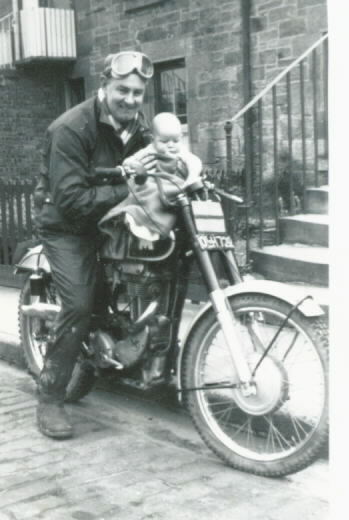
T. Arnott Moffat with son, John Moffat in early 1958 astride Moffat’s ex-factory 350 Matchless (OLH722) in long stroke form as sold by the competition department pictured in Stockbridge, Edinburgh. One of the few factory machines to find its way into private ownership which retained its Burman B52 gearbox casings cast in ‘Elektron’ magnesium alloy – Photo: Moffat Family Archive
…
The late Bill Lomas (former World Motorcycle Racing Champion) with Trials Guru’s John Moffat and the ex-factory Matchless OLH722 he was loaned by the factory in winter 1954-55. The dull grey ‘Elektron’ gearbox can be seen clearly in this image – Photo: Gordon Small
This is the story of another AMC factory machine that got away. A motorcycle that hasn’t been stored away or kept in a museum, but one that has continued to be used in anger as it was designed and built for – competition, and has won in the process.
WJJ580, where are you?
We set about tracking down the story of the 1959 registered AJS 16C with the index number WJJ580, one of a batch of similar machines used by the factory. Built as a long-stroke 350, it eventually became a 410cc variant which the factory wanted to try as a bigger bore machine. These special motors ranged between 401 – 420 capacity.
The discovery of WJJ580 opened a veritable pandoras box of information. With Trials Guru on the case, we find that there were three such machines made available to riders around the same time period.
The competitions department at AMC had been experimenting with competition short-stroke motors as early as 1956, these were issued to their factory supported riders replacing their long stroke units. Production short-stroke trials models would not be available until six years later, and a full year after Comerfords asked for Jackson replicas to be built, following his 1961 SSDT win. The first short-stroke would be the Matchless in 1962 followed by the 1963 AJS ‘Expert’ 348cc models.
The manufacturers of AJS and Matchless (AMC) introduced their trials models with short-stroke motors with Matchless in 1962 (top) and AJS 1963 (lower) now using the Norton style oil pump and a small pad style seat which replaced the ‘Dunlop’ rubber spring saddle. Photos: Associated Motor Cycles (AMC) advertising literature 1962/63
Factory numbers:
The factory registered their team machines in their name ‘Associated Motor Cycles’ with some AJS machines being registered as a Matchless. One such machine was the 1961 AJS used by Mick Andrews from 1962-1964 which was registered as a Matchless 347cc as 644BLB.
Gordon Jackson told Trials Guru: “When the factory disbanded the Matchless trials team in 1957 to concentrate the brand in scrambles and motocross, they asked me to use a Matchless tank on my works bike just to keep the brand name going in trials, but in reality the bike was simply my AJS with the different tank fitted“.
In September 1959, AMC trials models brought with them the bespoke trials frame with a much lighter and slimmer rear subframe, and a swinging arm taken from the lightweight road machines of the era. The previous competition models had the wide set rear subframe accepting firstly the Jampot rear suspension, and then latterly Girling suspension units with bottom clevis mounts.
With the launch of the ‘new’ trials model, the factory had registered a batch of 350cc trials models for their retention by the Competitions department under the watchful eye of former rider, Bob Manns. These were all registered consecutively on 1st January 1959 as WJJ578/579 and the subject of this article, WJJ580.
The ever helpful Don Morley, professional sports and news photographer, and author of many books on motorcycling, looked up his records for Trials Guru and confirmed that Roger Kearsey had been issued with WJJ578 as a Matchless as did Ron Langston in 1960, Cliff Clayton with WJJ579 and Gordon Mclaughlan with WJJ580; the machine we are featuring.
Ariel rider and all-rounder, Ron Langston briefly rode WJJ578 as a short-stroke Matchless in 1960. Note the alloy primary chaincase with detachable clutch cover in this photo. Photo courtesy: Ian Harland’s scrapbook
Don Morley told Trials Guru: “The motorcycle manufacturers worked under the same legislation as private purchasers, in that they had to pay purchase tax which started in 1940 and went on until 1973 when it was replaced by Value Added Tax, when registering any motor vehicle back then. This was the main reason why they simply replaced the machine between the number plates on more than one occassion. Triumph however didn’t seem to do that“.
Cliff Clayton rode the Scottish Six Days Trial in May 1959 on ‘579, but it did not have the complete new style frame at this time, instead it had the factory 1958 ‘prototype’ rear subframe heavily altered at the top damper mount and used a Girling unit with the alloy clevis type lower mount mated to the old style swinging arm. It also utilised the heavy full width alloy rear hub, but the 1959 style 5.5 inch half width front hub which was from the 41′ WD G3L military machine. The fuel tank was blue with gold lining and the AJS monogram. A departure from the traditional black/gold combination. The new rear 5.5 inch trials rear hub would be introduced in the September 1959 and eventually all WJJ registered machines would be retro-fitted with the new style frame and lighter wheel hubs by the competitions department.
Morley: “I do remember having a ride on WJJ580 during a visit to the Isle of Man some years ago“.
AJS, the brand:
Probably the most famous AJS trials machine of all time is that which was used by Gordon Jackson to win the 1961 Scottish Six Days, losing a solitary one mark, the lowest ever recorded score. It was registered in December 1960 as 187BLF and is now owned by the Sammy Miller Trust, having been re-discovered in 2010 by Miller and positively identified by Jackson. 187BLF had never left the UK, this was contrary to popular belief.
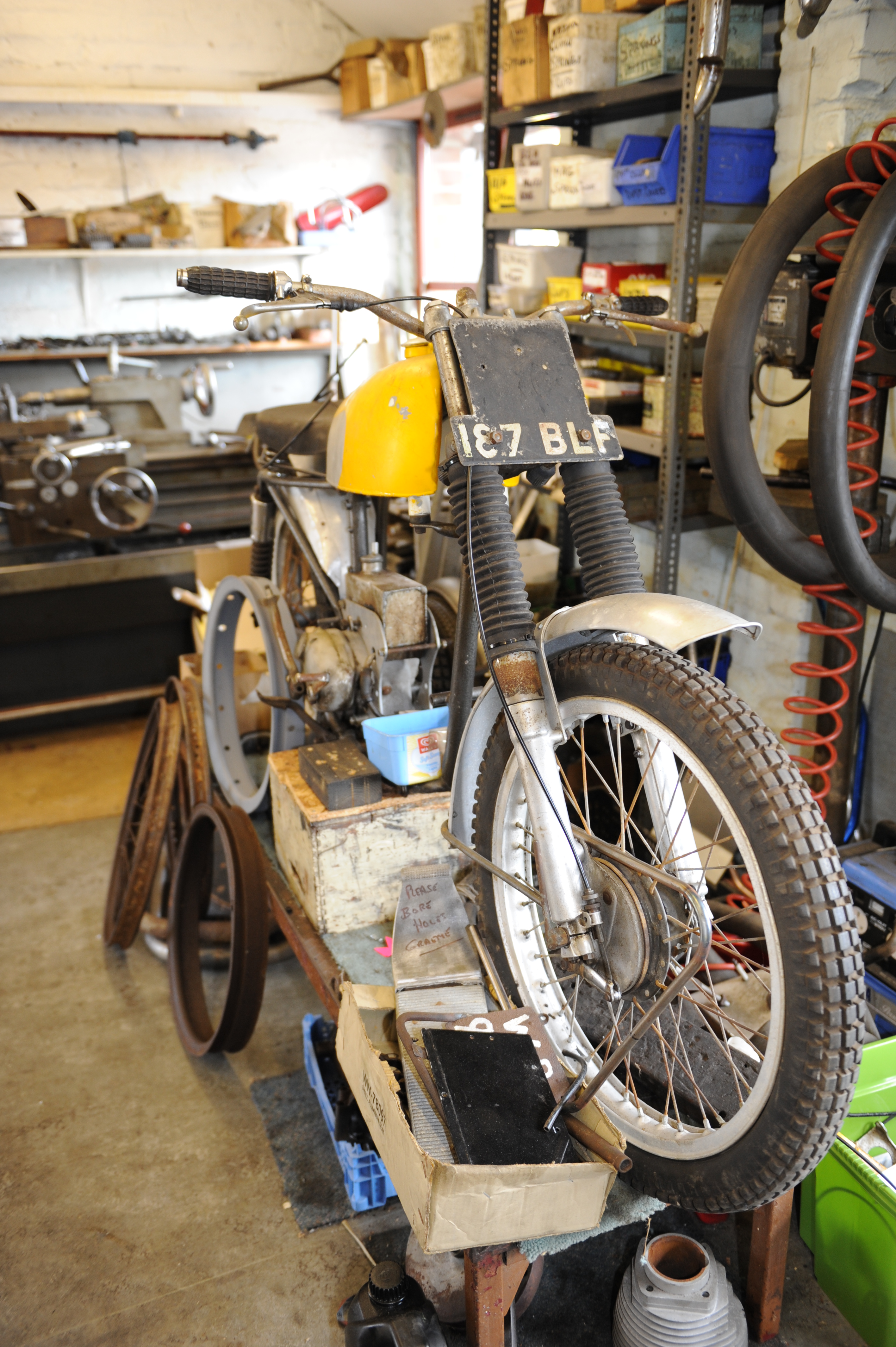
187BLF prior to full restoration by Sammy Miller in 2010 at Sammy’s workshops at New Milton. Note alloy front brake plate of the type only used by factory riders. – Photo: Sammy Miller
…
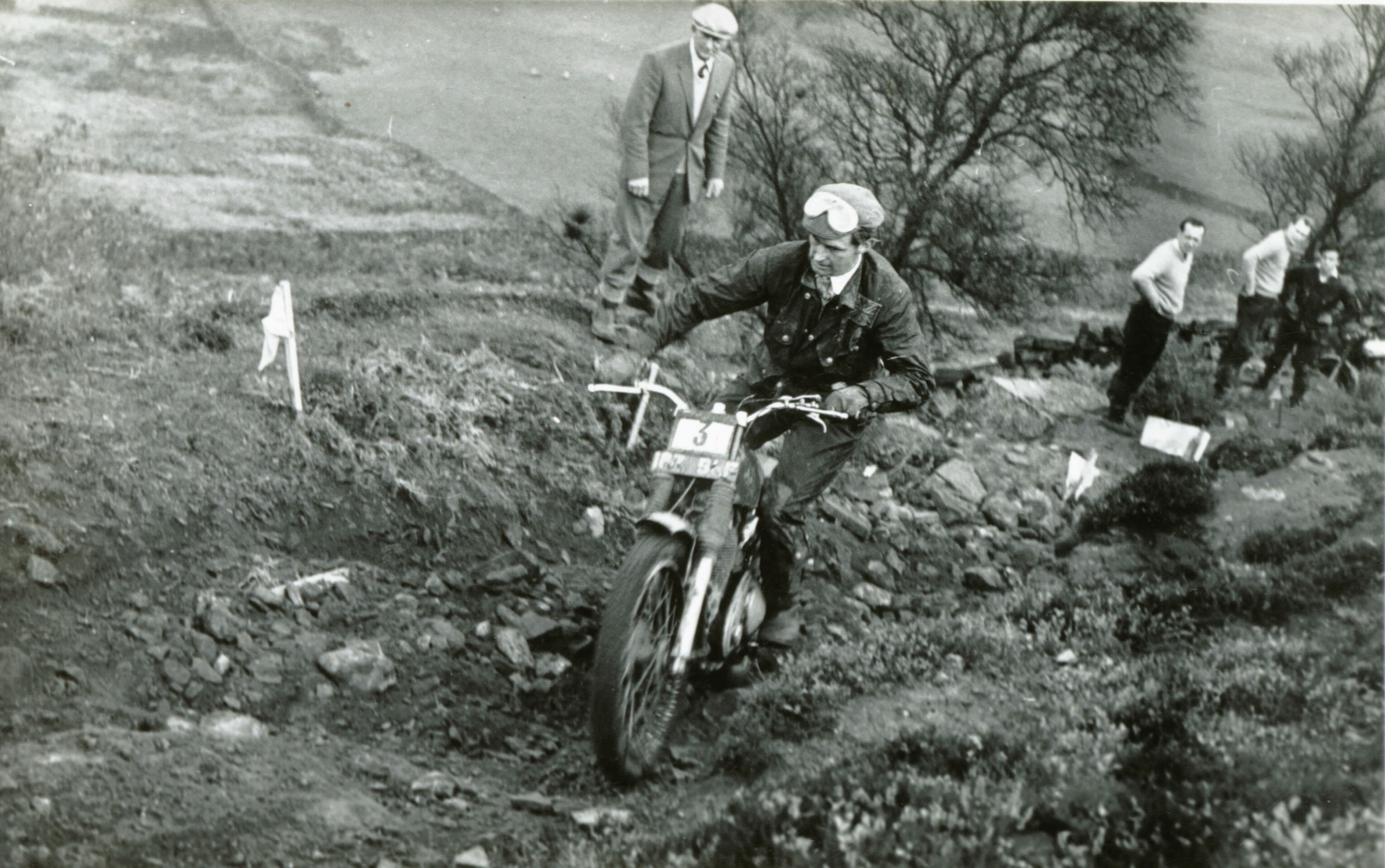
Gordon S. Blakeway on the world famous 350 AJS – 187BLF which carried Gordon Jackson to victory in the 1961 SSDT, seen here at the Colonial Trial in 1963 – Photo: Charlie Watson, Hull
…
Factory rider, Gordon Blakeway who had ridden for Ariel and Triumph, took over 187BLF when Gordon Jackson retired from trials in late 1962.
Gordon Blakeway told Trials Guru: “I rode 187BLF not as a short-stroke, but as a long-stroke. The bike was changed by the factory before I received it and Hugh Viney reckoned because I had ridden the long-stroke Ariel, then a long-stroke AJS would suit me better. I was slightly disappointed at this because I had been keen to have Gordon Jackson’s sharper short stroke motor“.
Blakeway continued: “When the factory eventually closed its doors in 1965, they asked me what I was due in expenses and I said it was about £55. I asked what they were going to do with 187BLF and they said it was for sale and they wanted £100 for it. I bought it, handing over the balance of £45 and about three weeks later I sold it on for an acceptable profit“.
…
Montesa’s Rob Edwards tries Noel Shipp’s Ex-Mick Andrews 350 AJS 644BLB for size in Australia when he was promoting the Montesa brand ‘down under’ in 1975.
It had been universally believed that 187BLF had been exported to Australia in the 1970s, even Blakeway believed that this was the case. However that was most likely to have been confused with the exportation of 644BLB, the 1961 registered Mick Andrews’ machine (1962-64), which Cliff Clayton also rode in the 1961 SSDT as an AJS, although it was registered as a Matchless.
Taken in 2013, after its full restoration, Gordon L. Jackson stands proudly with his famous factory AJS 16C (187BLF) on which he won the 1961 SSDT on one solitary mark! (Photo: Trials Guru/J. Moffat)
…
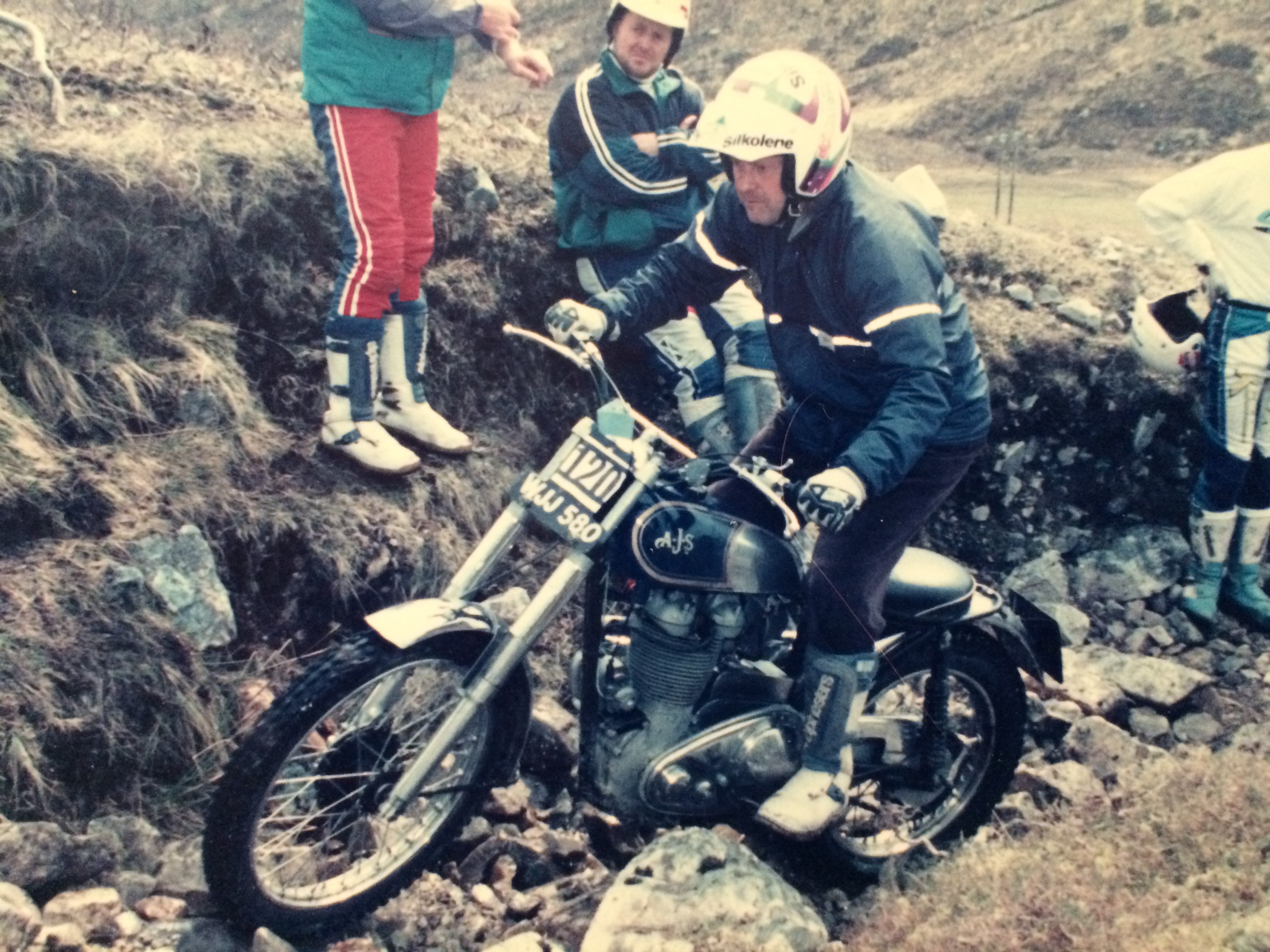
Ian Harland on WJJ580 in the 1990 Red Rose Trial
WJJ580, the beginning…
Looking at the original buff log book, WJJ580 was registered as a 59/16C AJS on 1st. January 1959 to Associated Motor Cycles Ltd at 44 Plumstead Road, London SE18 listed as a ‘350cc’. However, it would not always be ridden as a 350 but as a 410 sometime later. The AJS was retained by the AMC competitions department until 1963 when it was sold into private ownership to a Mr. Stone in Birmingham. After 12 months, he sold it to a Mr. Hopkins of Swansea, Wales.
The machine’s colour scheme was originally recorded as blue/black, being a blue tank and black frame, which was by then a colour option on production trials models.
The original buff log book (registration document) showing WJJ580 when it was registered new to Associated Motor Cycles on 1st January 1959. The ‘JJ’ index mark was used by Greater London until 1974 – Photo: Ian Harland, Isle of Man
Trials Guru tracked WJJ580 down to its’ current owner, Ian Harland who lives in the Isle of Man, he is the father of James Harland, a past winner of the Pre’65 Scottish on a Triumph twin in 2013.
Ian Harland: “I bought the AJS from the rider/dealer Bob Gollner of Denmead, near Waterlooville, Hampshire in 1989, it had been restored for him by Peter Pykett and I think he won the Talmag Trial on the bike“.
Talmag Trial at Hungry Hill, Aldershot organised by the Territorial Army (London) MCC – Left to right: Reg May (Norton 500T); John May (350 AJS) & Bob Gollner on WJJ580 – Photo courtesy of John May, Godalming
Harland: “The AJS has a lot of history in that it had been built within a small batch of similar machines for the factory riders. One of which was Gordon Mclaughlan who rode it in the 1960 Scottish. Unfortunately, it was believed that Gordon didn’t get on with the 410 motor and sent it back asking for a long-stroke 350. He was then allocated 164BLL which he rode until the factory closed its’ doors and the AJS team was finally wound down. Gordon retained the AJS, 164BLL for his own use after that“.
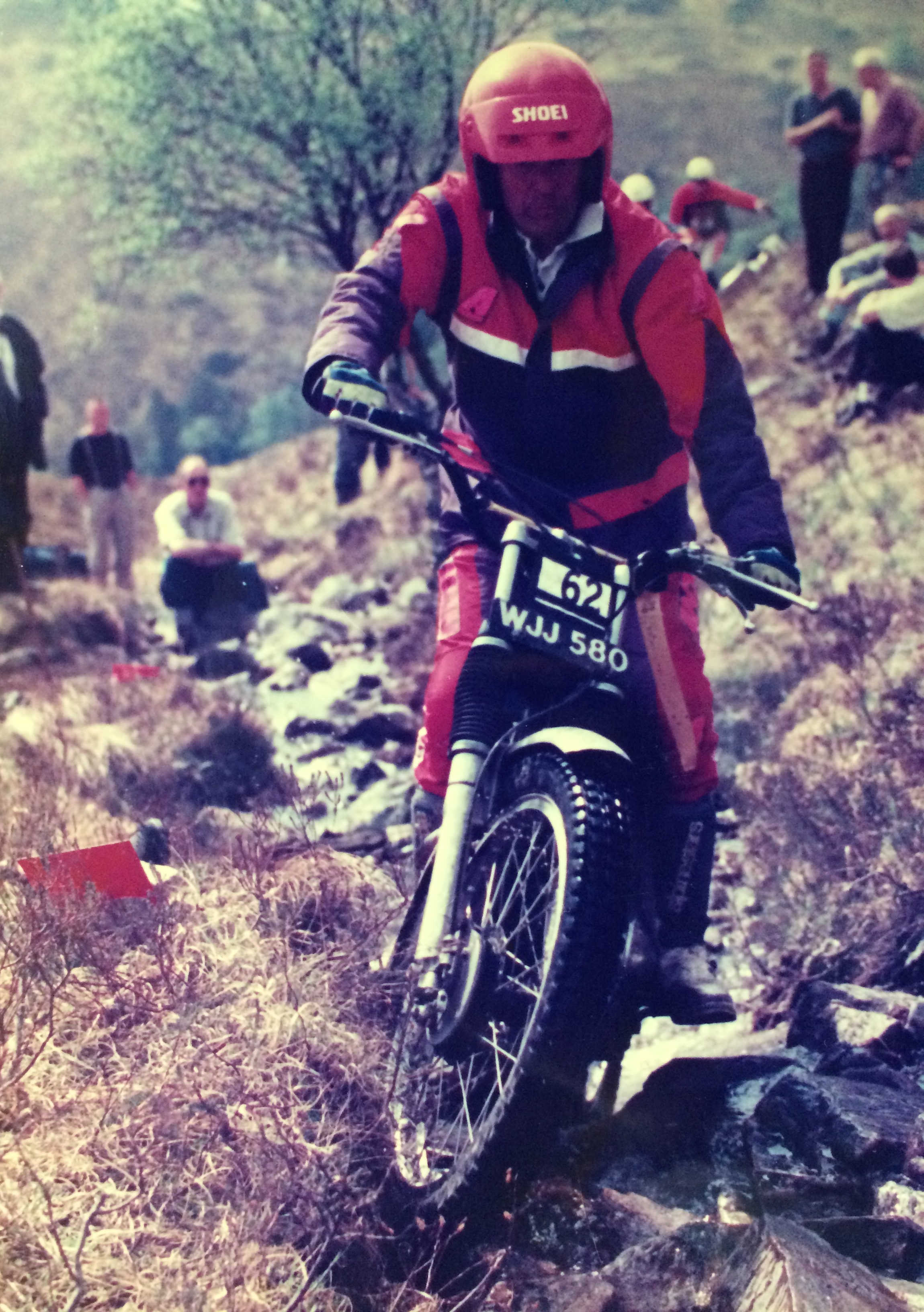
Ian Harland competing in the 1997 Pre’65 Scottish Trial at Mamore on the ex-factory AJS, WJJ580, which he has owned since 1989.
Harland: “According to the original buff log-book WJJ580 was first registered as a 347cc machine. If this dislike of the over-bored mtor is correct it happened around 1960-1961. The reason the crankcases are stamped ’61’ is because a replacement motor would have been fitted. Apparently, the conversion to 410cc involves long stroke 350 crankcases and an 74mm bore. So to change from a short-stroke 350 to 410 involves a complete engine change, not just the barrel and head. Presumably, the change back to a 350 involved the installation of a new engine in 1961 which is still in the bike today. I met an ex-AMC competitions shop employee at the Manx Classic a few years ago who remembered some of this. I understand that Malcolm Adams from Leeds owned the sister machine, WJJ579 the ex- Cliff Clayton bike”.
Ian Harland on the AJS with its original factory frame and cycle parts, but by then with a much shorter rear mudguard loop, at the 1990 Pre’65 Scottish on the top section of Loch Eild Path, high above Kinlochleven.
…
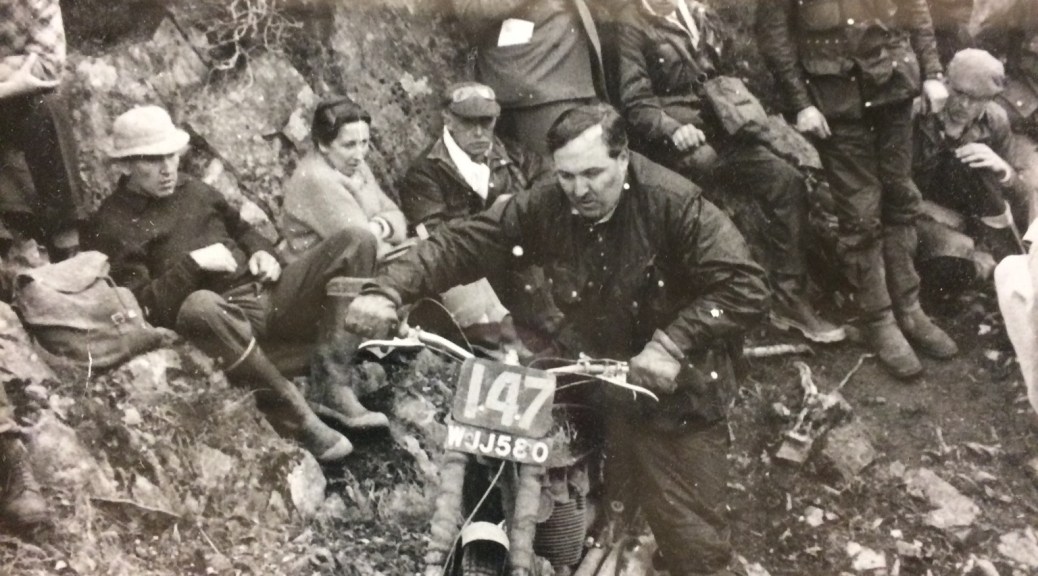
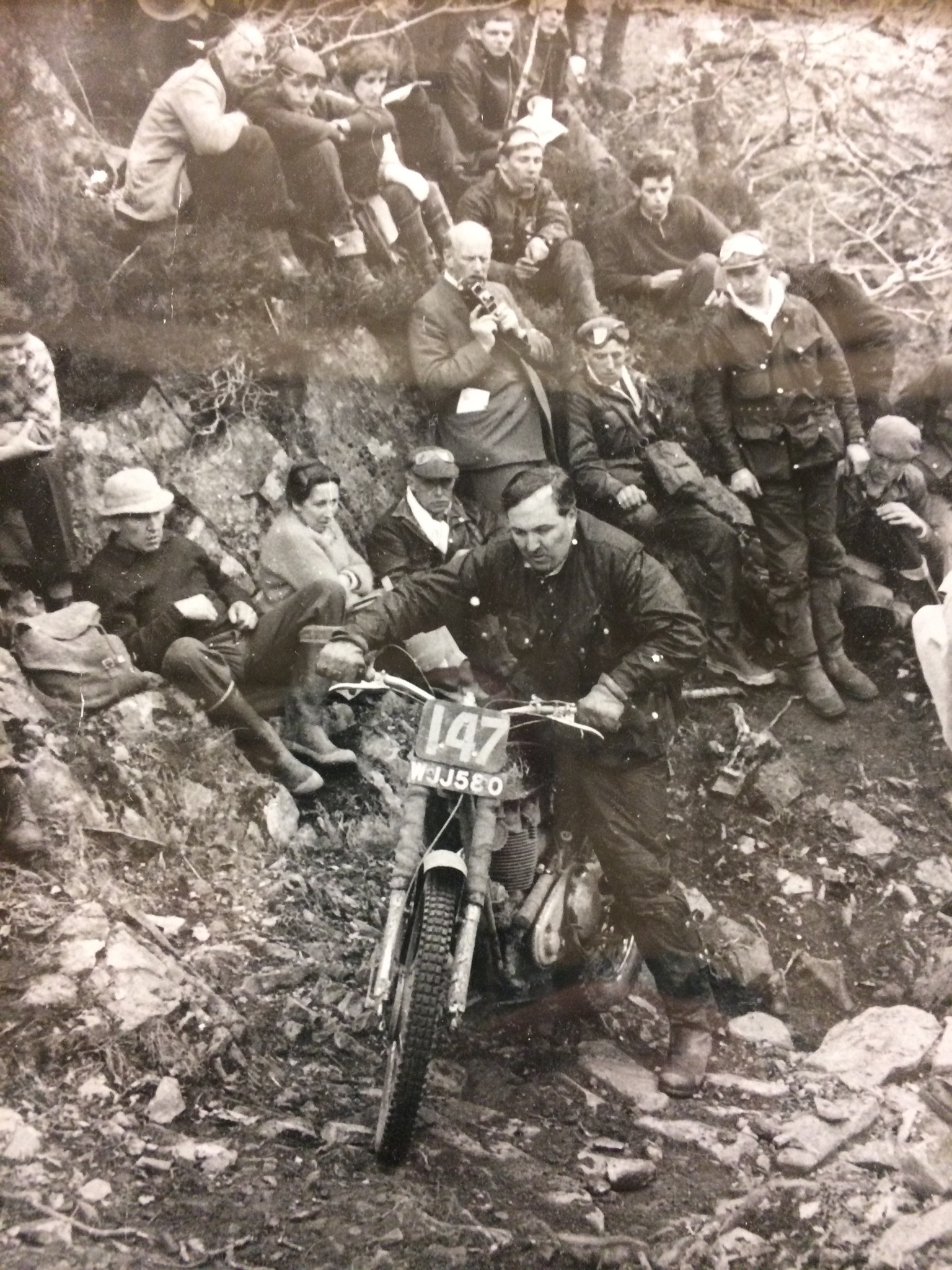
Gordon Mclaughlan was issued with WJJ580 and rode the 1960 SSDT carrying the riding number 147. It was obvious that the short-stroke motor was used at this point, evidenced by the matt black rocker-box which indicated an ‘elektron’ item. Elektron is a magnesium alloy made by the Magnesium Elektron company for AMC, which it used from the early 1950s. These componenst were usually retained by the factory when machines were sold to be used on other machines. It had the integral push rod tunnels. It also sported the long down-swept exhaust system with the short silencer. ‘580 was also fitted with the new style 14 inch Girling rear damper units which bolted on to bosses on the frame and swinging arm. Steel wheel rims were still being used at this time with the standard 21 inch front and 19 inch rear. Dunlop ‘Trials Universal’ tyres were fitted to all the team bikes.
…
Now enjoying a happy retirement, Gordon O. Mclaughlan was an AMC supported rider for 11 years 1954-1965 and ran his own car sales business, Gordon Mclaughlan Motors in Guisborough. – Photo: Ross Mclaughlan
…
Gordon Mclaughlan spoke to Trials Guru, confirming some points raised by Ian Harland: “It’s a long time ago now and I have read a fair bit about my factory bikes over the years and it would appear that people know a lot more about them than I ever did! I suppose I was just too busy riding them to note down all the important facts and figures about them. However what I can remember is this. My bikes were always prepared by the works. I used to take whichever bike I was riding to Thornaby railway station and send it to the factory at Plumstead. They would fettle the bike and send it back, wrapped in cardboard and taped up to protect it in transit and I would go and collect it from the station.
I remember that the factory gave me a spare fuel tank that was a Matchless one, so that I could enter some trials with the AJS as a Matchless and I would cover over the AJS emblem on the timing cover.
I really liked the long-stroke motor as the sharp motor that Gordon Jackson used was just a bit too quick for my liking. I recall that some of the engines in my bike were as high as 420cc or at least that is what the factory told me. It was to try and win the 500cc cup at events on what was an over-bored 350.
I did ride WJJ580 for a year or so, before the factory asked for it back to do some work on it and back came 164BLL, that would be around late 1960, early 1961. It was before Gordon Jackson won the SSDT and we were given similar machines. I used 164BLL until the factory shut down, I was due eighty-five pounds in unpaid expenses and I was given 164BLL as payment. I kept it for quite a few years and then sold it as I was too busy to ride it when I was building my business, Gordon Mclaughlan Motors in Guisborough. We sold AJS motorcycles and Lambrettas to start with then I started selling second-hand cars until we became Morris agents which became BMC and then Austin-Morris, British Leyland and finally Rover until I retired“.
Trials Guru research revealed that Gordon Mclaughlan’s 164BLL was registered on 1st. January 1961 as a Matchless, even although it was built as an AJS and used primarily as such, and as a 350cc. I mattered not that Gordon’s AJS was actually registered as a Matchless, because the MOT test which commenced in 1960 was originally a ten year test, reduced to seven years in 1961. The factory didn’t retain machines much above three years from the date of registration.
Mclaughlan continued: “I did ride one of the first Pre’65 Scottish trials at Kinlochleven on a replica AJS I had built, I think that would have been around 1984. I enjoyed my time riding for the factory from 1954 after a couple of years on my own Norton 500T. The first AJS I received was a rigid, but I can’t recall the registration number of that bike, if anyone has any photos of it I’d be keen to see it. I know it wasn’t an ‘AJS’ private registration number as Gordon Jackson, Hugh Viney and Bob Manns had those.
Hugh Viney was our team manager, he was quite an aloof, reserved character, a rather serious man.
It’s amazing how many ex-works bikes were sold off by the factory after use. Ted Usher’s bike OLH723 ended up near to us, a local lad from Thornaby called Robin Andrew bought it in 1957. He was a fairly good local club rider“.
Sadly the factory machine 164BLL issued to Gordon Mclaughlan, was completely destroyed in the fire that destroyed many historic motorcycles at the National Motorcycle Museum at Bickenhill, Solihull on 16th September 2003.
…
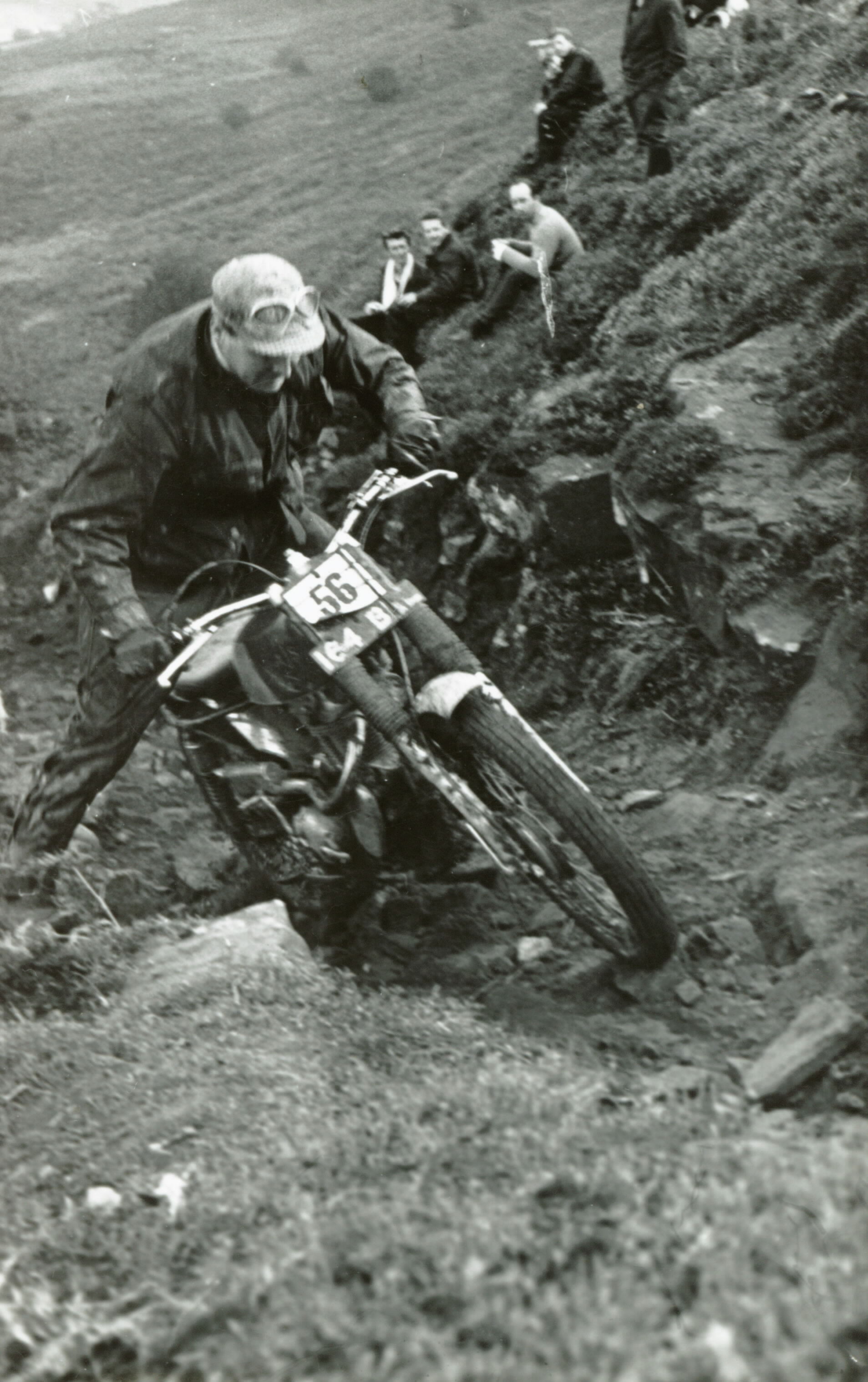
After campaigning WJJ580, Gordon O. McLaughlan was issued with this machine, 164BLL, here we see him taking a hefty dab at the Colonial Trial in 1963 – Photo: Charlie Watson, Hull
…
Ian Harland campaigning the ex-factory AJS (WJJ580) in the 1995 Pre’65 Scottish watched by Scots rider, the late Gordon McMeechan.
Ian Harland continued the story: “When I bought WJJ580 the engine wasn’t the sweetest, it was actually very ‘rattly’. Martyn Adams, then based in Brighouse, West Yorkshire re-sleeved the barrel and found a new 7R piston for it. The motor has run ever since in many trials over the years ridden by myself including a number of Pre’65 Scottish, most Manx Classics, Talmag, Mons in Belgium etc. I’ve retired from trials now so the engine top end is again being rebuilt, the barrel being re-sleeved again by Martyn, now in Adelaide, Australia“.
…
A Brian Holder photo of Gordon Mclaughlan takes a steadying dab on the factory AJS WJJ580 in the 1960 SSDT on Devil’s Staircase. Watched closely by SACU official Jim Birrell (standing with cine-camera) and Ralph Venables (seated, top left) Being factory prepared, it is fitted with the tommy bar front spindle nut and the compressed air bottle mounted on top of the alloy primary chaincase. The front forks have rubber inner tubes to protect the external fork springs. You can just make out the ‘prop stand’ bar strapped to the front frame down tube. This slotted into a tube which was welded to the front engine mount on the near-side. This complied with the SSDT regulation that the machine “must be fitted with a stand or the penalty would be 5 marks per day”. Mclaughlan was subsequently issued with 164BLL – Photo couresy of Ian Harland
…
Works issue:
WJJ580 was used in effect as the works ‘hack’, a machine that would be allocated to various riders who had either expressed a wish to ride for the factory or were chosen, some ‘selected’ by the well-known doyen of trials journalism, Ralph Venables. Venables would effectively ‘scout’ for the factories as he had the ear of the competition managers, two of which were Hugh Viney and Bob Manns of AMC. History records that Dave Rowland was ‘selected’ in 1961, prior to being snapped up by BSA, and was issued with 580 when he had been at Bordon doing his army national service. However it was not a happy arrangement and Rowland sent the machine back as he didn’t get on with it. But in his customary style, Dave sent a polite letter with the returned machine in 1962, thanking Hugh Viney and the factory for allowing him to try it over a period of time.
Taken directly from Ian Harland’s scrapbook on WJJ580, we have an image of the late Dave Rowland on the AJS when he was enlisted to the army during national service in 1961. We can see that the machine has the late type frame and swinging arm and long rear mudguard loop Please note: This image is copyright and was used by the late Ralph Venables in his ‘Ralph Remembers’ column in T&MX News at one stage.
Roger Kearsey from Upwaltham, Sussex who competed with the Matchless WJJ578 for a spell went on to ride for Royal Enfield. Eric Adcock of DOT fame also rode WJJ578, but eventually sent it back, preferring to stick with the two-stroke DOT.
WJJ578:
Eric Adcock spoke with Trials Guru and provided photos of ‘578 that he had taken, plus the letters that he received from Hugh Viney, the competition manager at the AMC factory. Eric is still heavily involved with the sport and is a Director of North Western ACU and is their Permit Secretary and Treasurer.
Eric Adcock: “I received correspondence from Hugh Viney, the competition manager at AMC and I was sent WJJ578 to try out”.
The ‘informal’ letter from AMC’s Hugh Viney to Eric Adcock in October 1959 suggesting that he might try one of the works 350 trials machines. – Copy courtesy of Eric Adcock
Adcock: “I had been demobbed from national service by then and was open to offers of a machine, I was in the Mechanical Transport division at Borden from March 1956 to December 1957“.
…
Hugh Viney’s ‘formal’ letter to Eric Adcock on 15th October 1959, inviting him to visit the AMC factory to discuss the matter of a works machine. – Copy courtesy of Eric Adcock
…
23rd October 1959, AMC’s Hugh Viney offers to send a works 350 to Eric Adcock for testing ‘locally’ – Copy courtesy of Eric Adcock
…
5th February 1960 – AMC’s Viney replies to Eric Adcock’s rejection of the Matchless WJJ578 – Copy courtesy of Eric Adcock
…
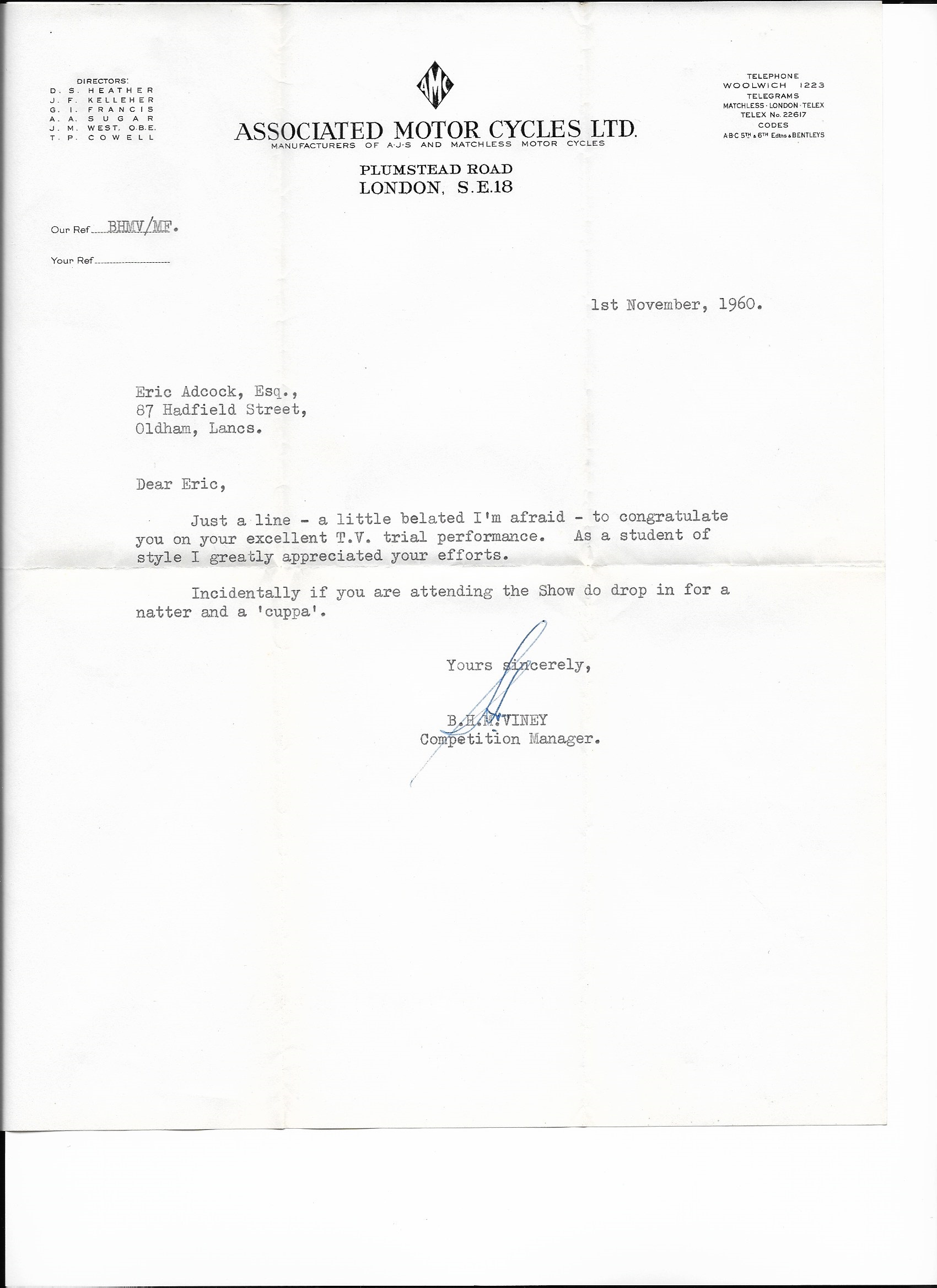
A friendly/congratulatory letter from AMC’s Viney to Eric Adcock on his performance at the televised trial in 1960 – Copy courtesy of Eric Adcock
WJJ578… Adcock’s test
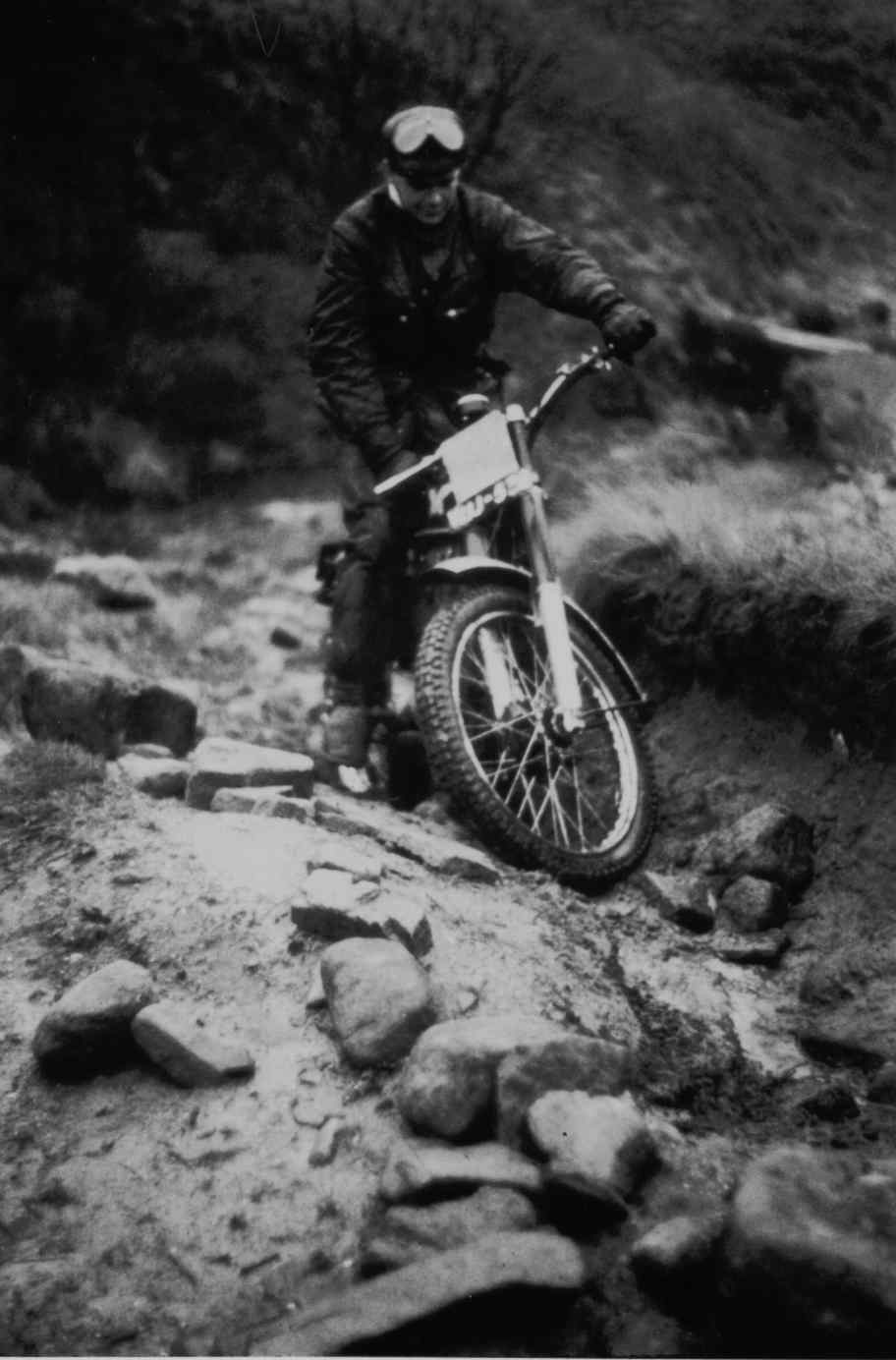
Eric Adcock aboard WJJ578 on ‘Hawks’ Nest’ in Derbyshire in October 1959 where he tested the Matchless against his DOT – Photo courtesy of Eric Adcock
Adcock: “I started in trials on a BSA Bantam in 1951, then on to a Francis Barnett and eventually on a DOT in January 1954, with a short spell on a Triumph Cub in 1958 which I had been sent by Henry Vale at triumphs, but couldn’t get on with it at all, so I sent it back. The Matchless I got on reasonably well with and quite liked it, winning an event in the process, but it was a bit too tall for me. I had the bike about three months before I sent it back to Plumstead, deciding to stick with DOT Motorcycles“.
Eric Adcock’s photo of WJJ578 when it arrived from the AMC competition department at Plumstead in October 1959. These photos were taken at an all electric cotton mill in Oldham where Eric’s father was the mill engineer. Young Adcock kept his bikes in the boiler house. Adcock: “… as it was a warm and pleasant place to clean them and work on them until I got married”
Adcock: “I took some photographs of WJJ578 when I had it and held on to them, along with the correspondence from Hugh Viney, I hope it brings back memories for your readers“.
…
Nearside view of the works Matchless WJJ578 taken by Eric Adcock. Note the rubber cover over the carburettor and the clevis lower mount of the Girling rear dampers. This is the late type trials frame for the 1960 season, retro-fitted by the factory. The alloy primary chaincase, a Plumstead special component shown off to best effect in this photo.
…
Often referred to as the bet side of a heavyweight trials bike, the ‘offside’ of the factory 350 Matchless, WJJ578 taken by Eric Adcock in October 1959
…
And so back to WJJ580 – Harland’s machine that got away:
Ian Harland at ‘Sloc’ in the Manx Classic Two-Day Trial on WJJ580, an event he won in 2004 on this very machine
In 1962 it was the time for the factory to move on the AJS, WJJ580, with new stock having been taken from the production line and retained by the competitions department, headed by Wally Wyatt.
Factory mods…
This was how it was done by the works: The machines would be selected by dispatch staff from the production line and the frame and engine numbers were all noted in the production ledgers as being retained by Comp Dept. These selected machines would be wheeled away to the Competitions department. The machines would be registered in the company name and then stripped down and modified by the competition staff with lighter components replacing standard parts as required. One such item was the primary chain-case, the factory had these fashioned from aluminium alloy instead of the standard steel pressing with a separate, detachable clutch dome also fashioned from aluminum alloy. This practice had been carried on from the immediate post-war years.
Around 1955, the practice was to steepen the steering of the standard trials frame by heating up the frame tubes and forcing down the headstock, this also required new engine plates in dural to be made up as the gearbox became closer to the motor and a shorter primary chaincase was also fabricated out of alloy. The result was a sharpening of the steering which the factory jockeys preferred.
Fuel tanks could be altered to sit on the machine closer to the steering head or otherwise to riders preferrence. Usually the area of the tank where the riders knees would make contact would have the paint polished off and abbreviated lining used.
Inside WJJ580…
The replacement 1961 stamped engine in Harland’s bike is definitely non-standard. The motor uses a 8:1 high compression piston and is a forged item as used in the AJS 7R racing motors. The valves are much bigger than the standard AJS 350 single utilises. It also has much more power than the standard 350 motor produces.
Around the year 2000, the original frame cracked at the headstock. The AMC trials frames were susceptible to this type of occurrence and it’s amazing it lasted so long. An Andy Bamford from Fleet frame kit was obtained which has been used ever since.
Harland: “I still have the original works frame which one day I’ll get repaired. These bikes are like ‘Trigger’s broom’. I rode my son James’s 500 AJS in the Pre’65 Scottish in 1999 and l loaned WJJ580 to my good friend, Giovanni Dughera from Turin who was a works Ossa rider in the 1970’s”.
…
1999 Pre’65 Scottish – Italian, Giovanni Dughera riding WJJ580 on Loch Eild Path. In the background to the left, Trials Guru’s John Moffat waits his turn astride his Matchless 469HKJ. On the right watching is Rochdale competitor, Frank McMullen – Photo: Iain Lawrie, Kinlochleven
…
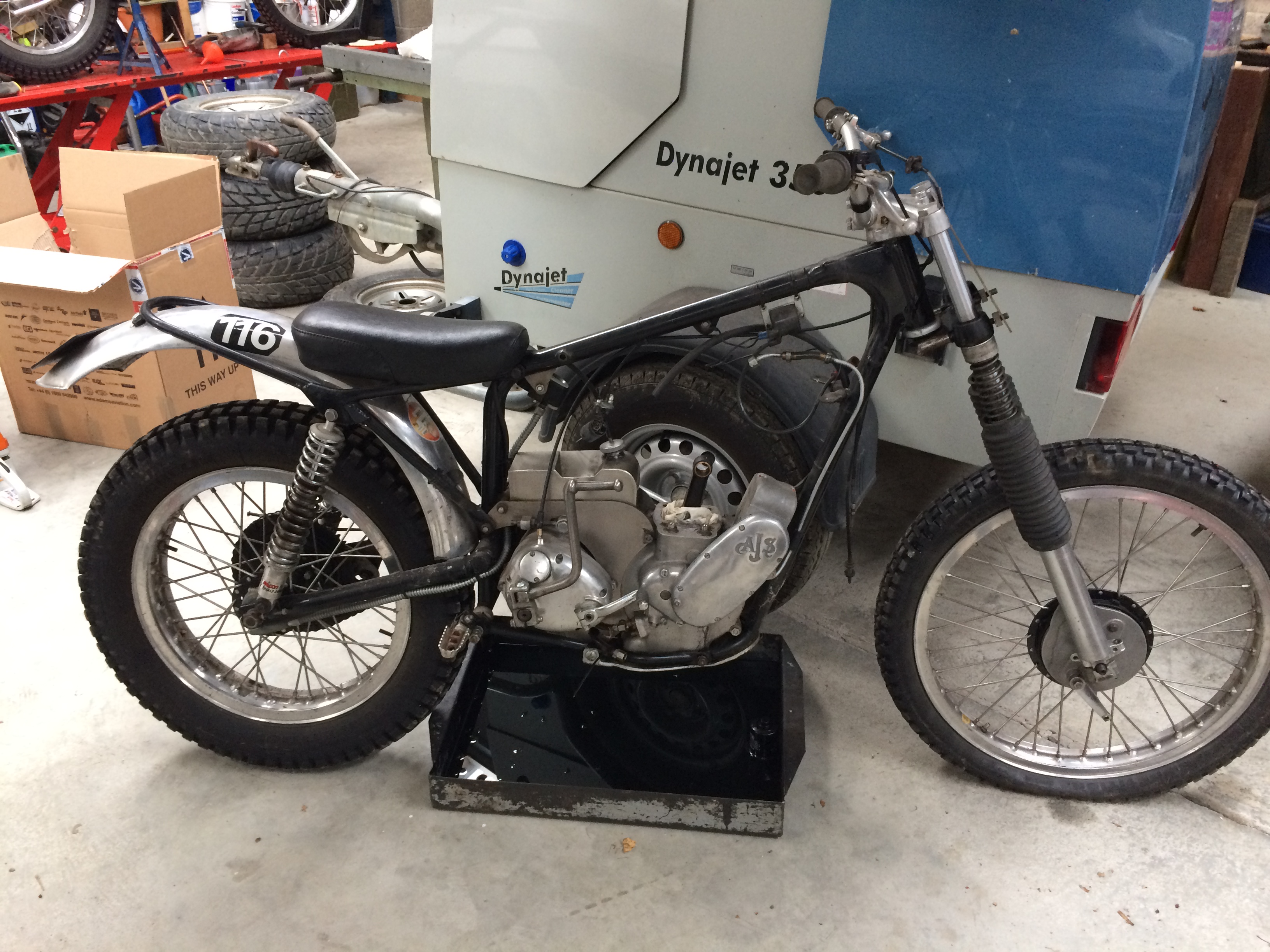
WJJ580 partially disassembled in 2016 to have a new liner fitted to the barrel by Martyn Adams. This frame was made by Andy Bamford in 2000, but Ian Harland still has the original frame set which will be repaired in the future. Note the alloy front brake plate, a special factory item, not the Comerfords version. The central alloy oil tank was a period modification used by the factory and subsequently marketed to private owners by Comerfords of Thames Ditton. All late model AMC trials machines from 1959-on used the bespoke trials frame and lightweight style swinging-arm and the 1 1/8th inch forks with the alloy top yoke.
…
Martyn Adams, formerly of Serco in Brighouse, now living in Australia and trading as MDA Motorcycle Engineering picks up the technical details: “I reconditioned this engine over 25 years ago and don’t think there is too much to say. However finding a piston for the engine 25 years ago was an issue, as the bore size is 74 mm, not the usual 69mm. At first we thought it was an AJS twin piston, but not so, as the piston is a forged type and not the cast type. We then realized the piston is from a 1954 specification AJS 7R, not the readily available short-stroke type of 75.5 mm“.
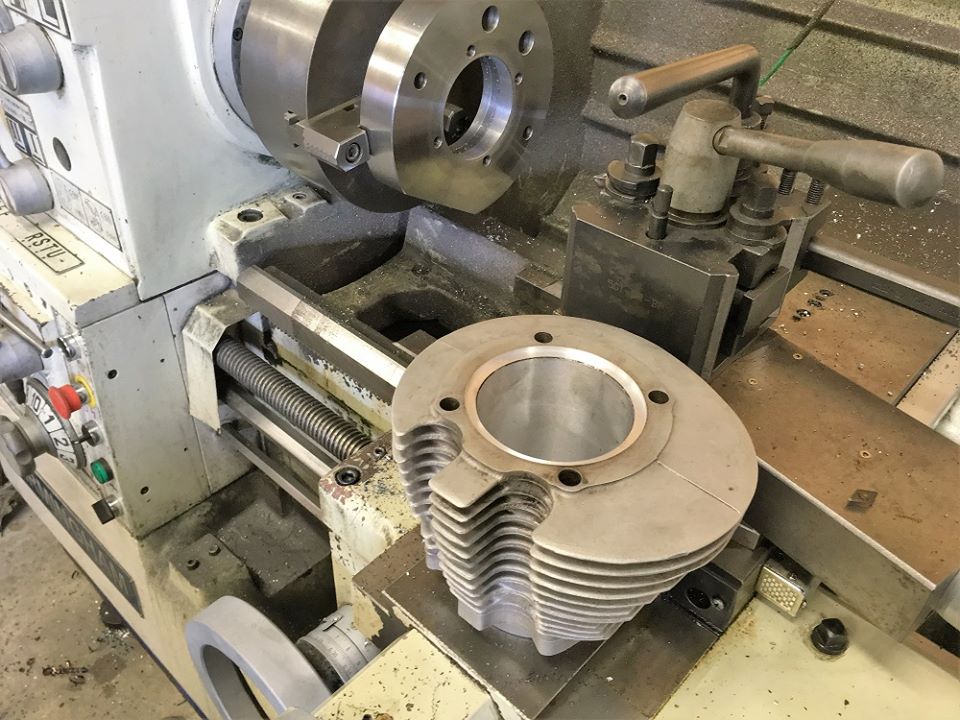
WJJ580’s barrel machined to take a fresh liner – Photo: Martyn Adams/MDA Motorcycle Engineering,
Adams: “This is the reason we recently re-sleeved the cylinder as the piston was still in very good condition but has now been machined to take a modern oil control ring. Ian believed for years that the motor was a 410, but I think the crank is a standard 93mm stroke, which would give a capacity of exactly 400cc“.
WJJ580 treated to a fresh cylinder liner using the existing piston machined to take a 3rd oil control ring – Photo: Martyn Adams/MDA Motorcycle Engineering
Adams continued: “So I suppose the motor is really quite special as it’s a pretty unique mix of factory parts. Ian also has a another bike with a special short-stroke engine that I made a crank for and is very similar to the short stoke Ariels we call her the big bang motor“.
Base of cylinder detail shows the customary lets for the con-rod to clear as it pushes the piston up and down – Photo: Martyn Adams/MDA Motorcycle Engineering
Adams added: “I haven’t checked, but would reckon with the domed piston and 74 mm bore, not 69mm, the compression ratio will be around 9:1. This is quite high for a trials machine. The cylinder head from memory has the later valves from the short stoke head with big inlet with a 5/16 inch stem and small head exhaust valve with a 3/8 inch stem. As I said a real mix of factory parts“.
…
The relined AJS barrel is now back at Ian Harland’s house awaiting to be re-united with WJJ580’s crankcases – Photo: Ian Harland
So at least WJJ580 escaped the fate of many factory machines that were broken up for their parts and it was put to good use. To be ridden and competed on, very much in the spirit in which they were all designed and built.
WJJ580 certainly was – One That Got Away!
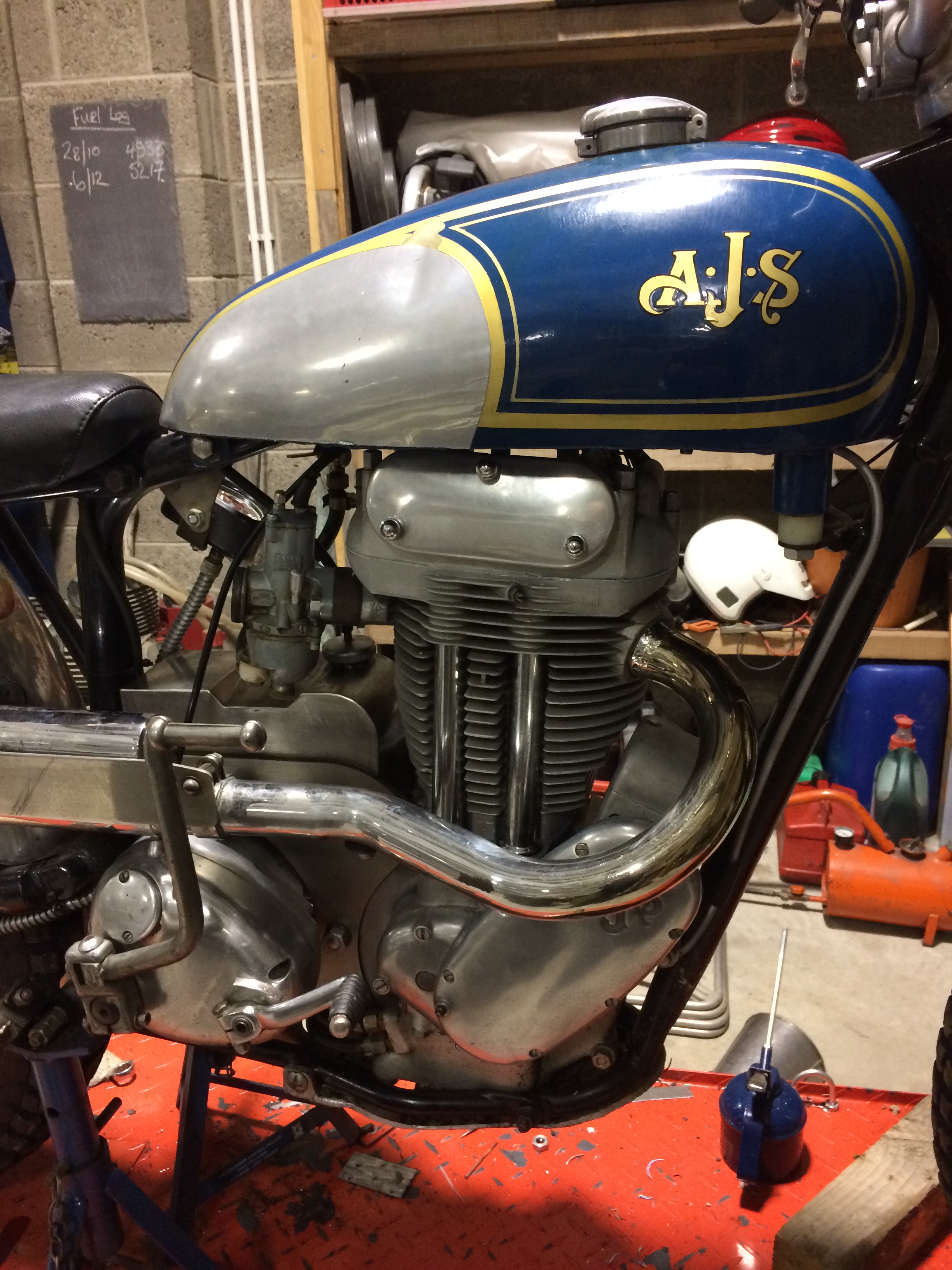
Back together again in December 2016 – WJJ580 and its special motor – Photo: Ian Harland, Isle of Man
…
The numbers game…
The AMC factory road registered all its ‘road test’ and works retained trials machines locally in the Greater London area. The ‘XF’ index mark for example was London County Council, used immediately post second world war. The exception was the ‘GK’ index mark, as it was London South West area, whereas the factory was based in being Plumstead SE18 London. It is safe to say that all AMC factory trials machines were all London registered.
Known AMC Factory Trials Registration Numbers:
(*) Indicates those sold or still in private ownership
AJS:
HXF641 * (Viney); HXF644; AJS775 (Jackson); AJS776 (Viney); AJS777 * (Manns); KYM835 (Viney); OLD865 (Viney); WJJ579 * (C. Clayton) WJJ580 * (Various); 187BLF * (1961-63 Jackson/63-65 Blakeway); 644BLB (registered as a Matchless) * (Location Australia – C. Clayton 1961/Andrews 1962-64); 164BLL (registered as a Matchless – destroyed in the fire that ravaged the National Motorcycle Museum in 2003) * (1961-65 Mclaughlan); UXO194 (Jackson); VYW659 * (Jackson); TLP686 * (Jackson); TUL654 * (Manns); VGK756 (Jackson)
…
A smiling B.H. M. ‘Hugh’ Viney on his works 347cc AJS (AJS776) in the 1955 Scottish – Photo: Jock McComisky, Linlithgow
…
TLP686, the former factory AJS 350 of Gordon Jackson from 1956 on which he won the British Experts, now in private ownership – Photo: Mr. Philip Clarkson
Artie Ratcliffe on his 1954 SSDT winning Matchless OLH721 on Town Hall Brae, Fort William – Photo: Ray Biddle, Birmingham
…
Sid Wicken from Kenardington, Kent on his factory 350 Matchless (OLH722) in the 1956 SSDT. Seen here with the short-stroke motor fitted, the ‘Elektron’ rocker-box can be seen with its matt black finish. Wicken’s frame broke below the headstock but still managed to finish the event with the frame wired together. The machine was sold into private ownership in August 1957 in long-stroke form to Arnott Moffat – Photo: Ray Biddle
…
1951 – Derek J. Ratcliffe, brother of Artie on his factory 347cc Matchess (KYM836) on Weem, near Aberfeldy in Perthshire – Photo: Ray Biddle, Birmingham
With Acknowledgement for their assistance in compiling this article to:
Martyn Adams, Australia
Eric Adcock
Gordon S. Blakeway
Ian Harland, Isle of Man
Gordon L. Jackson
Gordon O. Mclaughlan
Sammy Miller, New Milton
Don Morley, Reigate
Trials & Motocross News, Lancaster
Photographic Copyright: is retained by the photographers named in captions above.
Apart from ‘Fair Dealing’ for the purpose of private study, research, criticism or review as permitted under the Copyright, Design and Patents Act, 1988, no part of this article may be copied, reproduced, stored in any form of retrieval system, electronic or otherwise or transmitted in any form or by any means, electronic, electrical, mechanical, optical, chemical, photocopying, recording or otherwise without the prior written permission of the author as stated above. This article is not being published for any monetary reward or monetisation, be that online or in print.
The Kia Motors UK sponsored National Twinshock Series of trials for 2017 moves ahead at great pace, with the announcement of the dates for the now popular series of events for twinshock and air-cooled mono-shock machines.
The 2017 dates are as follows:
February, 26th – Congleton MCC
March, 26th – Castleside Trials Club at Stanhope
April, 23rd – Nene Valley MCC at Geddington
May, 14th – Scunthorpe MCC at Alkborough
June, 18th – Vale of Towy MCC
July, 16th – Wye Valley MCC
September, 17th – Aqueduct MCC at Foel
October, 1st – Spen Valley MCC at Tong
October, 22nd – Central Wales Auto MCC at Knighton
…
Seven times TT winner, Mick Grant on his BSA Bantam at the Knighton round in 2016 – Photo: Lorna Brackenridge, Falkirk
The series organisers will have a stand at the Classic Dirt Bike Show at Telford, Shropshire on February 18/19th where they will have more information and a booklet explaining the series available.
Richard Allen (Honda) at the final Knighton round in 2016 – Photo: Lorna Brakenridge, Falkirk
Commissioned and created specially for Trials Guru by ‘Joe Baker Design’, this new logo will be used on our website, facebook and twitter social media developments. This will give Trials Guru a new look.
Nothing changes, we are still dedicated to the sport of trials and running free of any charges or subscriptions. We may even use the new design on some free promotional material and advertisements in the motorcycle sport press during the coming season.
We will start using the new image immediately.
The Trials Guru logo and brand is the intellectual property of Trials Guru/Moffat Racing and should not be used without the express permission of the owner.
PETER MITCHELL – a Scottish Trials Character – 1942 – 2011.
Peter Mitchell – 1942-2011
Words: John Moffat, Isobel & Duncan Mitchell
Photos: Eric Kitchen; Jimmy Young, Armadale; Iain Lawrie, Kinlochleven; Colin Bullock/CJB Photographic, Solihull; Anthony MacMillan, Fort William*; Richi Foss, Inverness; Mitchell Family Archive.
Peter Mitchell having a cautionary dab on his 250 Suzuki at a Forfar event around 1980. Photo: Jimmy Young
…
One of Scottish trials best-known characters was Peter Mitchell. Born in the granite city of Aberdeen on 20th July 1942, he was the youngest of six children with four sisters and one brother, also a trials rider.
Peter Mitchell on elder brother Colin’s 16c AJS at Skatie Shore in 1962
Elder brother Colin competed in the SSDT and many events having been demobbed from his national service in 1959 and purchased a new 350 AJS 16C from Comerfords at Thames Ditton, a machine that Peter would ride on occasion.
Elder brother, Colin Mitchell seen here on his Beamish Suzuki in 1979
Peter attended school in Aberdeen, firstly at Mile End primary school and then Stonehaven’s Feteresso and Mackie Academies. Married to Isobel, they had four children, Duncan, Derek, Stuart and daughter, Alison. His nephews were Alan and Richard, Colin’s two sons.
Peter’s elder brother Colin seen here in 1979 with his Beamish Suzuki. Colin was a car body repair specialist and rode many events together with Peter Mitchell.
Isobel recalls: “Peter started scrambling as a member of Bon Accord MCC at the age of sixteen at a meeting at Findon near Aberdeen. Although I did not know him at the time, I used to go along to the scrambles to watch the racing, but never thought that on the 28th of December 1966, I would be married to him”.
Peter Mitchell scrambled a BSA Gold Star at one time, but a bad crash put him out of scrambling and he decided to concentrate his motorcycle efforts into trials, like his elder brother Colin.
Peter on his BSA Gold Star scrambler – Photo courtesy: Mrs Isobel Mitchell
Young Mitchell worked in various jobs as a builder, digger driver, lorry driver and with a demolition company. At the weekends he also worked at his brother Colin’s garage, where he would dismantle cars for parts reclamation and sales, this was before the advent of large vehicle dismantlers such as Overton Dismantlers. The beyond use parts were sent away to the scrap yards for crushing. Dismantling work was always done on a Saturday when his four sons were also involved, by donning their boiler suits to work at removing parts from the cars. Lunch times involved a trip to the Cammachmore public house where pie, beans and chips and a few pints were called for, while the children got a game of pool and a soft drink.
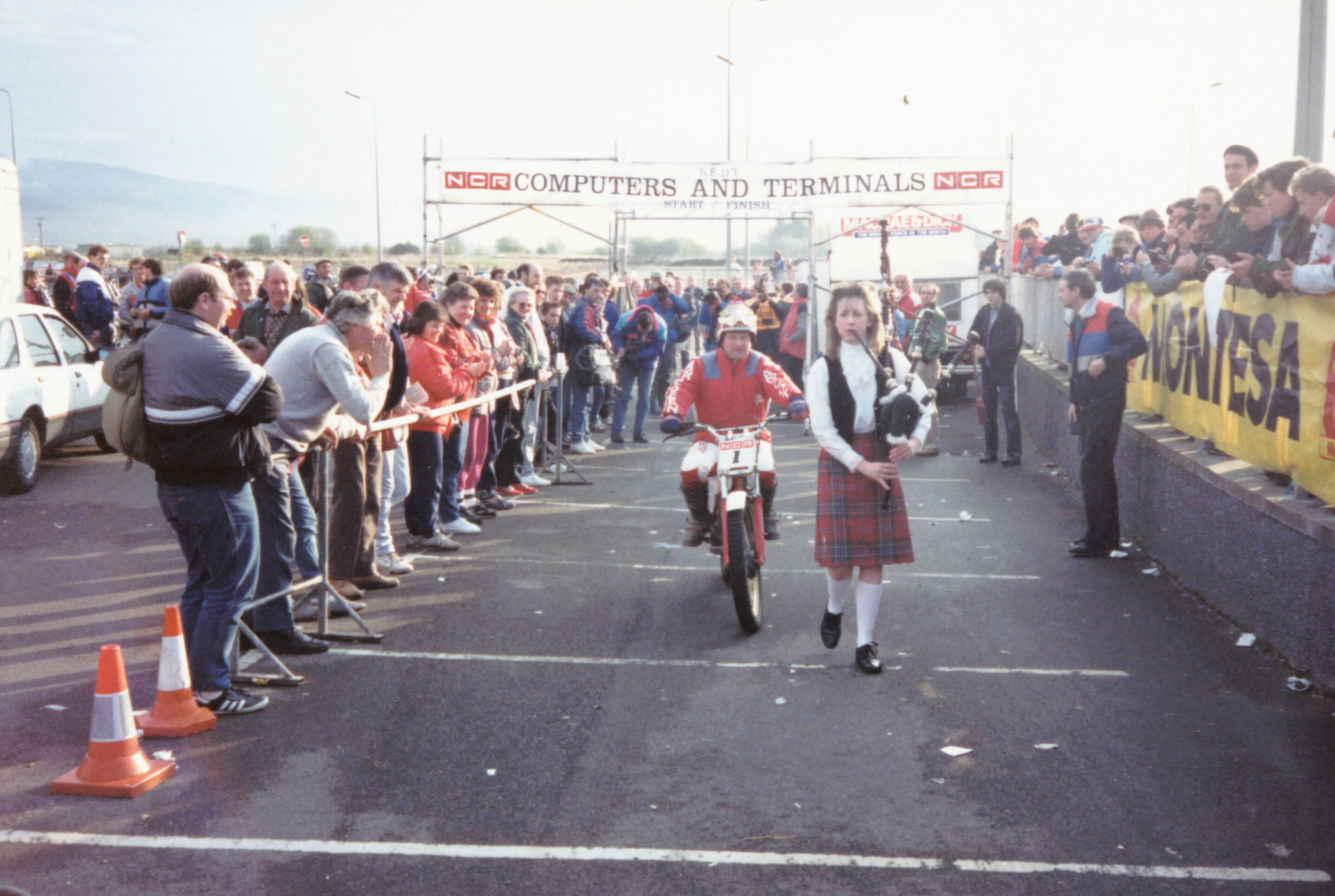
The camaraderie of Scottish trials is shown in this photo of Peter Mitchell at the 1988 SSDT start. If you look closely to the left, the man reaching forward with his hand to his face is Jimmy (J.D.) Morton of Sorn, Ayrshire – shouting ‘words of encouragement’ to Peter as he is piped away!
Son Duncan Mitchell, also a trials rider: “We used to get to drive the cars around the fields until they broke down, crashed them, or ran out of fuel, then we used Uncle Colin’s Land Rover to recover them, syphon the petrol from the cars so we could all use our bikes to race about the fields next door”.
Duncan Mitchell now rides Peter’s 350cc BSA B40, which he called his ‘secret weapon’ when it was first built. Duncan believes in keeping his Father’s memory alive in Pre’65 events, seen here at the Highland Classic on Alvie Estate, near Aviemore – Photo: Iain Lawrie, Kinlochleven
Peter was also a supervisor at George McGowan civil construction, operated by the brother to Rodger McGowan, who ran the Aberdeen bike shop ‘McGowan Motor Cycles’. After McGowan closed his company, Peter was made redundant and started out as self-employed, setting up a building company simply called Peter Mitchell Builders. He had the assistance from all his children on weekends and summer holidays to assist with any jobs they could undertake.
Duncan: “I remember this one time we built a wall and set the coping stones on it, then put the scratch coating on it all in one long day, Dad then said to me ‘great job let’s wash out the mixer’. He said to me to put some stones in the drum to knock off the mortar from it, so that is what I did, this was a ‘tow behind’ mixer so you can imagine where the stones came from, the wheel chocks! Well it took off down the hill and went clean through the wall, I’ve never ran so fast”.
Mind on the job in hand, Peter Mitchell (Beamish Suzuki) at the 1980 Aberfeldy Two-Day Trial – Photo: Jimmy Young
In 1998 Peter had a heart attack and was forced to give up his company. After he had some rest and was finished all the bikes in the garage he got a job with Ready Mixed Concrete (RMC Group) at Durris Quarry where he was in charge of the batching plant. He had a good easier job there and had a shed there where he could tinker with his bikes, also had a folding seat that he could sit outside when he was not too busy.
In 1982, Peter Mitchell rode and finished with this 238cc Bultaco in the Scottish Six Days.
Recycling:
Duncan Mitchell: “When the RMC company closed the Durris plant, Dad then got a job working driving skip lorries for a living, he was in his element here as many a good thing was discovered in a skip was what he told me. Many a tool and other things used to come home”.
…
1988 Scottish Six Days with Peter taking a hefty dab and advertising the ‘YAMSCOT’ support as he gets the TY250R Yamaha up the big step at ‘Witches Burn’
…
Eyes front and concentrating hard, 1993 Scottish Six Days on the TY250R Yamaha – Photo: Colin Bullock/CJB Photographic, Solihull
Family Man:
Peter was a real family man; he was Grandfather to Nicole and Callum, Katy and Iona, and father-in-law to Fiona, Pauline, Willie & Jill. He was also a Step Grandfather to Leanne, Darren and Liam with Great grandchildren, Tony and Sol. Son Stuart was not captivated by motorcycles, preferring football and golf as his sports.
Family man! Peter on his 1969 Bultaco M.27 Sherpa with his children Duncan, Derek and Alison.
…
Family was important to Peter Mitchell, seen here with son Duncan, daughter-in-law Jill, and wife Isobel at the finish of another SSDT for Duncan on the TYZ Yamaha.
Derek did both trials and motocross and also car rallying, autocross and hill climbs. He also took part at the Alford Museum popular moped race on a Yamaha DT50 and won this several times including the first year it was organised. Derek worked at Shirlaws Motorcycles for many years.
Waving a precautionary right foot, Peter Mitchell was a regular competitor at the Loch Lomond ‘Dan Stewart Memorial’ 2 Day Trial, seen here at the 1980 event on his 250cc Yamaha TY ‘Yamscot’ – Photo: Jimmy Young, Armadale
Alison was also a trials rider and rode for many years and only gave up competing to have a family and start a new business. Duncan Mitchell still rides trials most weekends, with the moped racing at Alford in September. He also assists the Bon Accord club whenever possible, the SSDT, Loch Lomond Two Day and at club trials. He was also the Bon Accord trials and enduro convener for a number of years and also set up the 2 Day events at Ballindalloch, where the barn dances were epic many a good weekend spent there.
Scottish Six Days in 1989 with Peter Mitchell on a Fantic 305 on Ben Nevis.
Peter Mitchell played Football for a local team in Cove Bay, until he got struck with the ball and punctured his lung. He was also an officer in the Boys Brigade 1st Cove Juniors.
Never one for sitting polishing his machines, Peter weighs in his well used 240 Fantic for the 1984 Scottish Six Days Trial
Peter was a member of the Bon Accord MCC for over 50 years, and other various clubs through Scotland and England from Rogart in the north of Scotland to Somerset in the south of England. He took part in scrambles, grass track racing, trials, enduro and also stock car racing.
Music:
Peter loved country music and also loved to go to the speedway racing, especially Cradley Heath when on holidays in the south. Peters motto in life was “Love me, love my bike – have bike will travel” and so the whole family joined in for many happy and enjoyable years, trekking up and down the country and making lots of friends along the way.
John Dickinson, formerly Editor of T&MX News: “I was minding my own business one day at home when I looked out of my window and suddenly there was Peter Mitchell and family walking outside my house, he had called into Kendal on holiday, knowing I lived there and began searching for me just to say hello”.
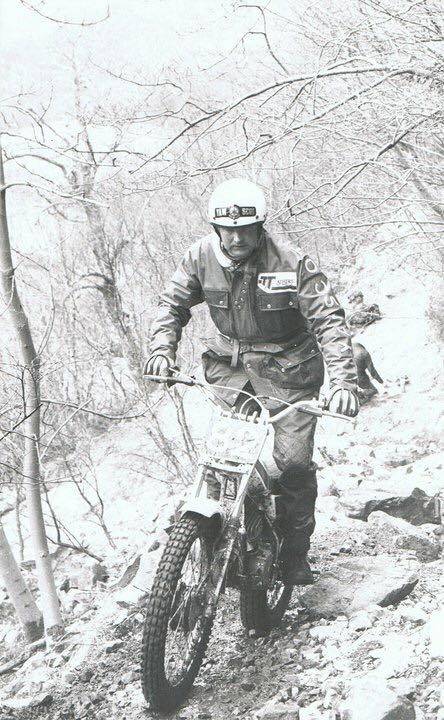
Hard riding Peter on his BSA B40 on Cameron Hill in the 2009 Pre’65 Scottish – Photo: Iain Lawrie, Kinlochleven
Duncan: “In 2009 we had a great holiday, we flew to Birmingham, hired a car and went to Cardiff to the world speed way cup and also visited the Sammy Miller Museum which was a place my Dad wanted to visit for a long time. We then watched the speedway racing at Eastbourne and then on to a meeting at Wolverhampton before handing back the hired car with over 1,000 miles on it”. “We had a great holiday, but little did we know what laid ahead of us. Sadly in the following April, Dad was diagnosed with cancer the week before we were heading up to Fort William. He rode the Pre-65 trial at Kinlochleven, but sadly this would be his last. He loved the area and loved the events there, after a long battle, he passed away on the 13th February 2011”.
Peter Mitchell enjoys a post event chat (and beer!) at the Scottish Six Days with (from left): Rab Paterson, Derek Mitchell, Peter, Duncan Mitchell and Alan Johnston.
Trials Guru’s John Moffat: “I was extremely privileged to be invited by the Mitchell family to speak at Peter’s funeral in 2011. I had known of Peter and his brother Colin before I started riding trials in 1974. Peter was a great character, he always greeted you with a broad smile and was always keen to chat about the sport whenever he met you. Never a shrinking violet, he was a hard rider, but had a heart of gold. The kind of guy that you could rely upon”.
No time to look at the scenery in 1984, Peter Mitchell tackles Laggan Locks in the morning sunshine of the Tuesday, 8th May on his 240cc Fantic.
Peter took part in many events and won many trophies over the years. He was Best up to 250cc in the SSDT, best Scottish rider in the Pre’65, Best over 350cc in the Pre’65 trial. Peter had ridden the Pre-65, then the SSDT, followed by the Lochaber Invaders trial which was the equivalent to nine one-day trials on the trot.
Duncan: “He was proud to show me the way around the hills of the SSDT course, not many people get the chance to do things like this with their fathers. I was so proud to have known this man for the time I did, I have so many experiences and great fun with him. He was to me a great man, missed by us all”. Peter also was one of a few that rode all of the Loch Lomond Dan Stewart Two-Day Trial up to the events’ 25 years celebration. It is believed that it was Ian Abbot and Peter were the only two to have ridden them all.
He annually rode the Forfar & Perth & District Club’s Aberfeldy Two-Day trial and along with a few others received a long-time rider award, this was a special motorcycle trophy made by a local artist, constructed from spark plugs, gears and bolts. In 2008, Peter received a life time achievers award for services to motorcycle sport from the Scottish ACU.
When undergoing treatment for cancer, Peter had numerous chemotherapy sessions but he still managed to ride the Scottish AMCA Over-40 series and finished the season by winning the championship. Sadly, he died while he was a reigning champion and never got the chance to defend this title.
Peter Mitchell’s career highlights:
Pre 65 Scottish: 1989-2010
Started the event as number 1 in 1994
Best finish was 4th overall in 1995
SSDT: 1978-1997
Started the trial as number 1 in 1998.
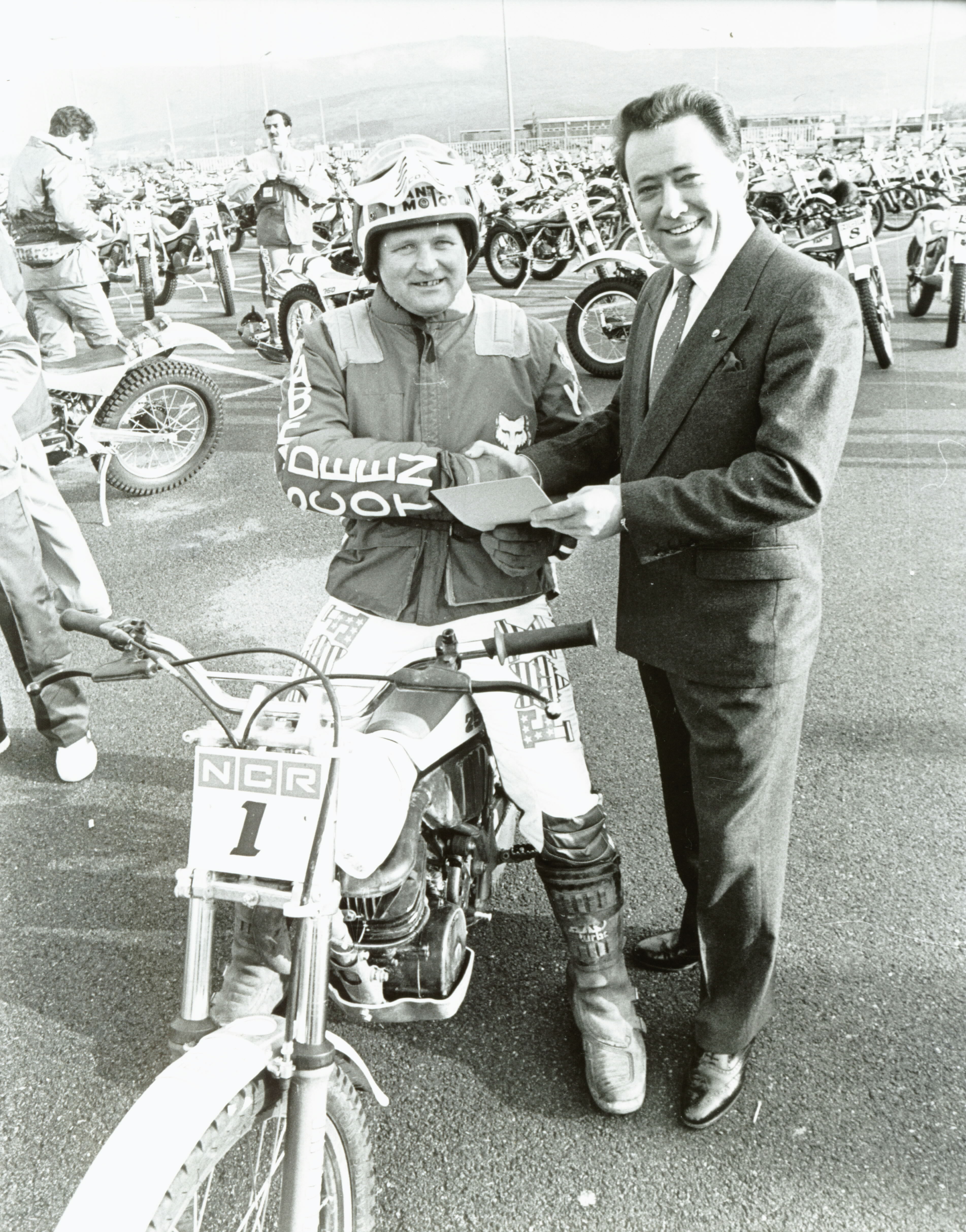
Getting his time-card from the official guest starter in the 1988 Scottish Six Days, Peter on his Yamaha TY250R at the start in Fort William, issued with number 1 – Photo: Anthony MacMillan, Fort William*
Peter rode for the Aberdeen based Yamscot team in 1978 won the ‘Eigg Cup’ for best performance on a motorcycle under 250cc, riding a TY 175 Yamaha, he rode with Jock Fraser and John Winthrop.
Peter Mitchell in his first SSDT in 1978 on the TY175 Yamaha on Blackwater
Peter rode a variety of machines in the SSDT, Yamaha TY 175, TY 250, Beamish Suzuki, Bultaco, Fantic, Yamaha TY 250R Mono, TYZ, Gas Gas, and completed his last SSDT on a TYZ model Yamaha.
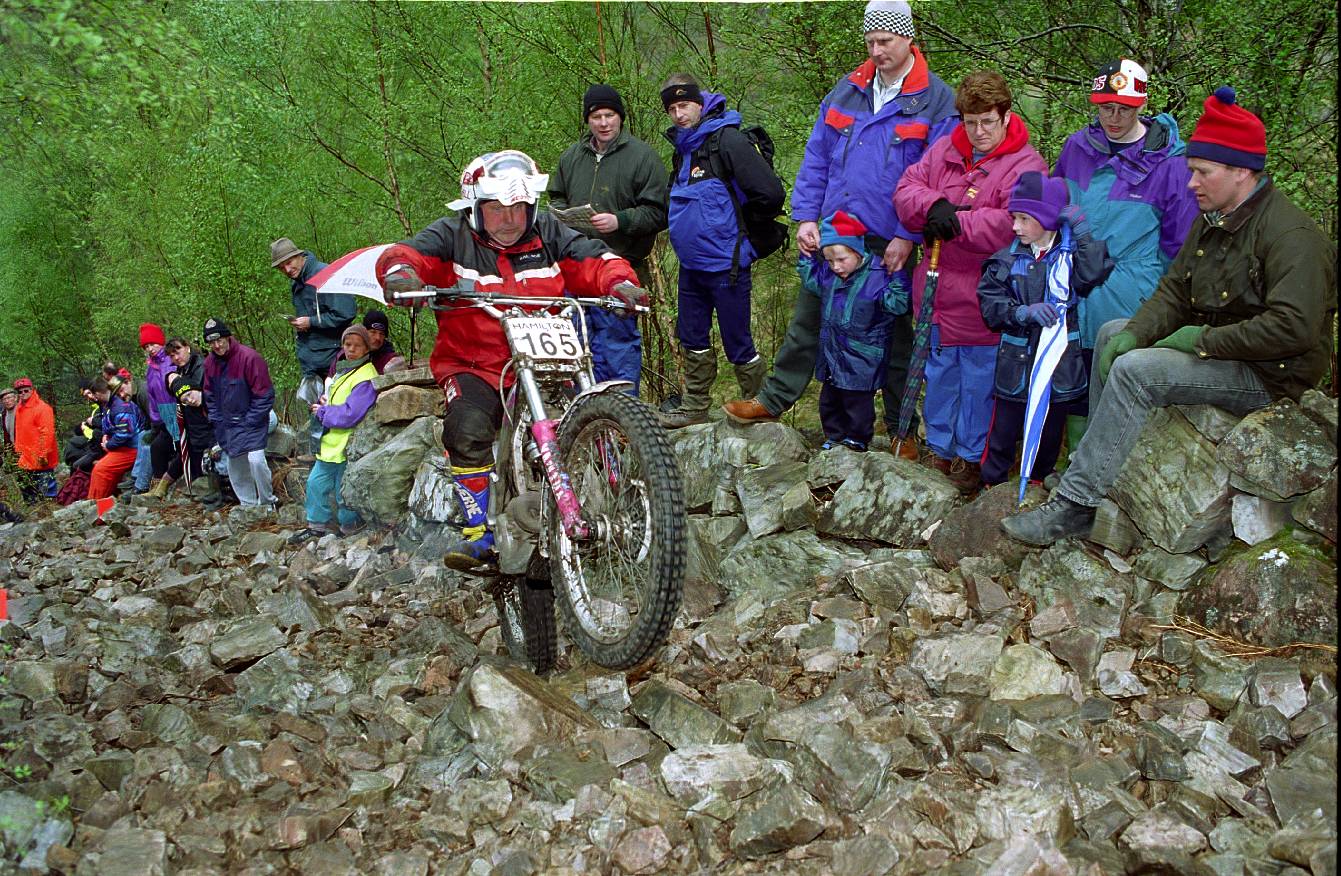
A fantastic shot of Peter Mitchell on his Yamaha TYZ climbing ‘Garbh Bheinn’ in the 1997 Scottish Six Days Trial, watched by Richmond clubmen, John Fraser and Andrew Kearton – Photo: Worldwide copyright – ERIC KITCHEN – (all rights reserved).
In 1994 Peter was in the winning team which were awarded the ‘Jackie Williamson’ trophy for the best Scottish team with Duncan Mitchell and Neil McGregor for the Bon Accord club, this was the first time the trophy was presented.
Grimacing with the effort of concentration in the 1998 Scottish Six Days, Peter Mitchell on the 250 Gas Gas at Piper’s Burn.
On the lighter side, Peter raced in the ‘Team Kwackersaki’ for McGowan Motorcycles with son Duncan from 1991 -1995 where they won the Scottish moped racing crown on several occasions.
Peter enjoys a pint and some grub after a hard day on the bike!
…
Peter Mitchell Memorial Trophy:
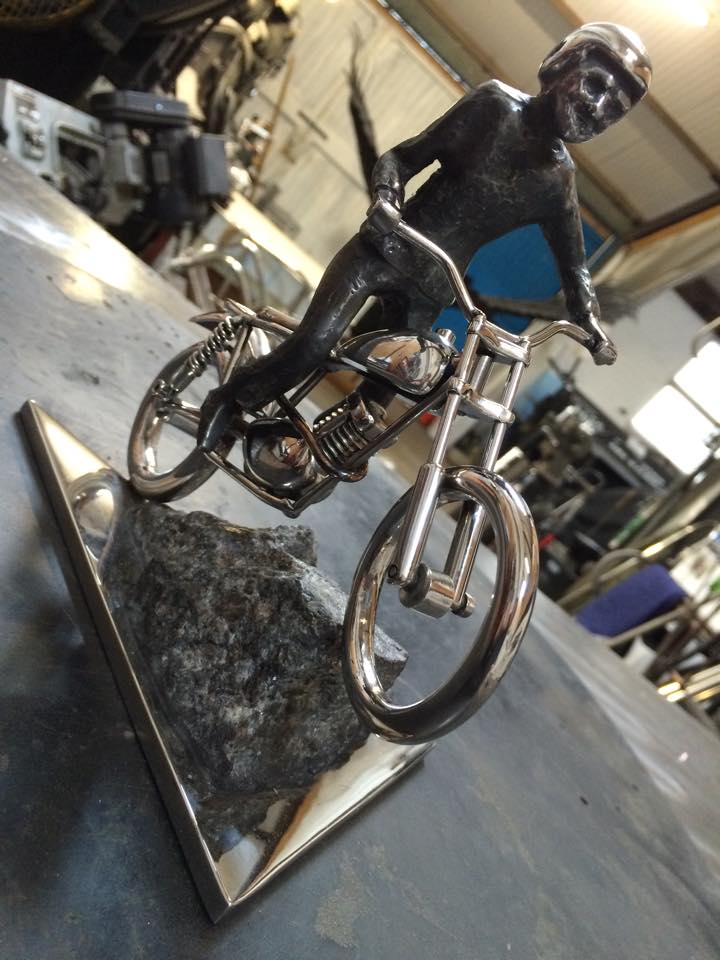
The Peter Mitchell Memorial Trophy, the trophy which was made by Inverness artisan, Richi Foss, the base was made by Peter’s eldest son Stuart.
After his death, Isobel Mitchell approached the Inverness based welder/fabricator and artisan, Richi Foss to commission a special trophy in Peter’s memory. It was to be presented to the Edinburgh & District Motor Club Pre’65 committee for the oldest finisher award at the annual Pre’65 Scottish Trial.
Foss undertook the commission and the first winner was none other than seven times TT winner, Mick Grant. Foss was delighted to hear that news, being a motorcyclist himself.
If you look at the Peter Mitchell trophy you will see that the rider is climbing his machine over a large granite out-crop, this is significant, as it represents the granite from Peter’s homeland of Aberdeen and also that he was always regarded as a ‘hard rider’.
Being an artisan, Foss contacted a ‘person’ who knew Peter Mitchell well and questioned him closely about Peter’s life and his career as a trials rider. Foss took all this information he had gleaned from the fellow enthusiast and thought about it long and hard before forming his ideas as to how the trophy would look. He also studied some photos of Mitchell in action, noticing that he rarely rode with a crash helmet with a peak fitted for example.
Foss wanted to capture the ‘spirit’ of Peter Mitchell in the finished article. This he achieved and the trophy was greeted with great pleasure by the Mitchell family when it was handed over to them by its’ creator.
Richi Foss has achieved the impossible when you realise that the wheels carry no visible spokes as they are spinning too fast for the eye to see, thus giving the piece the impression of ‘motion’.
The specially commissioned trophy for the oldest finisher in the Pre’65 Scottish Trial in memory of Peter Mitchell. Made by the Inverness artisan, Richi Foss of Foss Fabrication and Welding
…
The Peter Mitchell trophy rear view – Photo: Richi Foss
Trials Guru is indebted to the Mitchell family for their assistance in compiling this tribute to a true character and sportsman of Scottish motorcycle trials.
* Alistair MacMillan / West Highland News Agency, Fort William (with permission of current copyright holder: Anthony MacMillan, Fort William – All rights reserved)
…
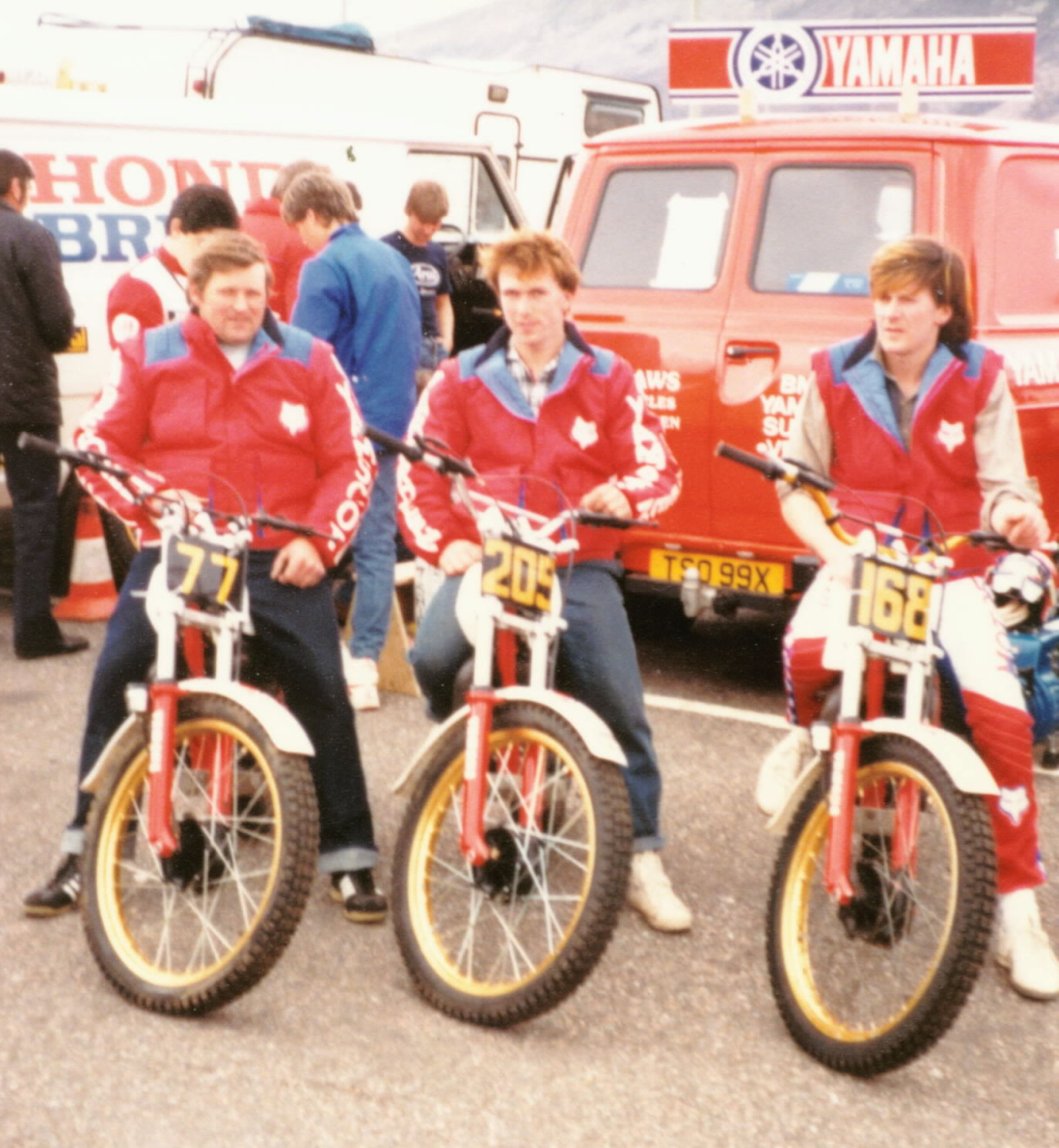
The Yamscot Team in the 1985 SSDT – from left: Peter Mitchell; Alan Fender and the late Ian Fender who lost his life in a road accident during the 1991 event.
…
Article copyright: Trials Guru/Moffat Racing 2016
Photographs and their copyright:
We respect the copyright of our photographers who give us access to their work free of charge.
Please do not breach copyright laws by taking images from this website for use elsewhere. Permission has been sought and granted from the copyright owners for the use of images on Trials Guru.
We are indebted to our photographers for their continued support of this venture.
Please be aware: All photographs displayed on Trials Guru are not held in any archive by the website operator, as the images are the legal intellectual property of the photographer only.
We do not sell any images used on Trials Guru, if you wish to purchase a copy, we can put you in touch with the relevant photographer.
…
If you want to know more about Scottish Motorcycle Sport from 1975 – 2005 click … HERE
Trials Guru – Dedicated to the Sport!
The Premier Trial Website – Recording the History of the Sport 'Established 2014'







































 TRIALS GURU - DEDICATED TO TRIAL